
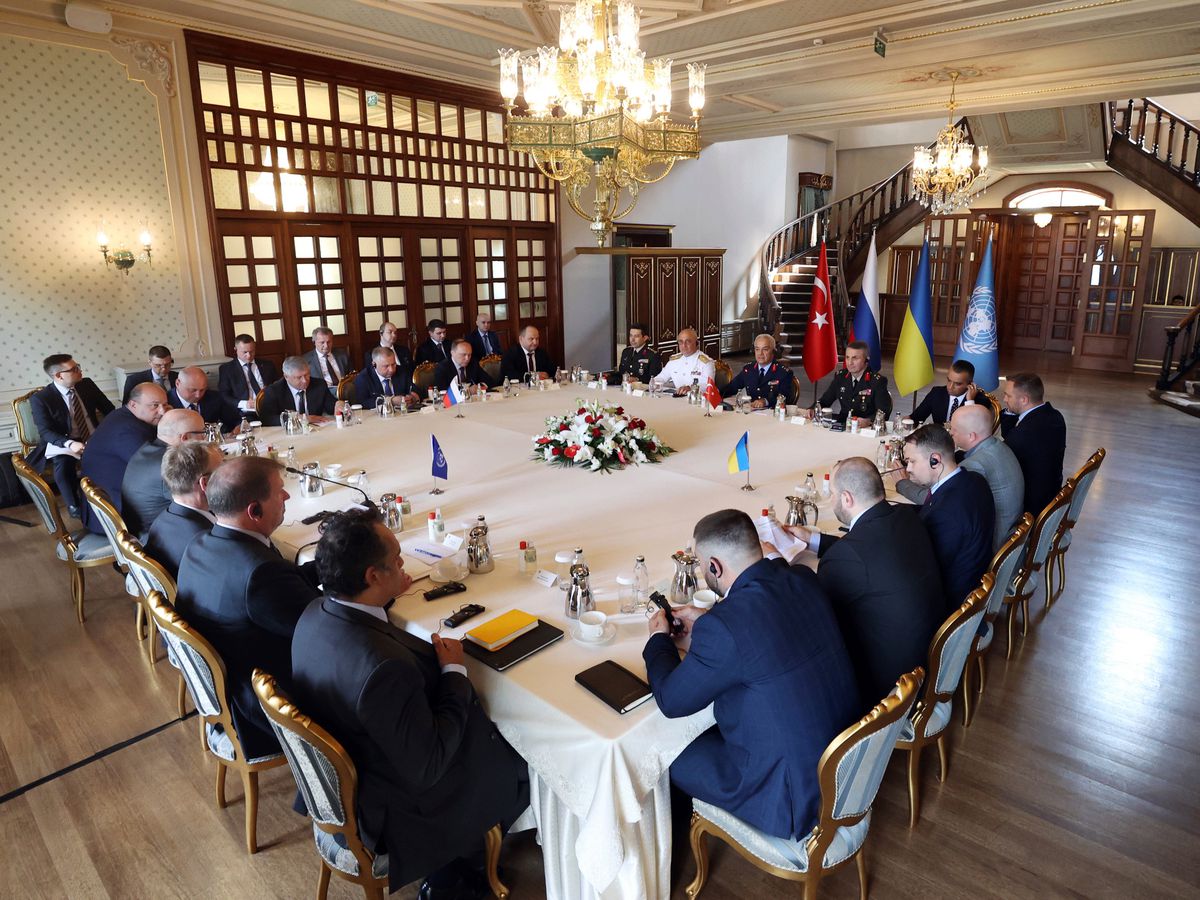
Attacks on ports and merchant ships in the Russia-Ukraine war have badly disrupted grain shipments across the Black Sea, and India has offered to mediate a "food corridor" for safe passage. Ukraine's president Volodymyr Zelenskyy said so on X after a phone call with India's prime minister Narendra Modi, Banglanews' international desk reports.
Modi did not mention a corridor or the Black Sea himself, restating India's commitment to contribute in every possible way to a peaceful settlement. India has published no formal plan, but its proposal may cover the safety of shipping, keeping grain and energy exports moving, and an end to attacks on ports and infrastructure. Ukraine's foreign minister Andrii Sybiha called it "the most comprehensive".
This year's strikes have disrupted grain and oilseed exports to Africa and South Asia. India, one of the world's largest edible oil importers, buys much of its sunflower oil from Russia and Ukraine. Its edible oil imports fell 7% in September, and sunflower oil imports dropped to 108,837 tonnes, the lowest since April 2022.
Citing Reuters, the report says damage to Russian port facilities in October cancelled 20,000 tonnes of cargo bound for India and delayed about 60,000 tonnes more. On 3 November India's foreign ministry said five Indian nationals were killed and two were missing after attacks on merchant ships in the Black Sea.
Citing Al Jazeera, the report says that before 2022 about a third of the world's grain exports passed through the Black Sea, and Ukraine alone supplied about 10% of world wheat exports and about 15% of maize exports. When the route is blocked, supply falls, freight and insurance costs rise and food prices follow, with import-dependent countries in Africa and Asia most exposed.
The obstacles are large. Moscow is pressing for a full peace deal rather than a partial ceasefire, the report says. Former Indian official Ravi Joshi said insurers are unwilling to cover ships without security guarantees, so commercial shipping would not recover quickly even if fighting eased. Maximilian Hess of the Foreign Policy Research Institute said disrupted grain supply and the risk of higher food prices make the issue more pressing for India.
Photo: International Maritime Organization / Wikimedia Commons (CC BY 2.0)
Source: Banglanews24


Comments
(0)