
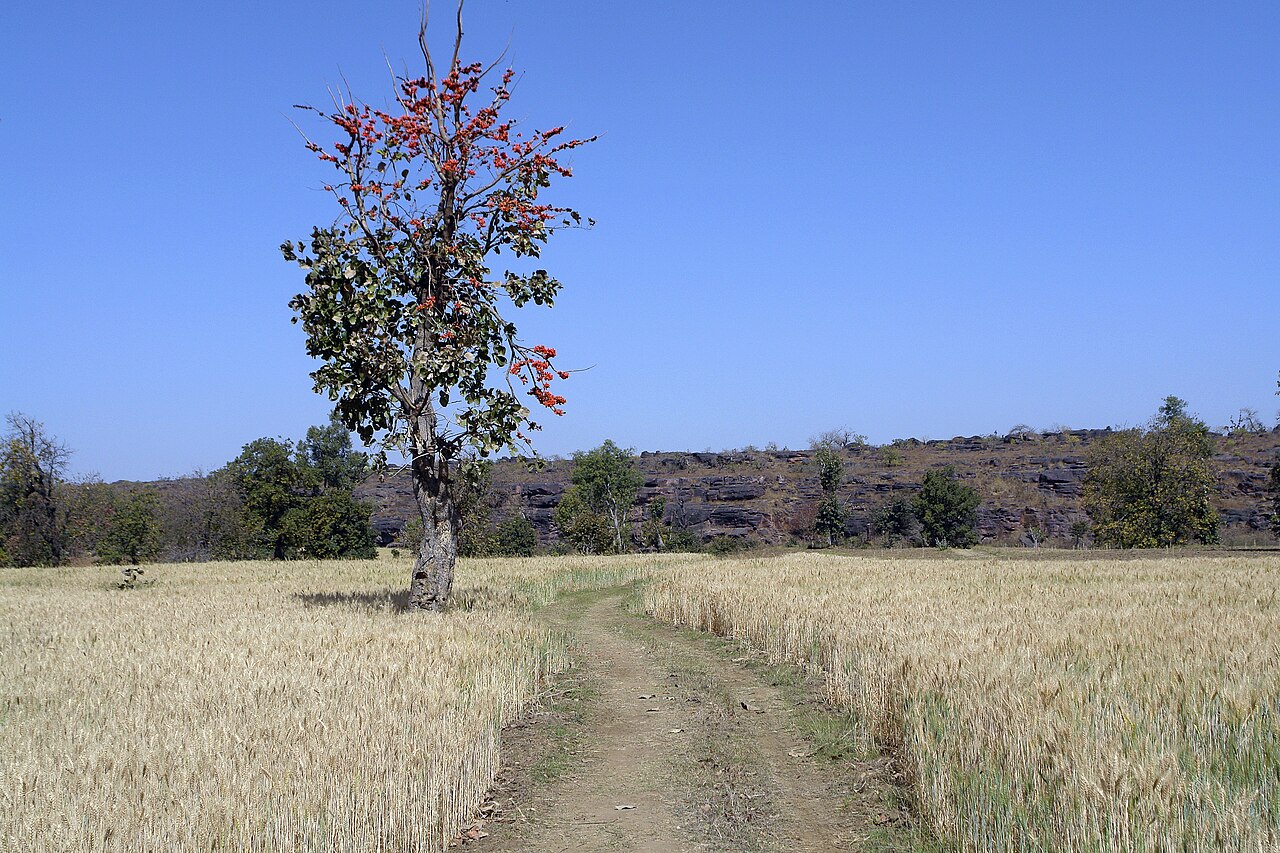
India has set a slightly lower foodgrain production target of 373.93 million tonnes for the 2026-27 crop year because of the El Nino's effect on the monsoon, Agriculture Minister Shivraj Singh Chouhan said at the National Agriculture Conference for the rabi campaign, Sandip Das reports in the Financial Express.
The projection includes a rabi, or winter crop, target of 177.72 million tonnes, above last winter's actual output of 174.51 million tonnes. "Our aim is to avoid water-intensive crops in areas that have received low rainfall and where reservoir levels and soil moisture are low, instead, we intend to promote sowing of pulses and oilseeds in those regions," Chouhan said, adding that targets were set state by state after consultations on water availability and soil moisture.
June-September rainfall is about 12 percent below the benchmark, but Chouhan said there was no major crisis and standing kharif crops were better than last year in places. Preliminary reports show about 0.61 million hectares of crops in Karnataka, Maharashtra, Tamil Nadu, Telangana, Andhra Pradesh, Rajasthan and Gujarat hit by excess rain, floods or drought. Total kharif sowing fell only about 1 percent to 109.49 million hectares, with rice down the most, by about 1.63 million hectares, and maize, soybean and cotton also lower.
Asked whether other states faced drought-like conditions besides Karnataka and Maharashtra, the minister named parts of Andhra Pradesh including Rayalaseema, parts of Telangana and parts of Rajasthan. He directed states to protect crops from pests and diseases, bring all eligible farmers under Kisan Credit Cards and run transparent crop-cutting experiments under crop insurance.
The ministry projects rabi fertiliser needs of urea, DAP and NPK at 38 million tonnes. Opening stocks on 1 October are put at 17.02 million tonnes, including 8.33 million tonnes of urea, 3.03 million tonnes of DAP and 5.65 million tonnes of NPK, 47 percent more than the 12.33 million tonnes available on 1 October 2025. "Despite the global challenges, there is no shortage of fertiliser in the country," Chouhan said.
Photo: Yann / Wikimedia Commons (CC BY-SA 4.0)
Source: Financial Express Agriculture
Comments
(0)