
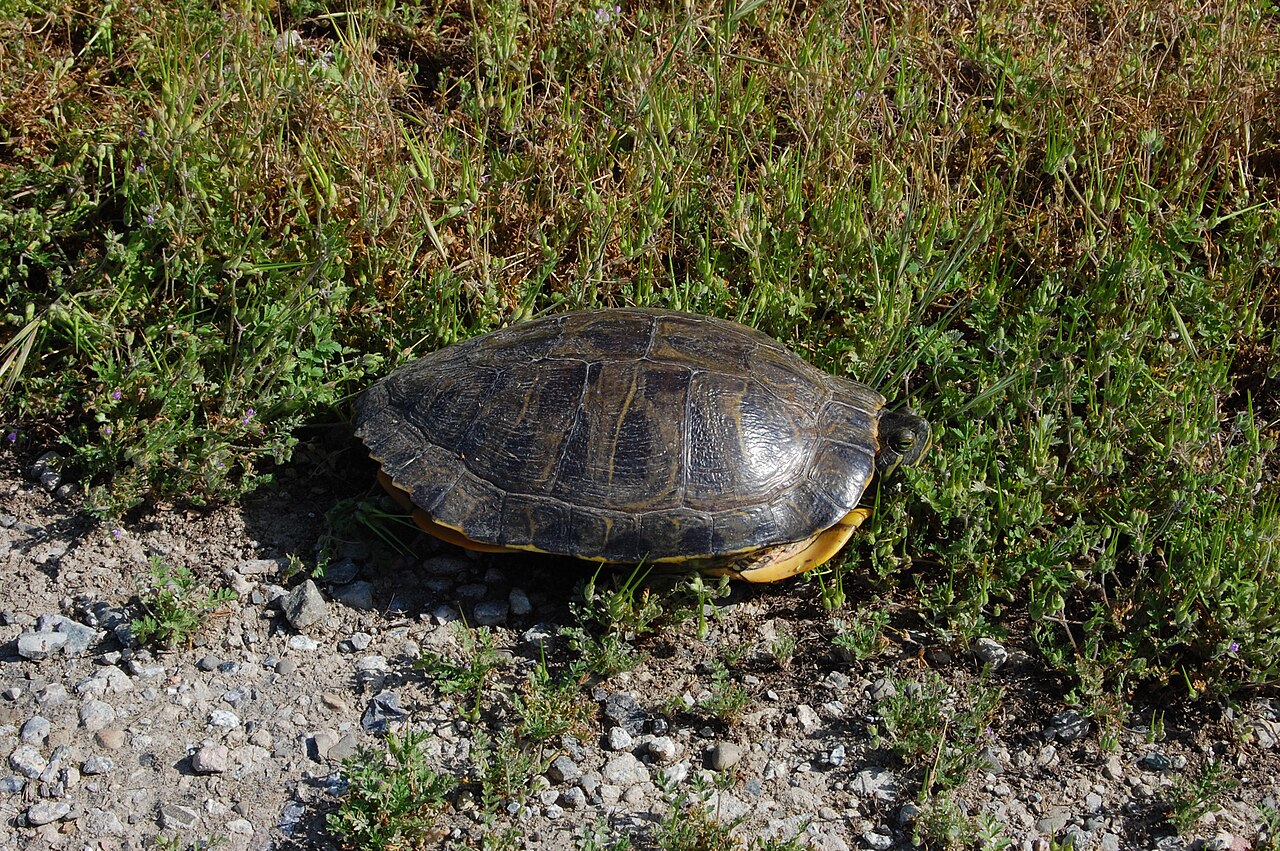
India's trade in exotic pets has grown into a sizeable industry, and more non-native animals are being abandoned or escaping into the wild, raising welfare and ecological concerns, Mongabay India reports in the third part of a series on the trade.
More than 40,000 people in 30 states and union territories declared exotic pets under the government's 2020 Voluntary Disclosure Scheme, according to a Humane World for Animals report, which says the true number could be far higher. Conservation researcher Uttara Mendiratta says people buy small, cute animals that grow bigger: a turtle outgrows its tank, a parrot lives for decades, a primate becomes hard to manage. A January 2026 study in Kerala found that 16% of respondents said some owners released red-eared slider turtles into open areas once they grew large.
The red-eared slider, native to the Mississippi basin, is listed by the IUCN's Invasive Species Specialist Group among the world's 100 worst invasive alien species. "They can become extremely dominant in water bodies," said Sumanth Bindumadhav, India director of Humane World for Animals. The turtle has been recorded in water bodies in Gujarat, Karnataka, West Bengal, Punjab, Rajasthan, Goa and Telangana; in Gujarat alone a study found it in 35 water bodies that also hold native turtles. India's biodiversity law has not formally designated any reptile as an invasive alien species.
Green iguanas from Central and South America are also widely kept, and Mendiratta said they could damage crops and harm native species; a 2025 study found large areas of India climatically suitable for them. In July 2024 Chennai Customs seized 402 baby iguanas arriving from Bangkok, 67 of them already dead, and 12,385 red-eared sliders were seized at Chennai and Tiruchirappalli airports between 2018 and 2020.
Removing animals from their native forests has its own cost: a 2024 analysis notes that primates disperse seeds and sometimes pollinate plants. Rescuers also report escaped or abandoned snakes, including venomous species for which India has no antivenom, as well as parrots, marmosets and sugar gliders.
Experts quoted in the report say India needs stronger rescue infrastructure and a national surrender policy so that unwanted animals are not released into the wild.
The report was written by Aditi Tandon for Mongabay India.
Photo: Eugene Zelenko / Wikimedia Commons (CC BY-SA 4.0)
Source: Mongabay India


Comments
(0)