
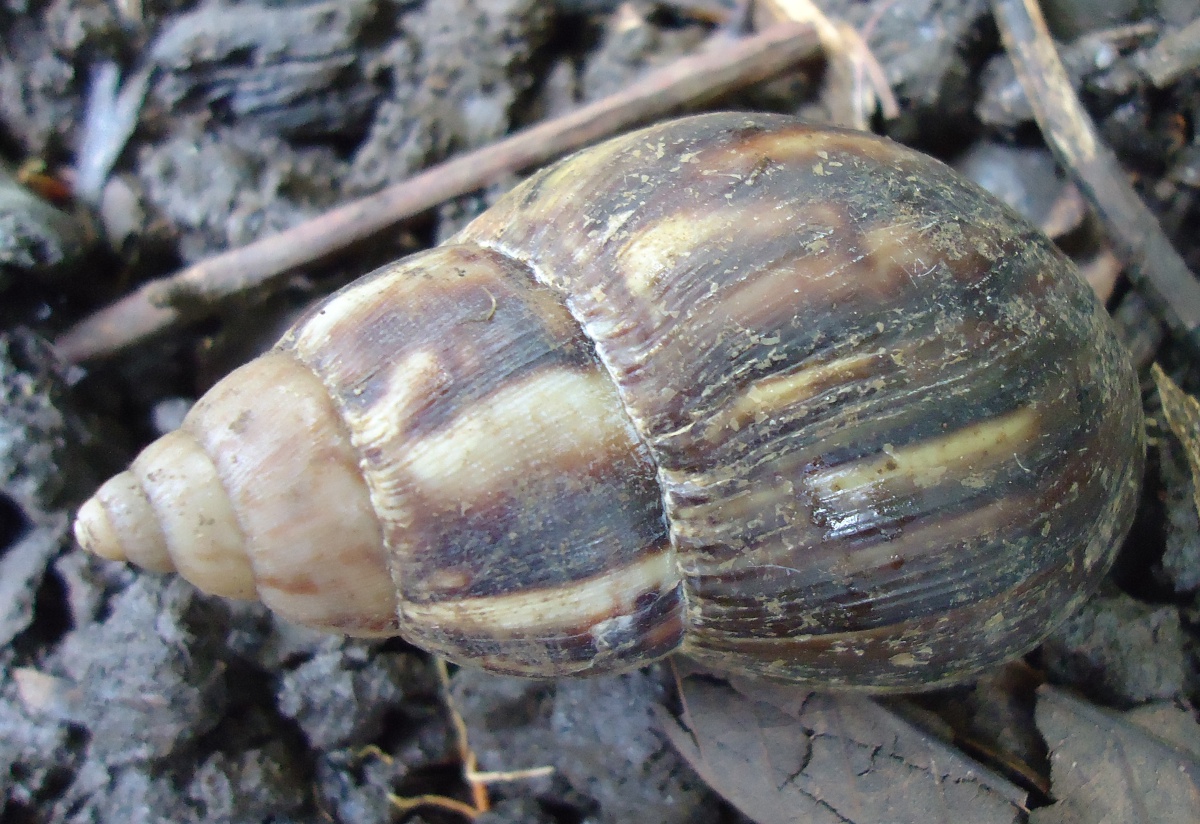
Integrated pest management methods demonstrated in farmers' fields have cut African giant snail infestation by 60 to 70% around Udaipur in Rajasthan, the ICAR-National Research Centre for Integrated Pest Management (NRCIPM) says.
The centre presented the results at a farmers' workshop, "Integrated Management of African Giant Snail: A Success Story", at Bichhiwada village under the Tribal Sub-Plan. The snail is a highly polyphagous pest that damages maize, vegetables, pulses and fruit plants, and its incidence in fields has been rising.
Director Dr Raman Thangavelu told farmers that chemicals alone are not enough and urged a combination of cultural, mechanical, biological and chemical methods. Farmers were advised to hand-pick and destroy snails in the morning and evening, remove eggs from the soil, set yeast- or jaggery-based traps and conserve natural enemies such as birds and frogs.
Where needed, the judicious use of metaldehyde, iron phosphate, copper sulphate, salt and lime was also recommended.
According to ICAR, the intervention protected crops and raised farm incomes, and the centre presents it as a model of farmer-scientist collaboration that could be adopted by other farmers facing the pest. The page carries a date only, 24 September 2026.
Photo: Obsidian Soul / Wikimedia Commons (CC0)
Source: ICAR
Comments
(0)