
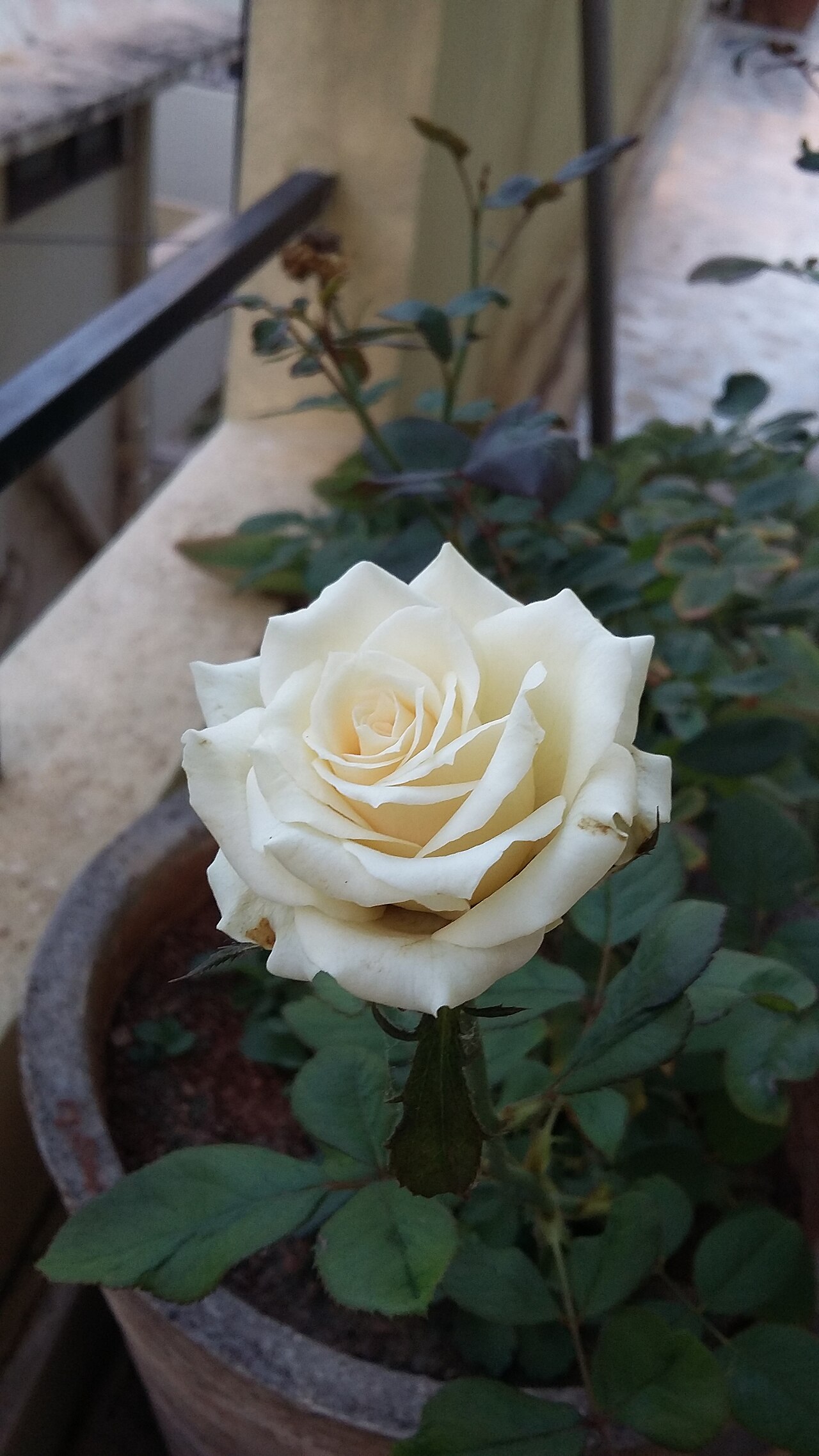
Climb onto the roof of almost any older house in a Bangladeshi city and you will find rows of clay pots. In one of them, a single red or white rose has opened overnight, and someone from the household is standing beside it with a morning cup of tea. Of all the flowers people grow on roofs and around the house, the rose is the favourite. Yet many share the same experience: the plant brought home from the nursery gives a few blooms, then slowly weakens, the flowers shrink, and one day it dies. A handful of rules make the difference between a rose that sulks and one that blooms, and none of them is hard.
Why roses on the roof
Cities have little open ground, but they have roofs, balconies and window ledges. Growing in pots means a plant can be moved as needed, its soil can be mixed to order, and many plants fit into a small space. Given the right care, a rose flowers for a large part of the year, and its range of colours, scents and forms makes it the rooftop gardener's first choice.
Pots have one big limitation, though. A plant in the ground can spread its roots and draw water and food from far away; a plant in a pot cannot. It has to live on whatever the limited soil in the pot holds. That makes soil, fertiliser, water and sunlight far more important for a potted rose than for one in the ground. This feature takes each step in turn, from choosing the plant to pruning, feeding, watering and pest control.
Choosing the plant: not new, but a year old
The first step to success is choosing the right plant. The advice from agriculturists is to plant a year-old rose rather than a brand-new one. A plant that has grown for a year has a firmer root system and stem, settles quickly into a new pot, and withstands disease and changes in the weather. When buying from a nursery, check that the leaves are green and unspotted, that the stem has no dry black patches, and that the root ball is firm.
Most roses sold in nurseries are grafted. Grafting joins two plants into one. The lower part, the rootstock, is usually a hardy wild rose with strong roots. The upper part is a branch of the chosen variety, the one that bears the large, beautiful flowers. Where the two are joined, the stem shows a knobbly swelling, the graft union. That spot will matter again and again at planting and in later care.
The pot and the soil
Match the size of the pot to the size of the plant. Government agricultural guidance recommends a 20-centimetre pot for small varieties and a pot of 30 centimetres or more for large ones. In a pot that is too small the roots run out of room, the soil dries out quickly and the plant suffers from constant thirst. Clay pots let the roots breathe, but plastic or cement pots also work as long as water can drain out.
The pot must have a hole in the bottom. Roses like moist soil but cannot bear standing water; their roots rot. A few pieces of broken brick or crockery laid over the hole stop the soil from clogging it and let water run out freely. Then fill the pot with loam mixed with well-rotted cow dung or compost. The mix should crumble apart when squeezed in the hand and released, not hold together in a sticky lump like mud.
How to plant
The most important thing at planting is to set the plant upright in the hole. A plant set at an angle grows crooked and is readily pushed over by the wind. The roots must be fully covered with soil, with no part left exposed to the air. Pressing the soil down lightly by hand afterwards removes air pockets around the roots.
With a grafted plant one rule must be followed strictly: keep the graft union at least 3 to 4 centimetres above the soil. If the union is buried, it can rot, and the upper variety may put out roots of its own, cancelling the benefit of the graft. Water the base of the plant often in the first days after planting, so the roots quickly take hold in the new soil.
Sun: at least six hours a day
The rose is a flower of the sun. Agricultural extension services at several universities in the United States advise that roses need at least six hours of direct sunlight a day. Roses kept in shade grow tall and weak, flower less and suffer more disease. The corner of the roof that gets sun from morning to midday is the best place for a rose pot.
Morning sun brings an added benefit. When the leaves stay wet from dew or watering, fungal diseases, especially black spot, find it much easier to attack. Research has shown that the spores of the black spot fungus need several continuous hours of wet leaves to germinate. Morning sun dries the leaves early and closes that window. In the fierce heat of a summer afternoon, however, the soil in a pot on a roof can overheat, so some shade around the pots or a layer of straw over the soil helps.
How much water
A newly planted rose needs regular watering for its first few weeks. Once it has settled in and starts putting out new shoots, the routine changes. The agricultural advice is then to water every ten days in the dry season, but thoroughly, like an irrigation: not a little every day, but enough at one time to soak all the soil in the pot until the surplus runs out of the drainage hole.
After each watering, loosen the soil around the base of the plant. Breaking the hard crust that forms on the surface as it dries lets air reach the roots and helps the next watering soak in. In the hottest weeks of summer the soil dries fast, so test it with a finger and water sooner if needed. In the monsoon water less, and make sure no water stands in the pot. Water the base, not the leaves; that way leaf diseases are fewer.
Pruning: secateurs out in Ashwin
Rose flowers come on new wood. Old branches do not flower well, which makes pruning one of the most important jobs in rose care. To let new shoots spread freely, cut out old branches, damaged ones and diseased ones. To get large roses the plant must be pruned regularly. Left unpruned it becomes a dense bush with no light or air inside, and the flowers stay small.
The Bengali month of Ashwin, roughly mid-September to mid-October, is considered the right time to prune. The monsoon is ending then, and the coming winter is the rose's finest flowering season. Pruning in Ashwin means new buds form on new shoots at the start of winter. Use sharp secateurs or a sharp knife so the stems are cut cleanly, not crushed.
Where to cut matters too. New shoots grow from the small buds, or eyes, at the base of each leaf. A slanting cut just above an outward-facing eye sends the new shoot outward, keeping the centre of the plant open to light and air, and a slanting cut does not hold water. If two branches in the middle of the plant rub against each other, remove one.
Paint the cut ends with a thick fungicide paste. An open cut lets fungus in, and the stem can blacken and dry from the tip downward, a condition known as dieback. Sealing the cut greatly reduces that risk.
Feeding: food before the cut
After pruning, the plant needs plenty of food to push out new shoots. So fertiliser goes in ten to twelve days before pruning, giving it time to mix into the soil and be ready for the plant when the cut is made. The recommendation is 2 to 3 kilograms of dry, well-rotted cow dung per plant, with 50 grams of TSP and 50 grams of potash. TSP, triple superphosphate, supplies phosphorus, which roots and flowers need. Potash strengthens the stems and helps the plant resist disease. Cow dung keeps the soil soft and releases a range of nutrients slowly.
How it is applied matters as well. Remove the top 10 centimetres of soil from the pot, loosen the soil beneath a little, and mix the fertilisers in. Take care not to damage the roots; digging hard with a trowel tears the fine ones. Droppings from ducks, chickens or pigeons can also be used to feed roses, but they are strong, so it is safer to use them well rotted and in small amounts.
Beyond this main feed, the plant needs small meals through the year. Government agricultural guidance says that once a potted rose is established, it should be fed every fifteen days to a month, starting a month after planting. The same guidance suggests three handfuls of powdered cow dung and one handful of bone meal per pot after the winter pruning. Bone meal releases phosphorus and calcium slowly, which benefits flowering. Small, regular feeds keep a plant from going hungry even in the limited soil of a pot.
Early summer calls for a little extra care. From March to April, a mulch of rotted cow dung and compost can be spread around the base of the plant. A mulch is a covering laid over the soil. It shields the roots from the sun, holds moisture in and, as it slowly breaks down, feeds the plant as well.
The same government guidance adds another summer task: at the end of March or early April, remove the top 8 to 10 centimetres of soil from the pot and replace it with rotted cow dung and fresh, loose soil. Covering it with straw or dry leaves then protects the roots from the harsh summer sun. Soil left unchanged in a pot for years runs out of nutrients, so renewing the top layer is especially useful for potted plants.
A few precautions for pots on a roof
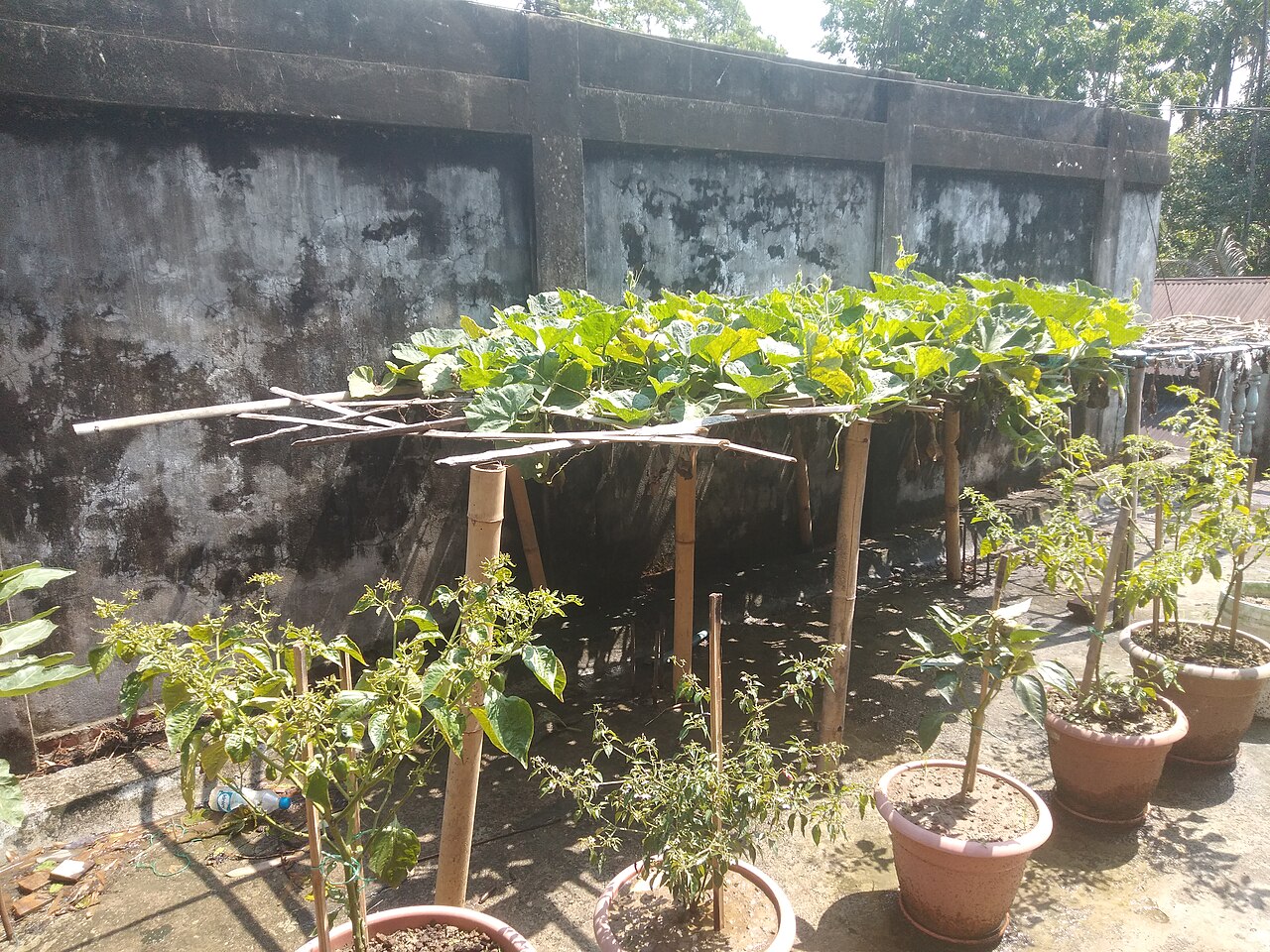
When keeping pots on a roof, think of the roof as well as the plant. A pot set straight on the roof floor drains poorly, and the constantly damp patch beneath it can damage the roof. Setting each pot on two bricks or a small stand lets water drain properly and air move underneath. Keep an eye on the roof drains too, so they do not clog with leaves and soil.
After a few years the rose's roots fill the whole pot. Roots poke out of the drainage hole, and water runs off the surface instead of soaking in. That is the signal to repot. Moving the plant into a slightly larger pot with fresh soil and fertiliser revives it. Repotting is best done close to pruning time, when the plant is resting anyway.
Exposing the roots to the sun
Rose growers have an old technique for dealing with harmful insects hiding in the soil. Dig a ring around the plant about 20 centimetres from the base and uncover part of the roots. The soil can be left open like this for eight to ten days, so that insects and grubs in the soil are exposed to sun and air and destroyed. Then refill the ring with fresh soil mixed with fertiliser.
Pests, diseases and organic remedies
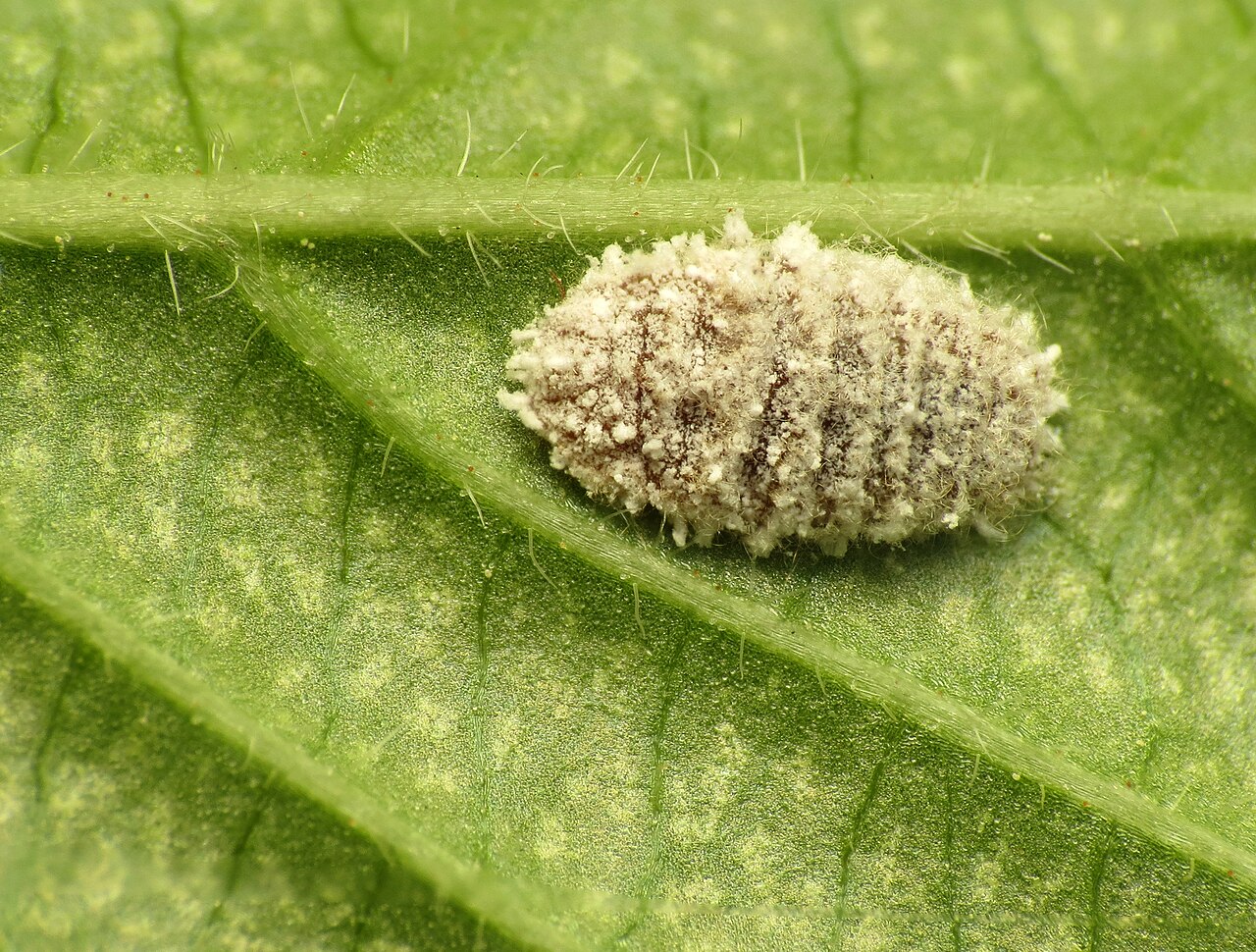
Potted roses are attacked by aphids, caterpillars and a variety of small insects. Aphids are tiny green or black insects that cluster on tender shoots and buds and suck the sap; the buds curl and the flowers fail to open properly. Caterpillars chew the leaves full of holes. When pests strike, a locally made organic pesticide can be used. On a roof where the whole family comes and goes, organic methods are safer than harsh chemicals.
The best-known disease is black spot, caused by a fungus. Round black spots appear on the leaves, the area around them yellows, and the leaves drop. Another disease leaves a white, powdery coating on the leaves and buds. Morning sun, watering at the base, air moving through the plant, and removing affected leaves at once are the most effective defences. Infected leaves left lying in the pot spread the disease again.
Cut off shoots below the graft
A grafted rose sometimes sends up shoots from below the graft union. At first it may look as though the plant is just growing bushier. But these shoots belong to the wild rootstock. Their leaves usually look different, and because the wild rose is so vigorous, the shoots grow fast and draw off much of the plant's food, weakening the fine variety above.
So any shoot that appears below the graft union must be cut off promptly with a sharp knife. Cut as close to the base as possible, since a stub left behind will sprout again. This is part of routine care; a glance at the base of the plant once a week is enough to spot them.
On home-made organic pesticides: extracts from the leaves and seeds of the neem tree have long been known as botanical insecticides, and neem-based organic products are sold in the market. When there are only a few aphids, washing the affected shoots with a strong jet of water or wiping them off by hand also works. Caterpillars can be picked off and destroyed. Any spray is best applied in the late afternoon, and it is safest to test anything new on a single branch first.
The trick for bigger flowers
To get large flowers, pinch off the first flower buds that appear. It sounds backwards, but the logic is plain: a newly planted or freshly pruned rose spends its energy first on strengthening roots and shoots. Flowering straight away splits that energy. Removing the first buds makes the plant stronger, and the flowers that follow are larger.
By the same logic, once a flower fades it should be cut off with a short length of stem. A plant left with spent blooms puts its energy into making seed, and new buds come more slowly. Removing faded flowers regularly brings new shoots and buds sooner.
If you want to cut flowers for the house, do it in the morning or late afternoon, when the bud has just begun to open. Flowers cut in the midday heat wilt quickly. Leaving at least two or three leaves on the stem below the cut lets a new shoot grow from there, readying the plant for its next flower.
Flowers all season in one corner of the roof
Put the rules together and a clear picture emerges. A year-old grafted plant, set upright, with the graft above the soil. A pot that drains, and six hours of sun a day. A thorough watering every ten days in the dry season. Pruning in Ashwin, with cow dung, TSP and potash ten to twelve days before. Organic pest control, and shoots below the graft cut away.
None of this costs much; what it takes is regular attention. A weekly habit of checking the leaves, stems, base and soil catches most problems early. If a disease or pest cannot be identified, advice is available from the upazila agriculture office or by calling the Agriculture Call Centre of the Agriculture Information Service on 16123. With that care, a few pots in one corner of the roof will stay full of flowers right through the winter.
Photo: A white rose in a pot, Abhignad / Wikimedia Commons (CC BY-SA 4.0)
Comments
(0)