
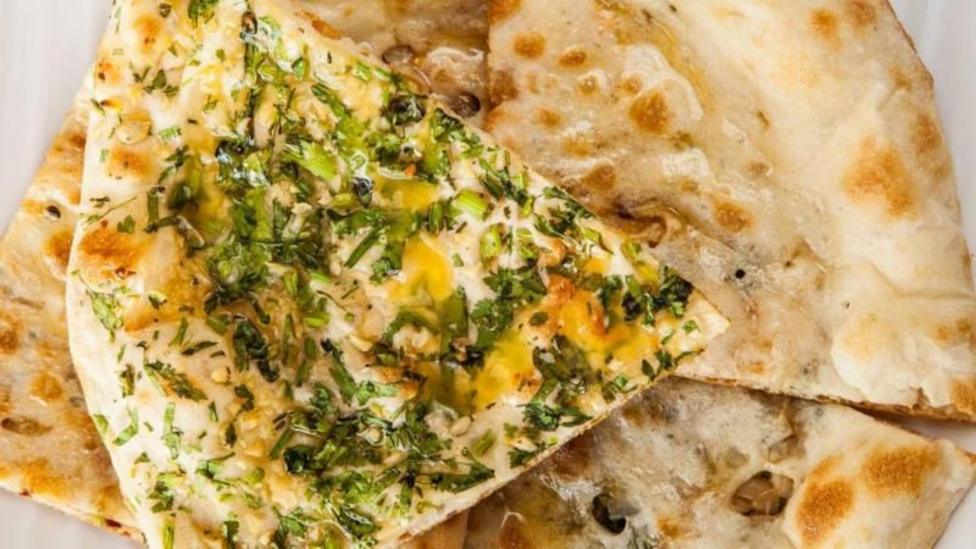
Naan, the soft, puffed leavened bread of South Asia, is now among the most popular breads in the world. Butter garlic naan, made by brushing the hot bread with butter and scattering chopped garlic over it, recently took first place in the food website TasteAtlas's ranking of the best breads; aloo naan, stuffed with spiced potato and coriander, is on the list too. Yet this was once a bread served only in the courts of Muslim emperors.
Its origins are not entirely clear, but many food historians place them in ancient Persia, since nan is simply the Persian word for bread. Persians made it from flour and water, probably baked on hot stones. It reached the subcontinent with the sultans who ruled much of it between the thirteenth and sixteenth centuries, along with the culinary traditions of West and Central Asia and the practice of cooking in a tandoor.
The Indo-Persian poet Amir Khusrau, writing about court life under Alauddin Khilji and Muhammad bin Tughlaq, mentions two kinds: nan-e-tanuk, thin and soft, and nan-e-tanuri, thick and puffed, baked in the tandoor. In the Delhi Sultanate it was eaten with kebabs and minced meat. Royal cooks added yeast to the dough, then a rare and costly ingredient, and the elaborate, expensive process made naan a luxury for royalty and the wealthy, a status it kept through three hundred years of Mughal rule.
"There were special cooks for making naan, called nan bais," says Neha Vermani, a historian of South Asia. They experimented constantly and gave their inventions descriptive names: nan-e-warqi with thin layers, nan-e-tangi small enough to soak up gravy. Some breads were named for the kitchen that produced them; Vermani says bakarkhani, a biscuit-textured flatbread, takes its name from the kitchen of Baqir Nazm Saini, a senior official at the courts of Jahangir and Shah Jahan.
Under British rule naan remained largely a food of the rich, but British travellers carried it west, and in India it became part of a colonial cuisine served with meat and sauces of local spices. Over time simpler techniques replaced the elaborate ones and a plain version reached ordinary people. Today the dough is made from flour, yoghurt and yeast, left to rise, pressed by hand into rounds, baked in a very hot tandoor until it puffs and browns, and brushed with butter or ghee.
In the 1990s and 2000s fine-dining restaurants in India and abroad began experimenting again. Chef Suvir Saran recalls adding spinach, a kind of cheese and mushrooms to naan at his New York restaurant to make it appeal to non-Indian diners. Today Goa offers pork vindaloo naan and butter chicken naan, and Hong Kong a truffle cheese naan. "Naan is an extraordinary gift from India to the world," Saran says.
Food historians are quick to add that naan belongs not to India alone but to a shared heritage of South Asia and the Middle East. How a simple wheat bread went from court luxury to staple of the masses is, in its own way, a lesson in the economics of food.
Source: BBC Bangla

Comments
(0)