
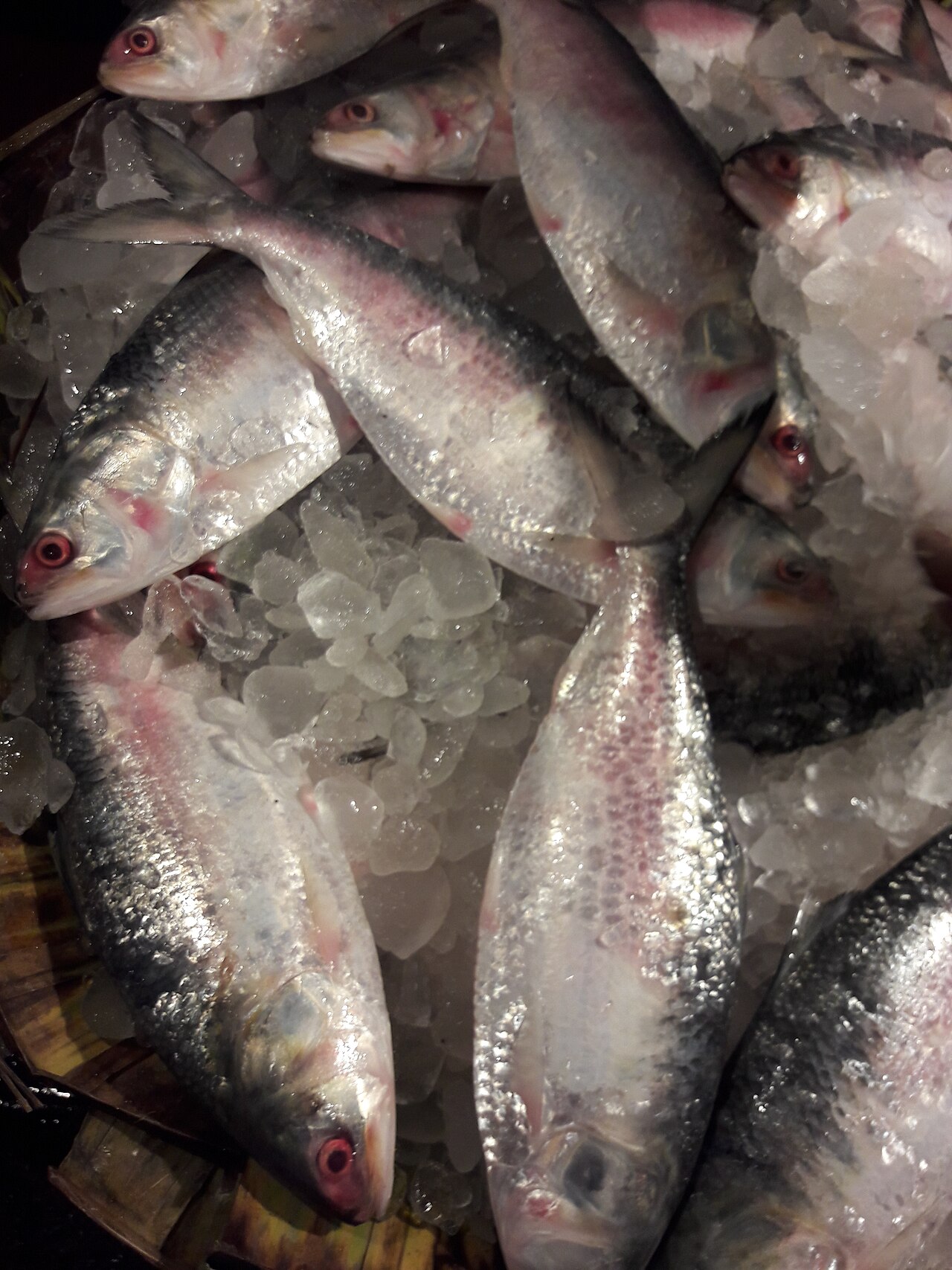
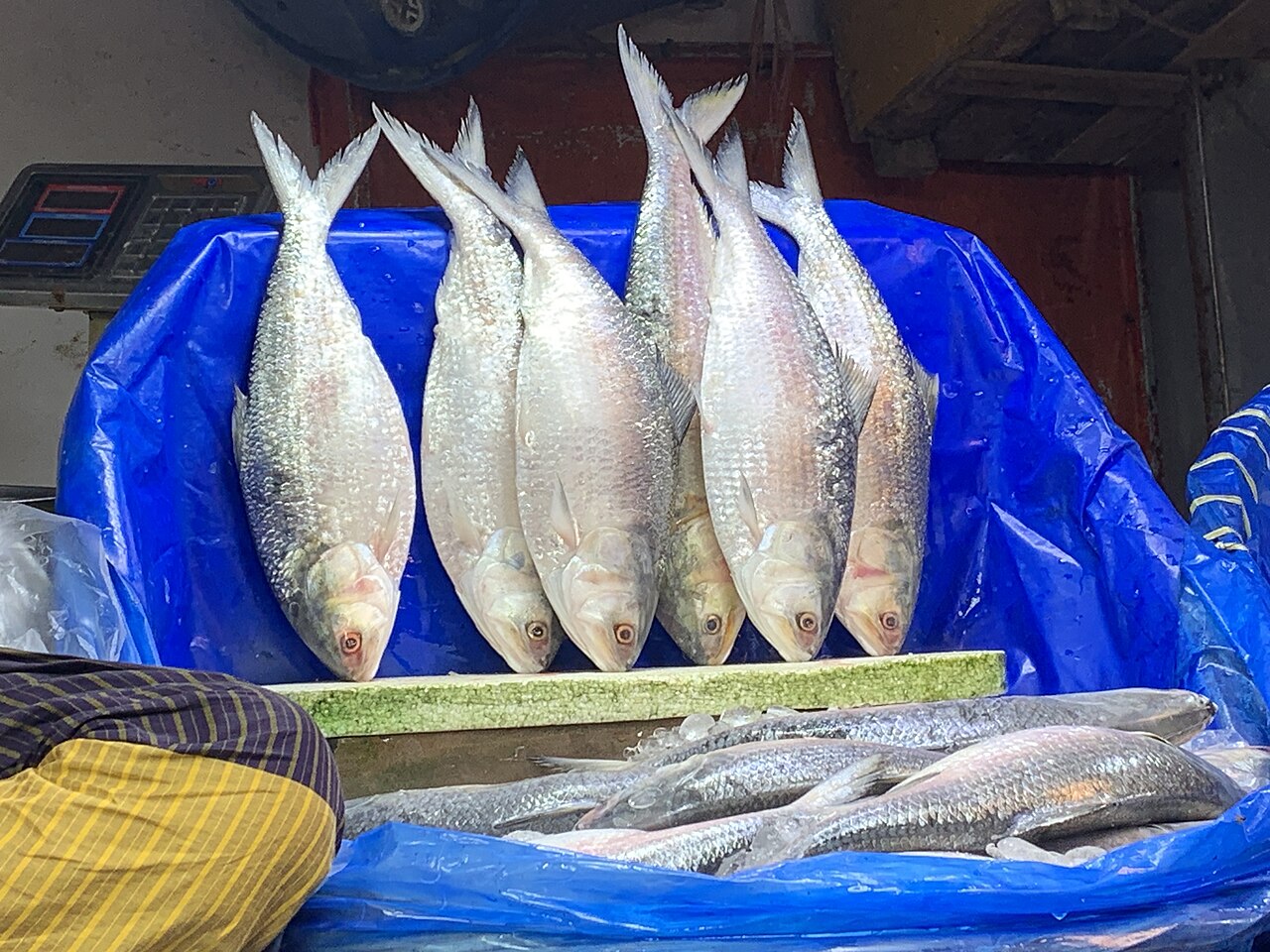
Hilsa production in Bangladesh has declined steadily over five years, and not only the large fish: egg output, the fry that hatch from them and the number reaching the juvenile jatka stage have all fallen, according to a report in the Kolkata daily Ei Samay.
By the figures in the report, Bangladesh produced 565,000 tonnes of hilsa in 2020-21, 529,000 tonnes in 2023-24 and about 500,000 tonnes in 2024-25. In Chandpur, output fell from 33,992 tonnes in 2020-21 to 32,304 tonnes in 2023-24.
Eggs tell the same story. In 2022, 805,515 kg of hilsa eggs were produced; at a 50 percent hatching rate that gave about 402,758 crore fry, and at 10 percent survival about 40,276 crore jatka. In 2025 egg output fell to 791,564 kg, fry to about 395,782 crore and jatka to about 39,578 crore.
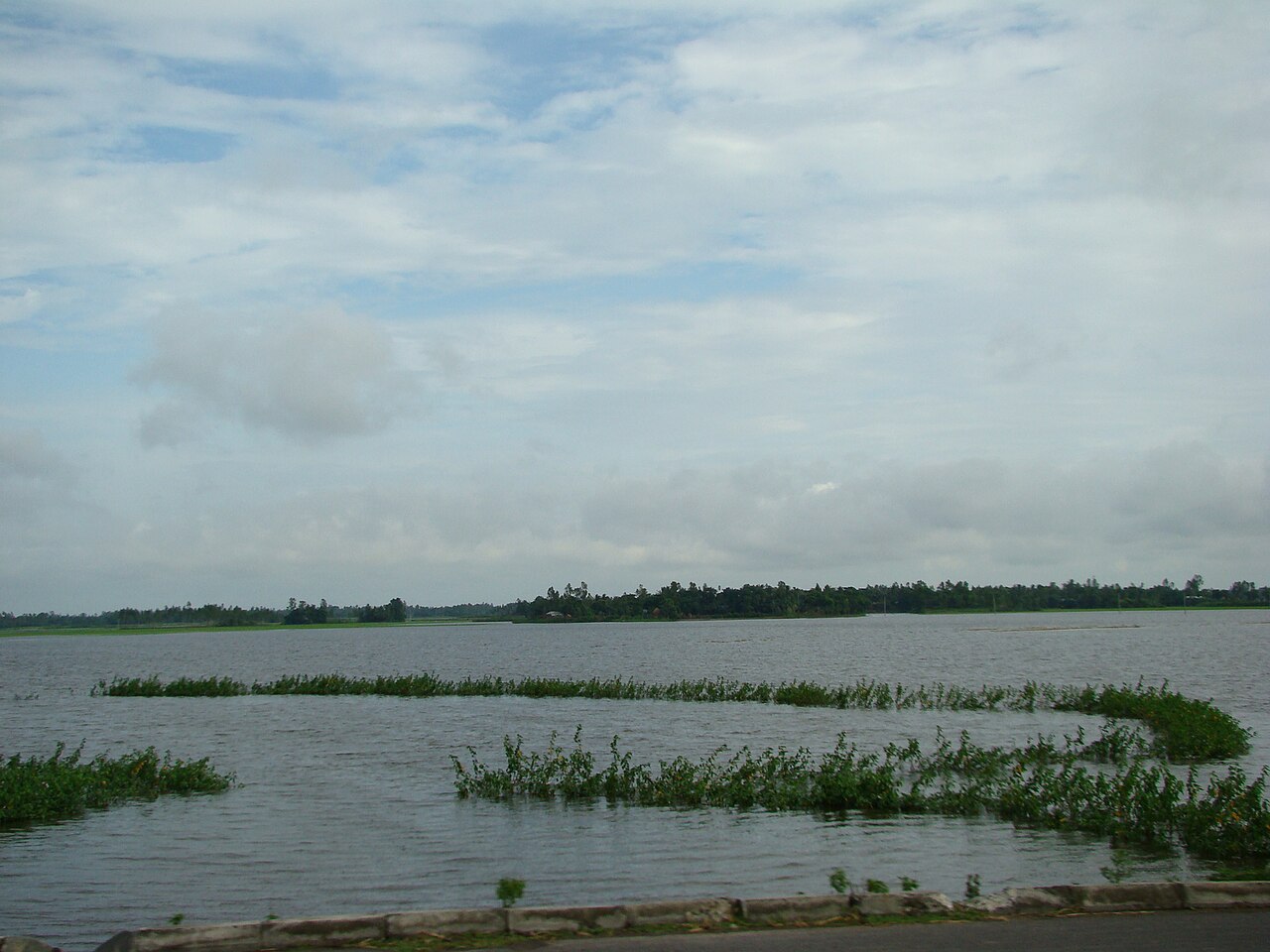
Shabe Barat, general secretary of the Barostation fish landing cooperative in Chandpur, said the river itself has changed: it has lost depth, and silt and sand are building shallow chars on the bed. "Hilsa is a deep-water fish, but the river no longer has that depth," said Chandpur district fisheries officer Mohammad Fakrul Islam. Pollution, harmful gear such as the tong nets of Chattogram and trawl nets at sea, and fishing during bans add to the pressure.
Dr Tayefa Ahmed, chief scientific officer at the Bangladesh Fisheries Research Institute's riverine station in Chandpur, said output has fallen most in the last two years. A study titled "Population Dynamics and Stock Assessment of Tenualosa ilisha in Bangladesh" is mapping how many hilsa are where, which sizes dominate and at what age catching them is safe. Catching hilsa under 25 cm is banned now; whether that limit should change will be put to the government once results are in. She dismissed the idea that Bangladesh's hilsa are leaving for Gujarat instead of spawning near Chandpur.
Five research teams are again studying spawning time. Researchers expect little spawning in the ten days before 8 October and most between 8 and 29 October, the 22 days of the ban. Sheikh Abid Hossain, general secretary of the Bangladesh Marine Fisheries Association, claims that although imports from India have stopped, Gujarat hilsa is entering the market illegally, about 75 tonnes via the Sundarbans border a few days ago.
The report is by Koushik Bhattacharya of Ei Samay.
Photo: Nahid.rajbd / Wikimedia Commons (CC BY-SA 4.0)
Source: Ei Samay

Comments
(0)