
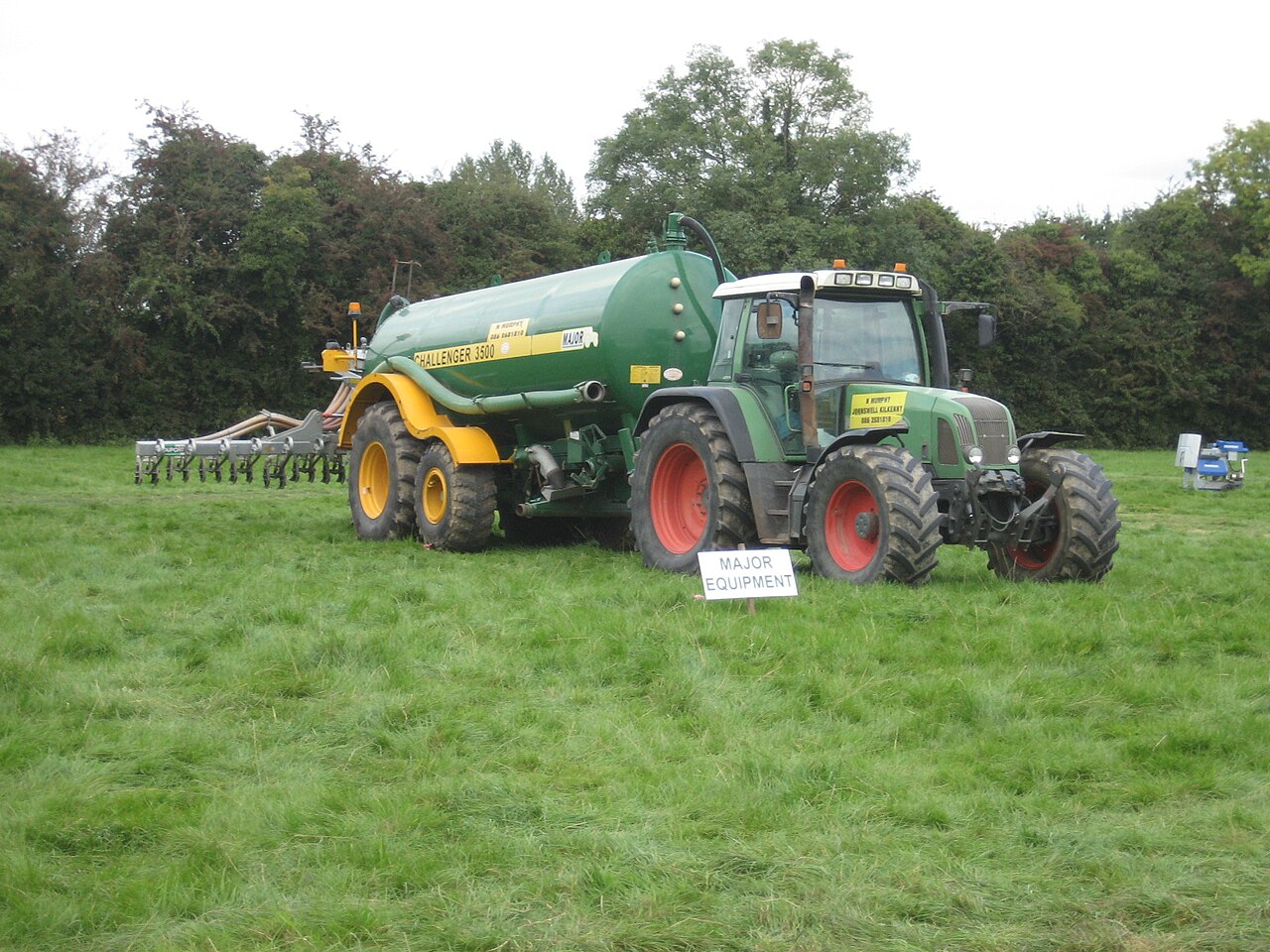
Ireland's agriculture minister Martin Heydon has said he will keep monitoring the situation on fertiliser and slurry spreading dates but has stopped short of extending them, telling the Dáil that "the science is clear that the earlier nutrients are applied to land, the better the response will be in terms of producing forage and the lower the risk of nutrient losses to water".
He was answering Sinn Féin TD Martin Kenny, who asked whether the department would review the cut-off and start dates, arguing that the weather of recent years "has not been compatible with the dates for spreading fertiliser and slurry". Farmers had until 15 September to spread chemical fertiliser and have until 1 October for slurry and 1 November for farmyard manure. The Irish Beef and Lamb Association has separately asked the minister to consult Teagasc and others on why a 30-day extension to all the imminent nitrates dates should not be agreed.
Heydon said the closed periods are set in the Nitrates Regulations made by housing minister James Browne, with whom he works on the Nitrates Action Programme, and acknowledged that this year's weather, especially the summer drought across much of the south and south-east, had been a significant challenge. His department has been engaging with Teagasc, farm organisations and industry through the National Fodder and Food Security Committee and the Agriculture Water Quality Working Group on grass growth and fodder.
Teagasc's Agricultural Catchments Programme, he said, has provided clear research that the closed period aligns with the period of highest nutrient-loss risk. Slurry and chemical fertiliser should be spread when nitrogen losses are low and crop uptake high, conditions that occur in spring rather than autumn, when shorter days limit growth, and not in winter however good the soil conditions. "I will continue to monitor the current situation in respect of closing dates," he said. Reporting by Joe Griffin.
Photo: desomurchu archive gallery / Wikimedia Commons (CC BY 2.0)
Source: Agriland



Comments
(0)