
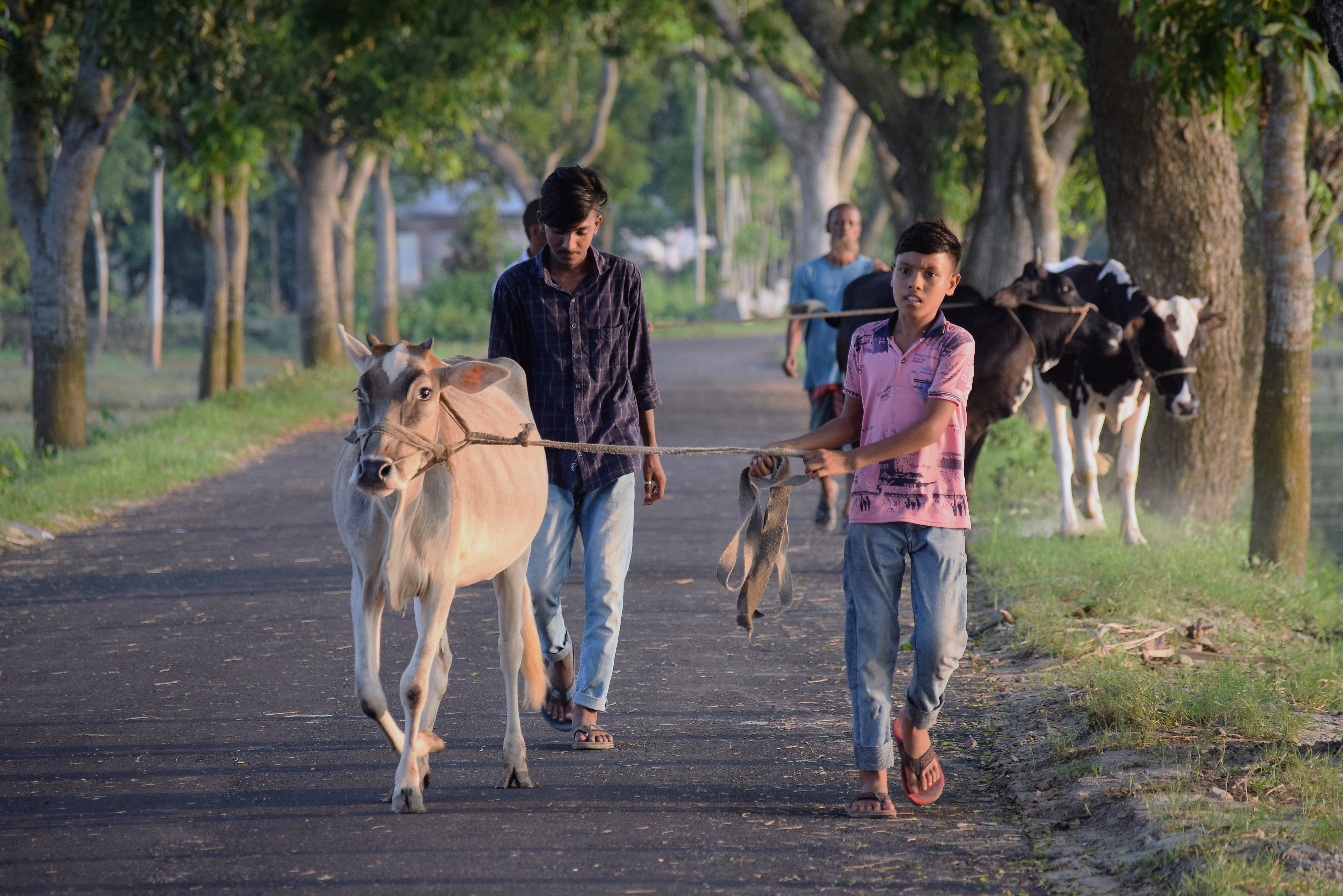
A few days before Eid-ul-Azha in June 2023, the qurbani cattle haats of Siddhirganj in Narayanganj were filling up, and one animal drew more attention than any other. At the haat on the sand ground of Dhakeshwari Ibrahim Textile, a black-and-white Australian cross bull that its owner, Kawsar Rahman, had named 'Hero Alom' was being offered at Tk 25 lakh. By the owner's account the bull weighed about 30 maunds, and buyers and onlookers came every day to see it, Jagonews24 reported in late June 2023.
The bull at the Ibrahim Textile sand ground
According to the Jagonews24 report, farmers were bringing sacrificial animals to the Dhakeshwari Ibrahim Textile Balur Math (sand ground) and to the other haats of the area. At the Ibrahim Textile ground the 30-maund bull caused a regular stir. People crowded round it every day for a glimpse, and some took photographs and videos and shared them on Facebook.
The details the report gave of the animal were these: it was an Australian cross, black and white in colour, about ten and a half feet long and six feet tall. Its daily diet included oil cake, bran and green grass. Its owner had raised it for four years and said it ate food worth Tk 1,200 to 1,500 a day.
Explaining the name, Kawsar Rahman said he had long been a fan of Hero Alom, and so he gave his favourite bull that name. The Agro News reports the name as the owner gave it and makes no comment on the person it refers to.
The owner said buyers had responded well from the start and he hoped to sell the animal at a good price. The highest offer so far, he said, had been Tk 13 lakh, and he would sell if he got a little more. The asking price of Tk 25 lakh and the Tk 13 lakh offer are both the owner's figures; no independent valuation of the animal was reported, and its weight of 30 maunds was the figure given at the haat, not a reading from a public weighbridge.
The same bull had already appeared in other papers that week. On 22 June 2023 Protidiner Bangladesh ran the headline "Siddhirganj's 'Hero Alom', price Tk 16 lakh", and on 23 June Sangbad Sarabela headlined "30-maund Hero Alom priced at Tk 16 lakh", while DesheBideshe reported on 23 June that crowds were gathering to see a bull named 'Hero Alom'. The headlines do not explain why the price quoted there differed from the Tk 25 lakh asking price that Jagonews24 reported.
The haat, its lessee and the district's preparations
The haat's lessee, the freedom fighter Shah Alam, told Jagonews24 that about 4,000 sacrificial animals had come to the haat from far and near. Because a lessee for the haat had been appointed late that year, he said, the number of animals there was somewhat lower than usual. He hoped every animal would be sold before the set time. To draw buyers, he said, sellers were giving their animals all kinds of attractive names.
Narayanganj's District Livestock Officer, Basona Akter, told the paper that about one lakh animals were likely to be sacrificed in the district that year and that more cattle than the demand were ready. Nine cattle haats had been permitted in the upazila that year, she said, and her office was keeping track of every one of them.
Before Eid-ul-Azha, temporary cattle haats are set up on open grounds such as the Ibrahim Textile sand ground and leased to a lessee (ijaradar), who runs the market and collects its revenue. Two weeks before the Siddhirganj report, on 14 June 2023, the government had told lessees that they could not forcibly collect money or revenue from people bringing animals to a market, UNB reported.
Siddhirganj and Narayanganj: an industrial belt on the Shitalakshya
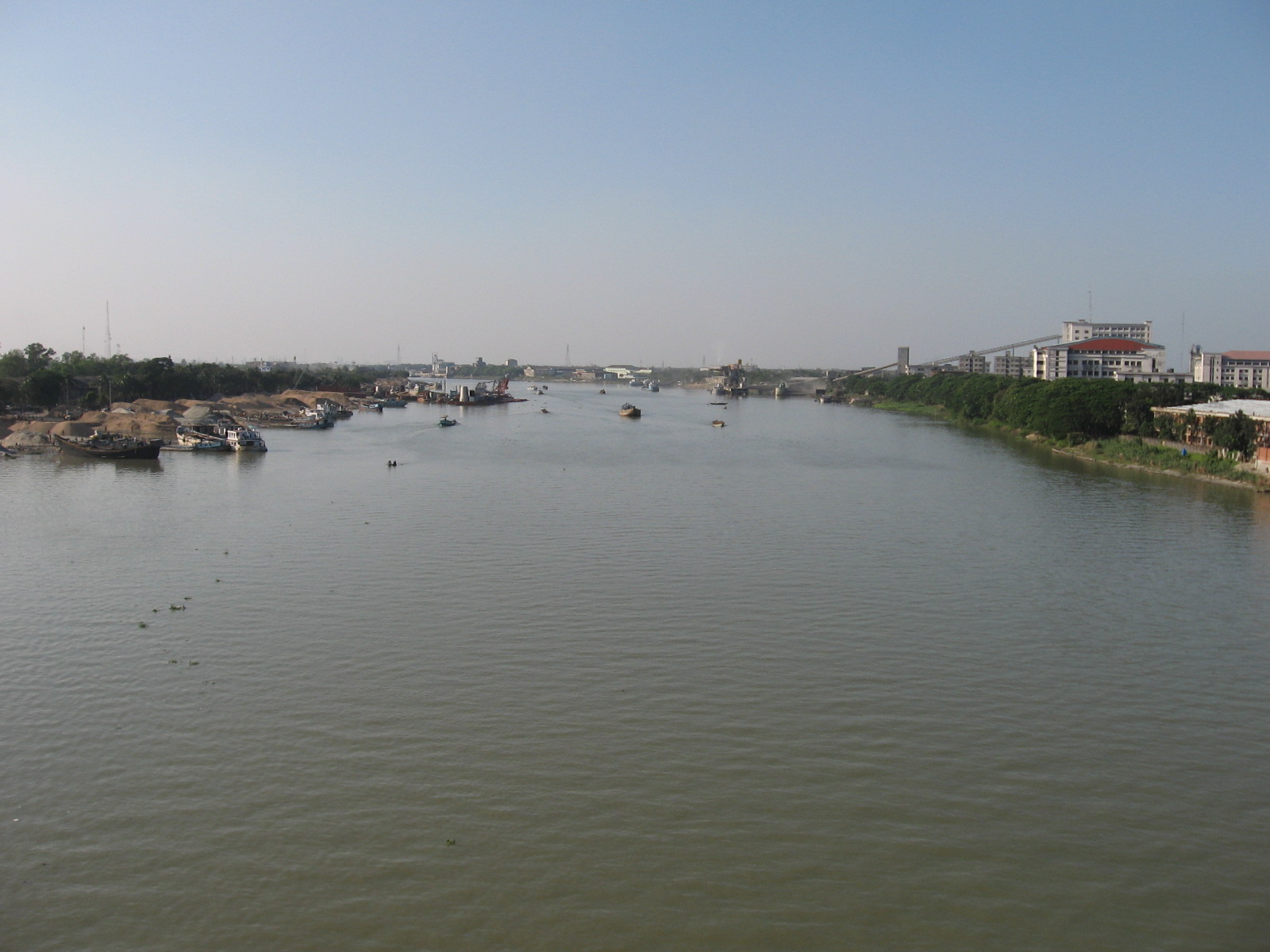
Siddhirganj, in Narayanganj Sadar upazila, stands on the bank of the Shitalakshya river beside Narayanganj town. In the 2011 census, as Banglapedia records it, Siddhirganj was a municipality of 22.71 square kilometres with 9 wards and 36 mahallas, a population of 256,760 and a literacy rate of 66.0 per cent. Narayanganj City Corporation was set up on 5 May 2011, and it was formed from Narayanganj town, the Siddhirganj municipal area and Kadam Rasul municipality.
Narayanganj district covers 684.37 square kilometres in Dhaka division and had 2,948,217 people in the 2011 census. Its main rivers are the Shitalakshya, the Meghna, the Old Brahmaputra, the Buriganga, the Balu and the Dhaleshwari. Narayanganj became a subdivision in 1882 and a district in 1984, and it has five upazilas, Araihazar being the largest and Bandar the smallest. Commerce (23.87 per cent) and service (23.13 per cent) were the main sources of household income in the census, ahead of agriculture (14.38 per cent).
The Shitalakshya, about 110 kilometres long and about 300 metres wide near Narayanganj, has long been an industrial river. Banglapedia notes that the muslin industry once flourished along it, that heavy industries including the Adamjee Jute Mills stand on its banks, that one of its thermal power stations is at Siddhirganj and that the river port of Narayanganj is on it. In Narayanganj Sadar upazila, Banglapedia counts 70 hats and bazars, among them the Fatullah cattle market and Siddhirganj Bazar, and lists textile, jute, paper and steel mills among its factories. The upazila also has a number of fisheries, dairies and poultry farms, and paddy, potato, jute, sugarcane, lentil and mustard are its main crops.
Bulls with famous names
Giving a large qurbani bull a striking name was a familiar way to draw a crowd well before 2023. A year earlier, on 28 June 2022, Dhaka Times reported on a Holstein Friesian bull in Fulbari Moddhopara, Bogura Sadar upazila, that its owner had also named 'Hero Alom'. That black-and-white animal was about four years old, 8 feet long and five and a half feet tall, and weighed 900 kg; its owner asked Tk 8 lakh for it and expected it to sell for more than Tk 7 lakh. He told the paper it was fed straw, fresh grass, oil cake, bran, rice bran, maize and rice, that no harmful tablets or injections had been used, that it was bathed twice a day and vaccinated regularly, and that he took a vet's advice.
In July 2021 Bangla Tribune had carried the headline "'Hero Alom' weighs 31 maunds" about another bull of that name. In the week of the Siddhirganj report, on 19 June 2023, Jagonews24 headlined bulls named Neymar and Messi, priced at Tk 10 lakh and Tk 12 lakh, and on 23 June RTV headlined a bull named 'Zayed Khan'. The Siddhirganj lessee's remark that sellers were giving their cattle attractive names to draw buyers describes the same practice.
What 30 maunds means
The weight of a large qurbani animal is still usually given in maunds (mon) at Bangladeshi haats. The maund is a traditional unit of the subcontinent. It was first standardised in the Bengal Presidency in 1833 at 100 troy pounds, about 82.28 pounds avoirdupois, divided into 40 seers. After independence India and Pakistan fixed it at exactly 37.3242 kg, while in everyday use throughout Bangladesh a mon is taken as 40 kg, according to the encyclopedic reference on the unit.
Live weight at a haat is generally the seller's estimate. The price of a qurbani animal is not set by a published rate per maund either; it is agreed between buyer and seller, which is why figures such as the Tk 25 lakh asking price are best read as the owner's starting point.
Australian cross and the crossbred cattle of Bangladesh
Two species of cattle are kept in Bangladesh, Banglapedia explains: Bos indicus, the humped zebu of the subcontinent, smaller and slower growing but resistant to some infectious diseases, and Bos taurus, the temperate cattle, which are medium to heavy, mature early and can produce much more meat and milk. Since the 1960s farmers have kept three kinds of cattle, pure breeds, crossbreeds and local animals. To raise the output of local cattle, exotic breeds have been brought in for crossbreeding several times; Banglapedia lists Holstein-Friesian, Jersey, Sahiwal, Haryana, Sindhi, Australian and Sahiwal-Friesian among them.
The improved local types of Bangladesh are Pabna cattle, Red Chittagong, Munshiganj cattle and North Bengal Grey. Local animals are heat tolerant and less prone to disease, Banglapedia notes, while pure breeds and crossbreeds have a higher nutritional requirement, adapt less well and are more susceptible to parasites and disease; crossbred cattle in Bangladesh often cannot reach their potential because of harsh conditions, a shortage of green fodder, unskilled management and a lack of health care.
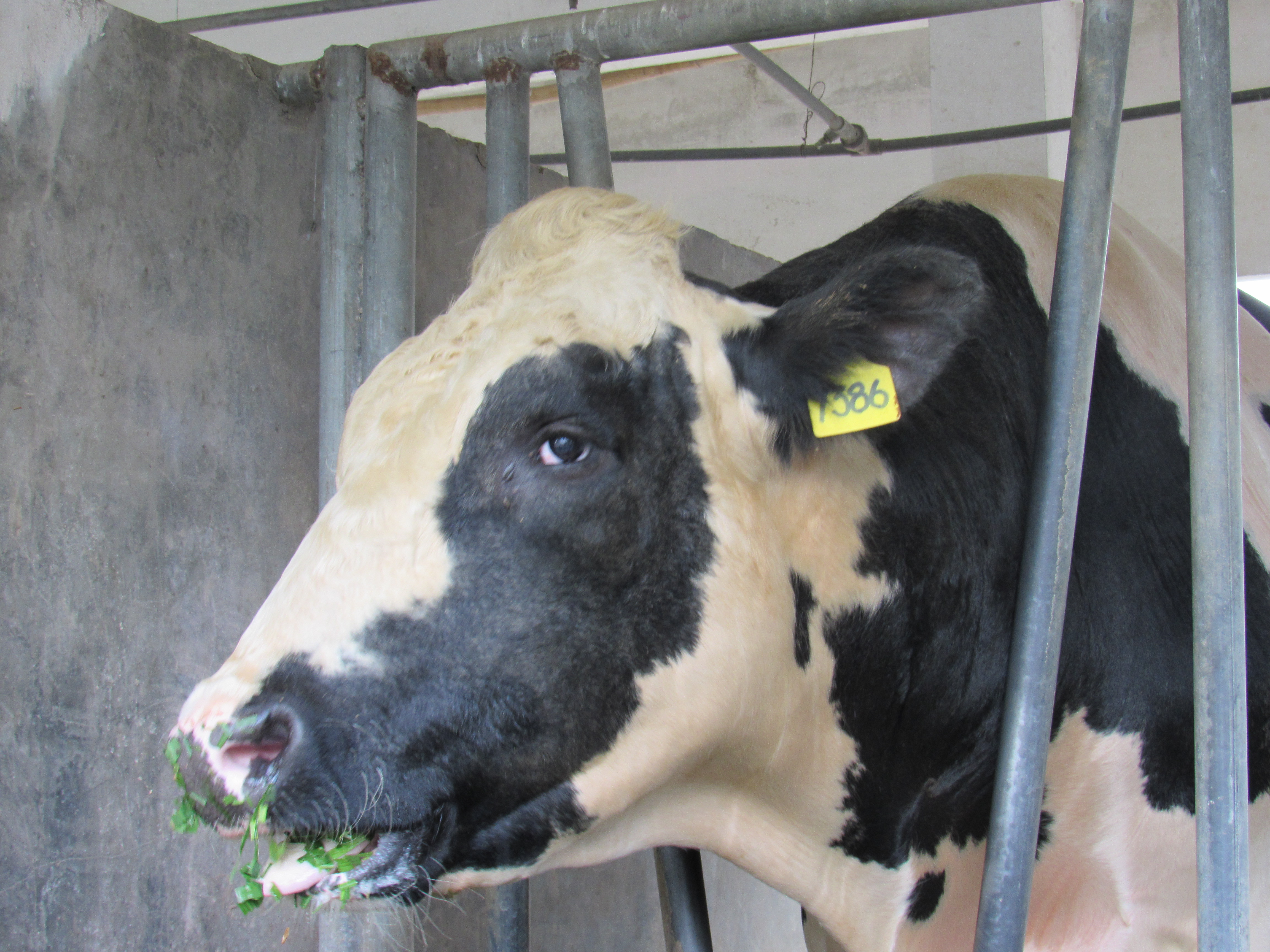
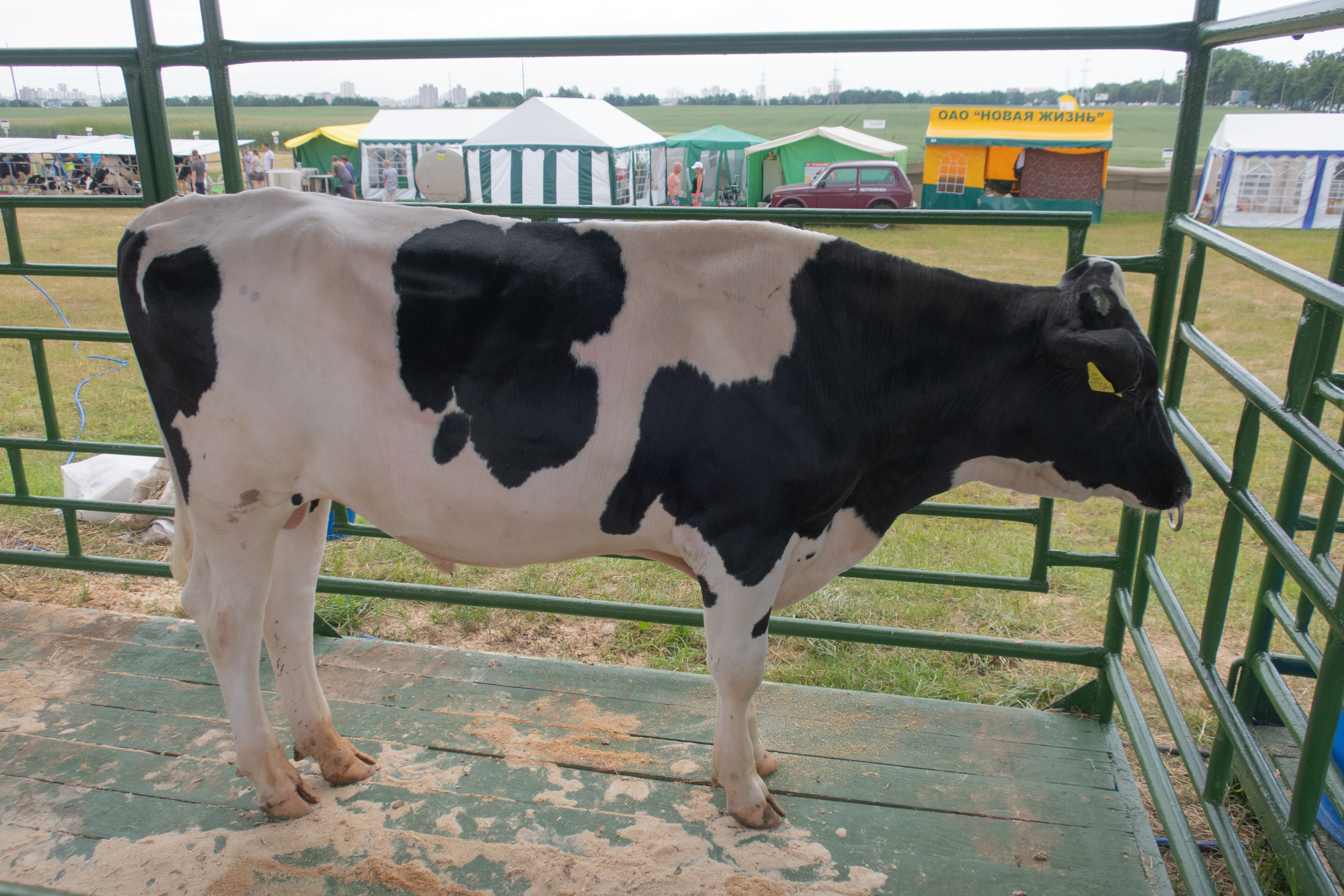
At the cattle haats, the large black-and-white crossbred animals are commonly sold as 'Australian' or 'Australian Friesian'. The Holstein Friesian, the black-and-white breed that originated in the Netherlands and Germany, is now mainly a dairy breed, though it was originally kept for both milk and beef; mature animals are given as weighing 680 to 770 kg and standing 145 to 165 cm tall. The Bogura bull of 2022 was described as a Holstein Friesian, and the Siddhirganj bull as an Australian cross.
Oil cake, bran and grass: fattening and the law on feed
The diet the Siddhirganj owner described, oil cake, bran and green grass, is the standard ration of Bangladeshi cattle farming. Banglapedia groups the country's cattle feeds into crop residues such as straw, agro-industrial by-products such as molasses and oil cakes, milling by-products such as brans, and green roughage from roadside and embankment grasses, tree leaves and cultivated fodders such as Napier and Para grass and maize. For fattening yearling bull calves farmers add green grass, wheat bran, rice bran, rice gruel and urea-molasses blocks or urea-molasses straw.
Banglapedia records that feeding yearling bull calves on conventional and non-conventional ingredients gives a daily weight gain of about 1.0 kg, and that local yearlings of about 98 kg grew about 450 grams a day on the urea-molasses straw method developed by the Bangladesh Livestock Research Institute (BLRI). It also notes that because of the seasonal demand at Eid-ul-Azha many farmers have taken up planned fattening of improved male calves, though feeding and management systems for beef fattening were not yet well established.
What may go into the feed is fixed by law. Section 14 of the Fish Feed and Animal Feed Act, 2010 (Act No. 2 of 2010, dated 28 January 2010) says that antibiotics, growth hormones, steroids, pesticides and other harmful chemicals may not be used in fish feed or animal feed, and that breaking this rule is an offence under the Act. Section 20 sets the punishment for an offence under the Act at up to one year's imprisonment, a fine of up to Tk 50,000, or both. Under section 15, the Director General or an officer empowered by him may inspect feed factories, stores, vehicles carrying feed and sales points.
Qurbani 2023: supply, demand and the government's instructions
Eid-ul-Azha was celebrated in Bangladesh on 29 June 2023, the national moon-sighting committee announced on 19 June, as The Daily Star, BSS and New Age reported that day. In Islamic jurisprudence the sacrifice may be made from the morning of the 10th of Dhu al-Hijjah until sunset on the 12th, the animal must be healthy and free of defects such as blindness, cattle may be shared by several people, and the meat is generally divided into thirds, for the household, for relatives and for the poor.
At an inter-ministerial meeting on 14 June 2023 the Minister of Fisheries and Livestock said 1,25,36,333 animals were available for sacrifice that year, 4,11,944 more than the year before, against an estimated demand of 1,03,94,739, leaving a surplus of 21,41,594, UNB reported. The ministry also announced these arrangements for the season:
- Veterinary teams would again be posted at cattle markets across the country, and no diseased or sick animal would be allowed for sale.
- Farmers could call the 999 helpline for help in taking animals to the market of their choice, and to stop animals being forced off at haats along the road; local law enforcement would act on such calls.
- No revenue would be collected from a farmer who sold animals from the farm or from home.
- Haat lessees could not forcibly collect money or revenue from people taking animals to a market.
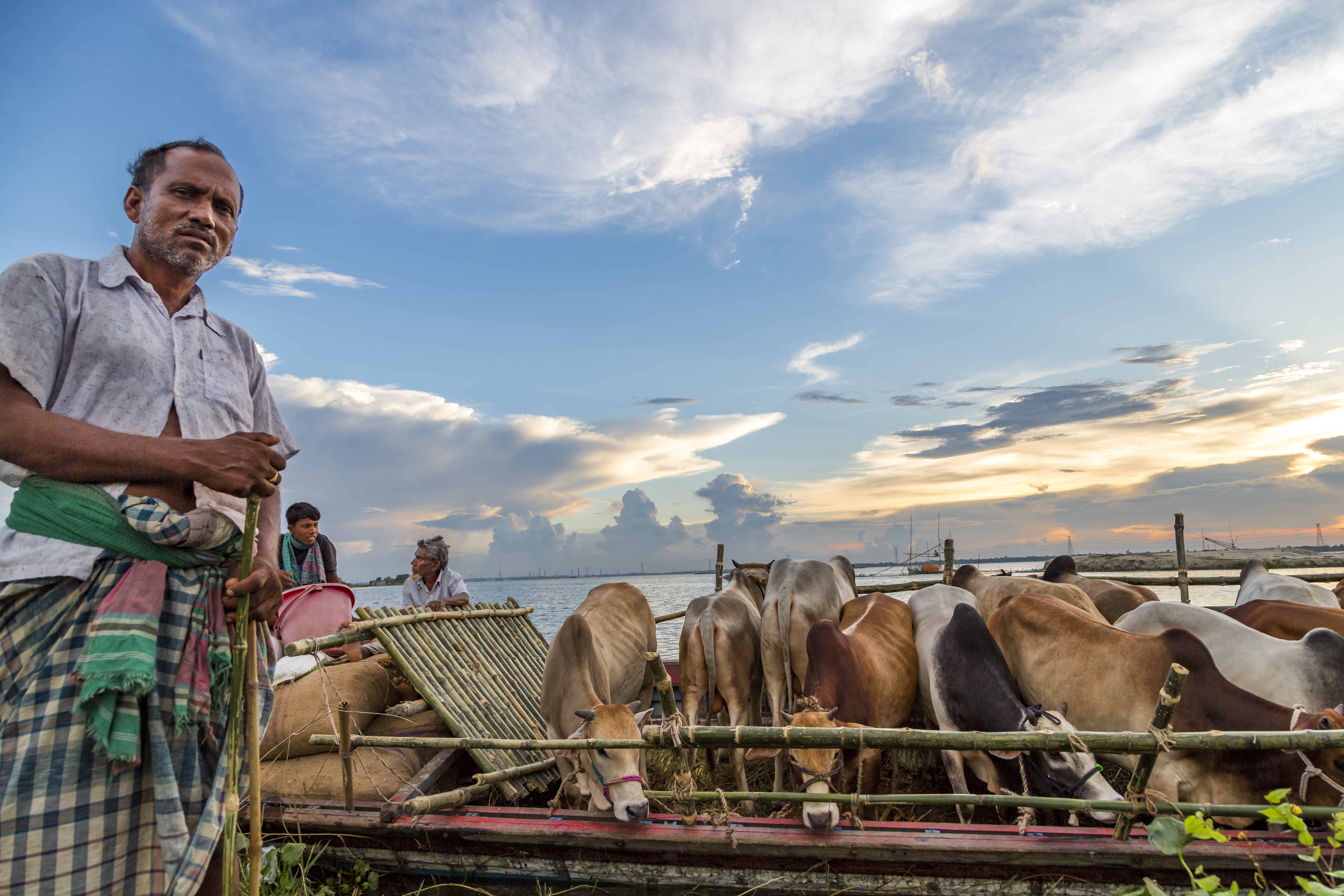
The experience of the previous Eid explains why owners of very large bulls watched the market closely. In July 2022 The Business Standard reported from Dhaka and Chattogram that cattle priced Tk 60,000 to Tk 1 lakh were selling fast and that buyers were paying Tk 15,000 to 20,000 more than a year earlier for small animals, while sellers of big animals struggled: a 23-maund Australian Friesian brought from Mymensingh to the Polytechnic Institute ground went unsold for three days, and at Gabtoli a seller asking Tk 12 lakh for a 40-maund Australian Friesian had received offers of up to Tk 7 lakh.
Bangladesh's livestock sector before Eid 2023
The country's herd was large enough by then to meet Eid demand from home. In January 2023, citing DLS figures for fiscal year 2021-22, the Emerging Credit Rating research note on the livestock and dairy industry counted 247 lakh cattle, 15.08 lakh buffalo, 37.52 lakh sheep and 267.74 lakh goats in Bangladesh. It attributed the growth of the herd mainly to rising domestic demand for meat and milk and to India's ban on cattle exports to Bangladesh, which, it said, drew many farmers and traders into cattle rearing.
The same note gave DLS figures for 2021-22: meat production of 92.65 lakh tonnes against a demand of 75.20 lakh tonnes, so that meat met the whole of local demand, and milk production of 130.74 lakh tonnes against a demand of 156.68 lakh tonnes. Livestock contributed 1.90 per cent of GDP (Tk 67,189 crore) and 16.52 per cent of agricultural GDP that year, and, citing Banglapedia, around 20 per cent of the population was directly involved in livestock and poultry farming.
Photo: Frameofashik / Wikimedia Commons (CC BY-SA 4.0)
Sources: Jagonews24, Protidiner Bangladesh, Sangbad Sarabela, DesheBideshe, United News of Bangladesh (UNB), The Daily Star, Bangladesh Sangbad Sangstha (BSS), New Age, The Business Standard, Dhaka Times, Bangla Tribune, RTV, Banglapedia, Emerging Credit Rating Ltd (citing the Department of Livestock Services), Laws of Bangladesh (Fish Feed and Animal Feed Act, 2010), Wikipedia (maund, Holstein Friesian, Qurban, Narayanganj City Corporation)
Comments
(0)