
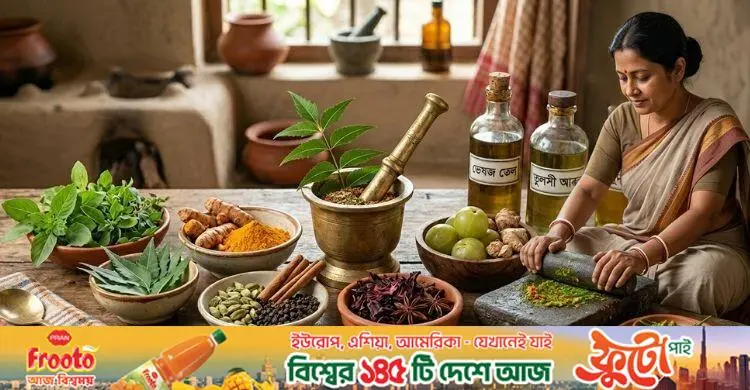
The sound of a mother grinding spices on the shil-pata (grinding stone) in a corner of the kitchen was once a familiar part of Bengali life. The house would fill with the smell of ginger, garlic, turmeric, cumin and coriander. Perhaps no one then imagined that these everyday cooking ingredients would one day interest scientists in modern laboratories. Yet over time, human knowledge, research and use of herbs and spices have taken on many dimensions. Today, around the world, herbs and spices are not just flavourings but an important part of health, the economy, culture and scientific research.
The use of herbs and spices goes back thousands of years. In ancient Egypt, India, China and the Arab world, plants and spices were used for food, perfume and medicine. In South Asia's Ayurvedic tradition, ingredients such as turmeric, tulsi (holy basil), ginger, cinnamon and black cumin have been used for centuries. Through folk knowledge and experience, people have learned about their benefits generation after generation.
In rural Bengal too, herbs were part of daily life. Ginger and tulsi leaf juice for colds and coughs, cumin for stomach trouble, cloves for a sore throat and turmeric on wounds were common in every home. Before modern medicine spread, these were people's first resort, and many families still keep the tradition alive.
Spices and world history
The history of spices is just as fascinating. Black pepper, cinnamon, cloves and nutmeg were once extremely valuable goods, and European sailors made long sea voyages in search of them. According to historians, the spice trade also played an important role in the world economy and the expansion of colonialism. A small kitchen ingredient, in other words, once influenced the course of international trade and political history.
Today the field of research on herbs and spices has widened further. Universities and research institutions around the world are studying curcumin in turmeric, allicin in garlic, the active compounds in cinnamon and gingerol in ginger. Scientists are working on their possible health effects, their nutritional value and their uses in various fields. Although no herb or spice should be taken as an alternative treatment for disease without a doctor's advice, scientific analysis of these ingredients is opening up new possibilities.
As health awareness has spread, herbs and spices have grown more popular. Many people are now turning to natural ingredients in their diets, and interest in natural flavours and properties in place of chemical additives is rising. As a result, the market for herbal teas, spice-based drinks, natural foods and herbal products is expanding.
An opportunity for Bangladesh
Herbs and spices are also an important economic opportunity for Bangladesh. The country produces turmeric, chilli, coriander, ginger, garlic and many other spices, and there is potential for cultivating and processing medicinal plants too. With proper planning, research and market management, the sector can create new opportunities for farmers and entrepreneurs.
But awareness is also needed in using herbs and spices. Adulterated spices, unsafe processing and a lack of quality control in the market often put consumers at risk. Safe production, proper storage and quality marketing must therefore be given priority, and folk knowledge must be combined with modern scientific research.
The story of herbs and spices is essentially a human story, a story of culture, tradition, food habits and the evolution of knowledge. The aroma of spices ground by a mother's hand on the shil-pata that once filled the house is now being evaluated anew in laboratory test tubes. Times have changed and technology has advanced, but people's trust in nature remains unshaken.
Herbs and spices remind us of that long journey. From familiar kitchen ingredients to the investigations of modern science, their path stands as a unique testament to human knowledge, experience and innovation.
The writer, Bibi Shahijan, is a former teacher from Oxygen, Chattogram.
Source: Jagonews24. First published in Bengali on The Agro News.
Comments
(0)