
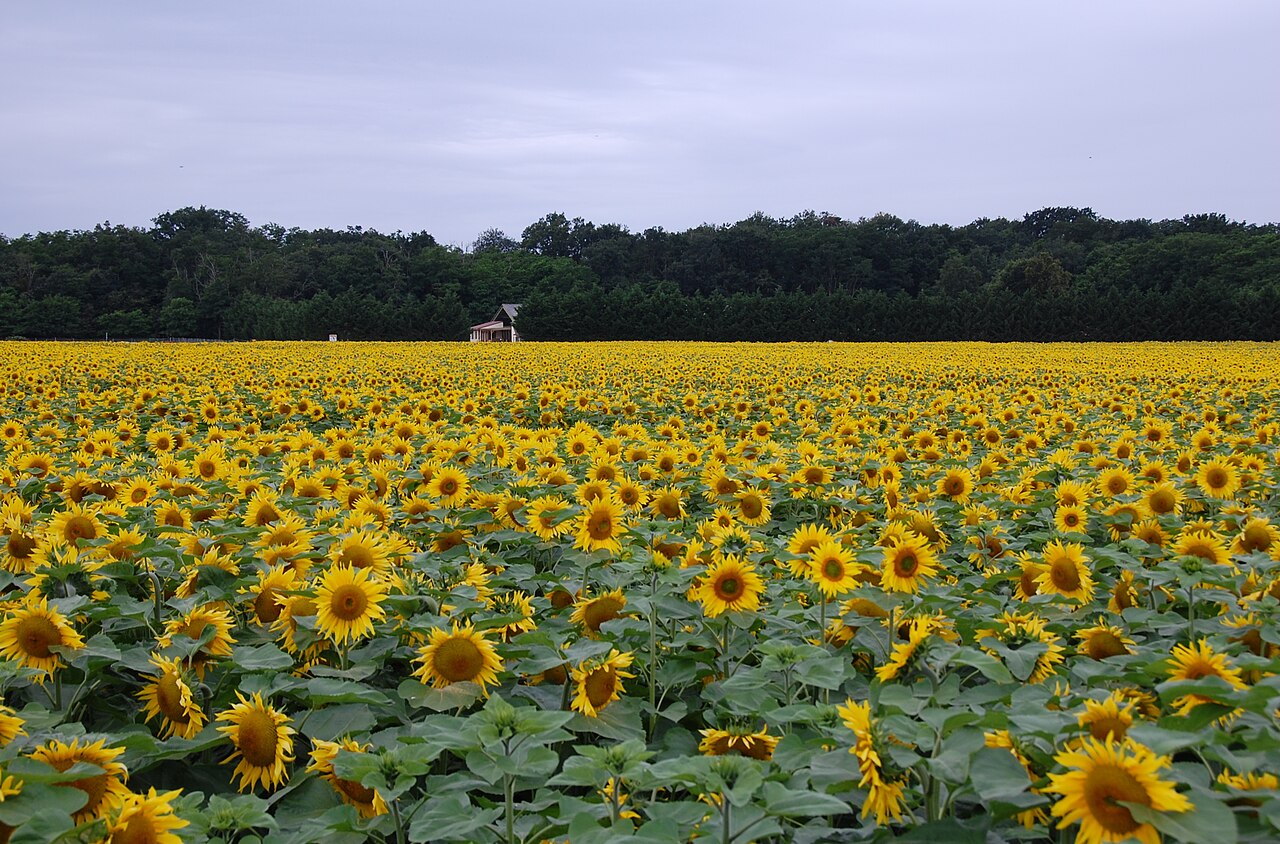
An EU-funded research project called HelEx is sowing its last field trials of drought- and heat-tolerant sunflowers in France, Germany, Hungary, Romania and Serbia, with a year of work left, AgroPages reports.
Around 75 percent of the world's sunflowers are now grown in continental Europe, but rising temperatures and water scarcity are cutting yields. "If we don't do anything, then sunflower yields will decrease and might no longer be viable in places like Greece and Bulgaria," said project coordinator Nicolas Langlade of France's National Research Institute for Agriculture, Food and Environment (INRAE).
The project brings together 17 partners, including researchers, plant breeders, biotech firms and farmers, and combines classical breeding with gene editing. Building on earlier work that identified the genomic regions behind drought tolerance, the team screened wild sunflower populations from arid regions of the United States and crossed the most tolerant with commercial European varieties. The seed companies Limagrain, RAGT, Lidea (through Innolea), MAS Seeds and Syngenta hope eventually to sell these "climate-smart" hybrids across Europe.
The researchers also identified genes that control the flowers' ultraviolet colour and nectar sugar, to make sunflowers more attractive to pollinators, and found that bees respond to differences in the microbes in nectar. Langlade said the resulting variety produces six times more nectar and pollen than conventional ones and flowers in summer, when many hives go hungry. It is going through registration and he expects it on the market in 2028.
Sunflower seeds contain about 43 percent oil and 17 percent protein, and the project is also looking for genes that raise protein content, to meet demand for plant protein and reduce Europe's reliance on imported soybeans and seed oils.
Photo: BenAveling / Wikimedia Commons (CC BY-SA 3.0)
Source: AgroPages

Comments
(0)