
By Jenis Farzana Tania
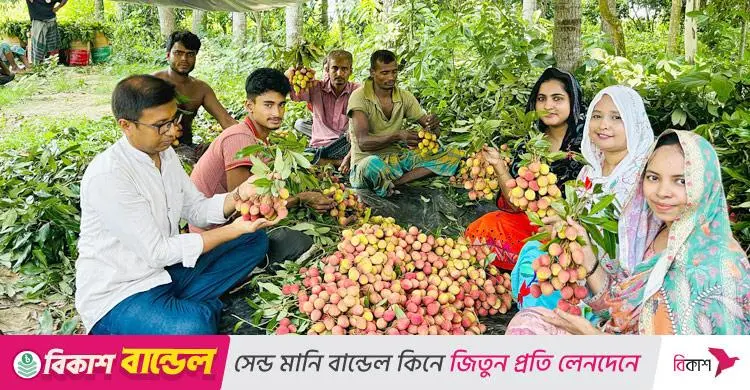
The lychee of Hazrapur in Magura is not just a seasonal fruit. It is a promising tool for boosting the area's farm-based economy, and its recognition as a geographical indication (GI) product has multiplied its commercial importance. Hazrapur's lychee has long been known locally for its juiciness, taste and quality, but GI recognition has now given it a distinct identity in national and international markets. The recognition essentially establishes that lychee grown through the combination of Hazrapur's landscape, weather and local farming practice is distinct from, and superior to, lychee from any other region. This has created a huge opportunity to build a complete commercial chain around the fruit.
Branding and fair prices
One of the biggest advantages of GI recognition is that it raises a product's standing and price, establishing it as a reliable brand in the market. The prospects are even brighter for Hazrapur's lychee because demand for lychee is huge in Bangladesh and across the subcontinent. If it can be identified separately as a GI product, it will build trust and appeal among consumers.
If Hazrapur's lychee can reach Dhaka's supershops, farm produce markets and five-star hotels, it can be sold at higher prices. That would ensure fair prices for farmers and allow a sustainable sales system to be built with middlemen brought under control. Not only producers would benefit: jobs and income would be created for many people in local transport, packaging, cold storage and the supply chain.
Export and processing
Hazrapur's lychee also holds promise for export. At present Bangladesh exports lychee on a limited scale each year to the Middle East, Europe and North America, for Bangladeshis living abroad. A GI tag would greatly increase the fruit's acceptance in international markets, as foreign importers are more interested in GI products because they assure quality, origin and food safety.
If Hazrapur's lychee can be prepared through internationally certified production and packaging processes, it can be exported to various countries at a higher profit. There is also room for public and private investment, in particular to build an agro-food industry making processed products such as frozen lychee, lychee jam and jelly, or drinks.
A coordinated plan
Realising this potential needs a coordinated action plan. First, the farmers concerned must be registered, trained and brought under quality control. A policy on the use of the GI logo should be drawn up so that only registered producers may use it.
Second, better packaging and logistics are essential, so that the fruit stays fresh longer and losses fall. Third, marketing should make use of digital platforms, e-commerce and social media, so that Bengalis living abroad can order online. Fairs or a "lychee festival" could be held locally to increase tourism and sales.
Most important of all, the district administration, the Department of Agricultural Extension, the Ministry of Industries, private entrepreneurs and the media must work together. An experienced consultancy could be appointed to carry out market research, branding and export policy.
A GI certificate is not just an honour; it is a responsibility which, used properly, can transform a district's economy. The commercial potential of Hazrapur's lychee is not a fantasy but a real prospect, and putting it into effect could establish Magura as one of the country's leading agricultural brands.
The writer is the proprietor of Alia's Collection.
Source: Jagonews24. First published in Bengali on The Agro News.
Comments
(0)