
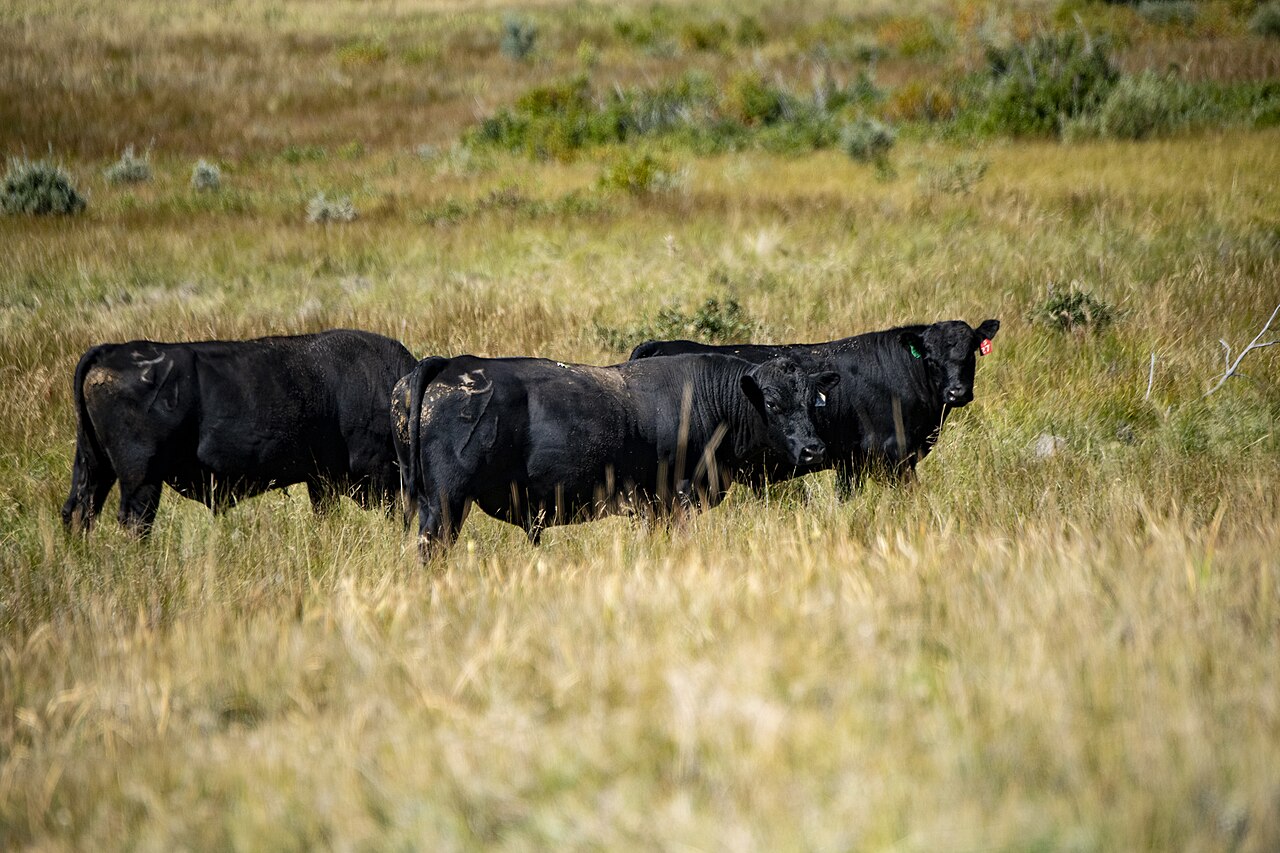
A logistics platform built by a rancher to follow the costs of getting beef from the pasture to the store is one example of how artificial intelligence is moving into everyday farm management, Farm Progress reported, alongside the view of an Agco forecasting director that farm AI only works when it starts with a farmer's actual problem.
Carrie Richards, a fourth-generation rancher and the first woman to run her family's farm, co-founded HarvestPath with her brother Tom after they struggled to track spending while scaling up Richards Regenerative Meat Company, which sells meat directly to consumers and wholesale to restaurants and supermarkets, including the Sprouts Farmers Market chain. The platform, built on Salesforce's digital infrastructure, has been live for about a year.
The problem it addresses is the middle of the meat supply chain. Setting a price means accounting for the animal's purchase price, labour, fuel, processing fees, yield loss from animal to carcass, bone buyback and waste disposal, and then transport, labelling, packaging, storage, shipping and online marketplace fees, all of which move with cattle and fuel prices. "Overnight, gas prices could change, and my hauling costs could go from $3,000 to $4,000 real quick," Richards said, adding that companies that do not own the whole chain, unlike JBS, Tyson or Cargill, find it very hard to track.
Richards said a version for row-crop farmers, still under development, would track input prices, equipment use and maintenance to calculate per-acre profitability from yield, and that dairy and specialty-crop growers could track their own production costs. The company is adding generative AI features to help price products as expenses change.
Adrian Crawford, a Minnesota row-crop farmer and senior director of global forecasting at Agco, said that over five years working on data, analytics and AI at the company she oversaw the integration of an AI voice assistant into tractors and helped develop a tool that gets the right equipment to where it is needed. "You don't have to be a data scientist to interact with AI," she said, noting that her 79-year-old father-in-law uses AI-embedded equipment that makes farming easier for him.
Crawford described machine learning as finding patterns, outliers and predictions in data, and generative AI as producing text, images and other content from inputs; a talking tractor turns a farmer's spoken question into a prompt for a large language model that queries only the information it is allowed to use. Her test for any application is the farmer's day-to-day need. "AI without a use case in mind is a hypothetical exercise," she said, pointing to agronomic optimisation, doing more with less on a fixed area of land, as the biggest opportunity.
The report was written by Andy Castillo of Farm Progress.
Photo: USDAgov / Wikimedia Commons (Public domain)
Source: Farm Progress


Comments
(0)