
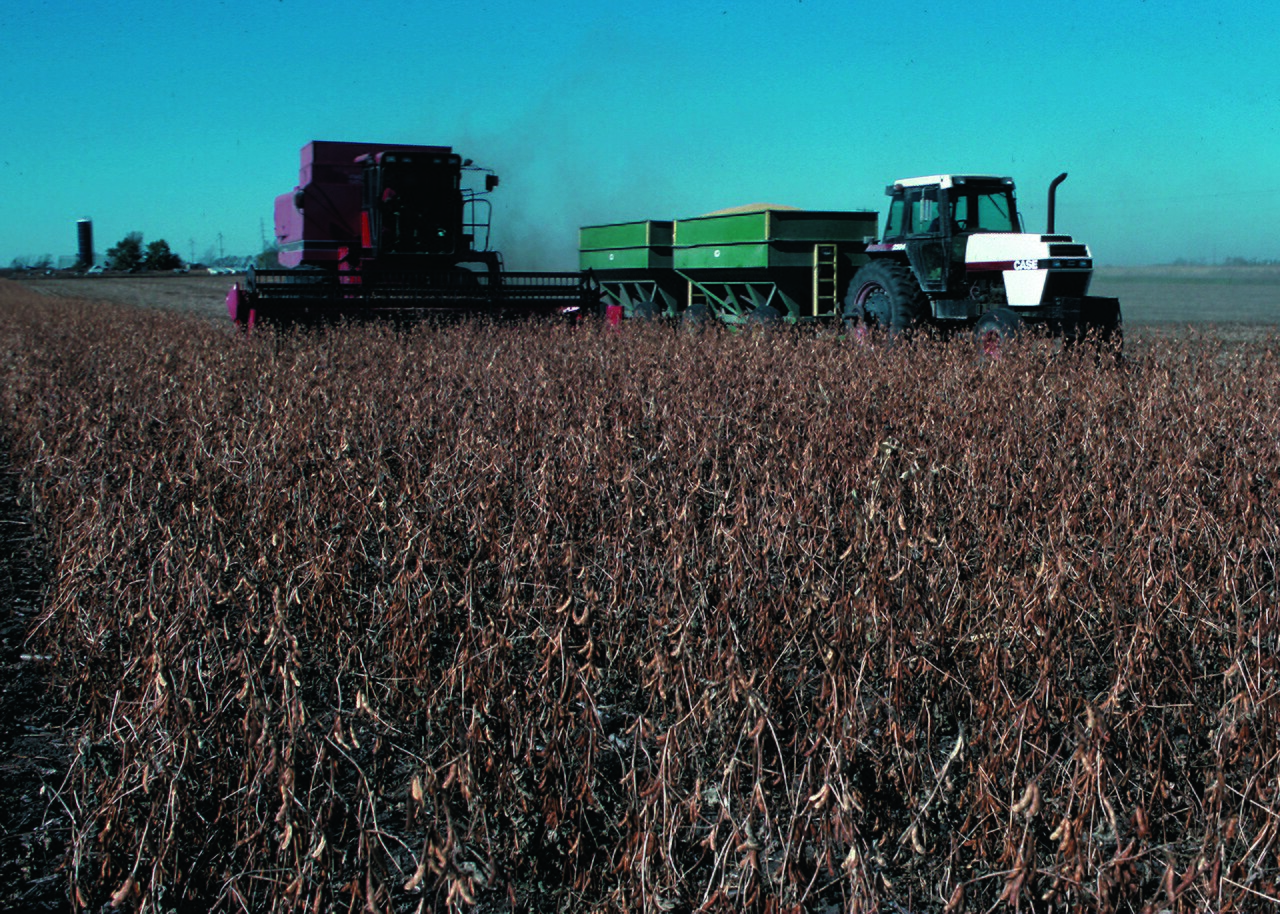
Harvest prices for corn, soybeans, cotton and wheat in the United States all finished above their spring crop insurance prices in 2026, raising the revenue guarantees of farmers who hold Revenue Protection policies with the harvest price option. An analysis by the American Farm Bureau Federation says it is only the second time since 2011 that all four crops did so, and warns that the higher guarantees do not remove the pressure of prices that remain below the cost of growing them.
Under standard Revenue Protection (RP), the guarantee is set on the higher of the projected spring price or the harvest price. Corn's harvest price rose 2.8% above its spring price, its first increase since 2022. Soybeans rose 13.9%, the first rise since 2021, wheat 11.8% and cotton 15.9%. Farmers who chose RP with the Harvest Price Exclusion pay lower premiums and do not get this upward adjustment.
According to USDA's Risk Management Agency, about 88.8 million acres of corn, 80.4 million acres of soybeans, 10.1 million acres of cotton and 33.6 million acres of wheat were insured in 2026, and RP policies covered about 95% of that area. Farmers had paid about $5.8 billion in premiums across all insured commodities as of 2 November.
Higher harvest prices have been the exception. From 2011 through 2026, corn's harvest price beat its spring price in six of 16 years, soybeans in five, cotton in six and the wheat series in four. Only 2021 and 2026 saw all four rise.
The analysis, by Farm Bureau deputy chief economist Faith Parum, then sets the guarantees against costs. Total production costs are projected at $935.79 per planted acre for corn and $683.89 for soybeans in 2026, rising to $952.09 and $701.48 in 2027. Using USDA's October yield projections, total-cost break-even prices come to about $5.65 a bushel for corn, $13.03 for soybeans, $11.62 for wheat and $1.58 a pound for cotton. All four are above USDA's October WASDE price forecasts of $4.70, $12.00, $6.30 and 77 cents.
Operating-cost break-evens are lower, at $2.86 for corn, $4.90 for soybeans and $4.68 for wheat, so expected prices would cover out-of-pocket spending but not land, machinery and other fixed costs. Cotton is the exception: its operating break-even of 95 cents a pound is above the projected price, so growers fall short even on variable costs.
Insurance harvest prices are not the marketing-year prices farmers actually receive, the analysis notes. Higher guarantees protect against losses but do not make market revenue cover costs, and with costs expected to rise again in 2027, Farm Bureau argues for keeping crop insurance affordable and flexible.
Photo: Lynn Betts, USDA NRCS / Wikimedia Commons (Public domain)
Source: American Farm Bureau Federation



Comments
(0)