
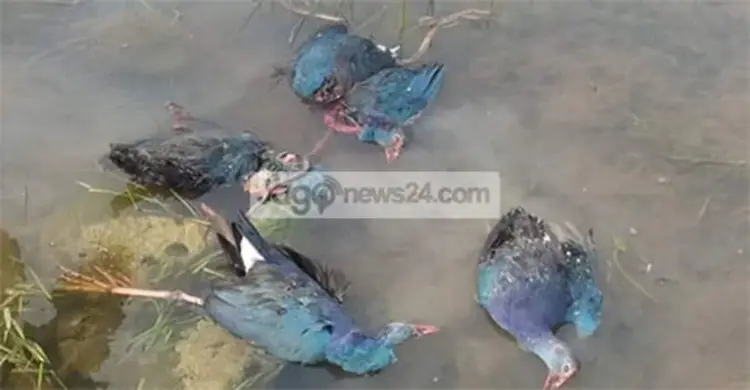
Hakaluki, South Asia's largest haor, is made up of 238 beels and 10 rivers across five upazilas of Moulvibazar and Sylhet districts. As winter begins, flocks of migratory birds of hundreds of species arrive from colder countries, from distant Siberia and from Ladakh in the Himalayan foothills. These colourful foreign birds are one of the main attractions for the hundreds of tourists who visit the haor. But bird numbers at Hakaluki have fallen significantly of late.
The migratory birds take shelter in Hakaluki's Chakia, Kangli, Gobarkuri, Gourkuri, Jalla, Haorkhal, Pingla, Kalapani, Malam, Baiyagjua, Naguyalribai, Futbil and Koiyakona beels. The haor was once a safe haven for them, but in recent years it has become unsafe.
Local people say many rare fish have returned to the haor and fish production has risen. But because of the destruction of the swamp forest and hunting with poison bait, migratory birds no longer come as before. Where 50 to 60 species once came, this year at most about 30 have arrived. If this continues, the haor will one day be empty of birds.
They believe that unless buffalo grazing in the swamp forest and hunting birds with poison bait are stopped immediately, the haor's biodiversity will face an extreme threat.
Source: Jagonews24. First published in Bengali on The Agro News.
Comments
(0)