
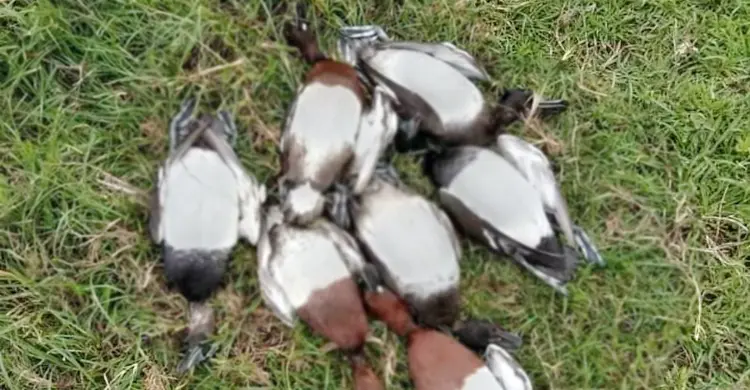
Bird hunting is going on freely in Hakaluki haor, with poachers using poison bait and traps because of a lack of oversight by the authorities concerned. Asia's largest haor lies across six upazilas of Sylhet and Moulvibazar districts.
Migratory birds come here in winter from colder countries in search of a little warmth. As temperatures rise, they start to leave, moving about in all directions. Unscrupulous hunters take this chance for one last round of hunting.
Local environmentalists and bird lovers have strongly demanded effective action to stop the hunting.
Birds of the haor
Every year birds of many species come to Hakaluki haor from cold countries around the world, including balihash, bhutihash, lenjahash, sarali and kalim. Besides migratory birds, many native species also live in the haor.
People living on the edge of the haor say fewer guest birds come each year because unscrupulous hunters kill them with poison bait and traps. Hunters become active especially as soon as the migratory birds arrive in winter.
Poison bait kills ducks too
Environmental activist Khorshed Alam told Jagonews that hunters are most active in Nagua Haorkhal, Maichhla, Gajua, Pingla and Baiyabil. Hunters are killing birds day and night with traps, guns and nets, and with poison bait. Many farmers' ducks are also dying after eating the poison bait. The authorities need to increase surveillance, he said.
Md Shamim Mia, a farmer beside Nagua beel, told Jagonews: "Temperatures are rising. Hunting goes on freely even as the birds are going back. I stand guard myself to stop the hunting, but the hunters still kill birds with various traps. Our domestic ducks often die from the poison bait the hunters lay. When we try to stop them, they threaten us."
Environmental activist Iqbal told Jagonews that birds were being hunted freely. Public awareness must be raised to protect them. The forest department is short of staff to stop the hunting, and that shortage must be solved immediately and the necessary steps taken to prevent hunting, he said.
Officials cite staff shortage
Admitting that birds were being hunted, Md Alauddin, Juri range officer of the Wildlife and Nature Conservation Division, said the staff shortage often makes it hard to catch hunters. "But we are active on this matter," he said.
Rezaul Karim Chowdhury, divisional head of the Wildlife and Nature Conservation Division in Sylhet, said the main obstacle to stopping bird hunting was the staff shortage. They sometimes get reports of birds being shot with guns. They are running public awareness activities, and after this, legal action will be taken against anyone who hunts birds, he said.
Source: Jagonews24. First published in Bengali on The Agro News.

Comments
(0)