
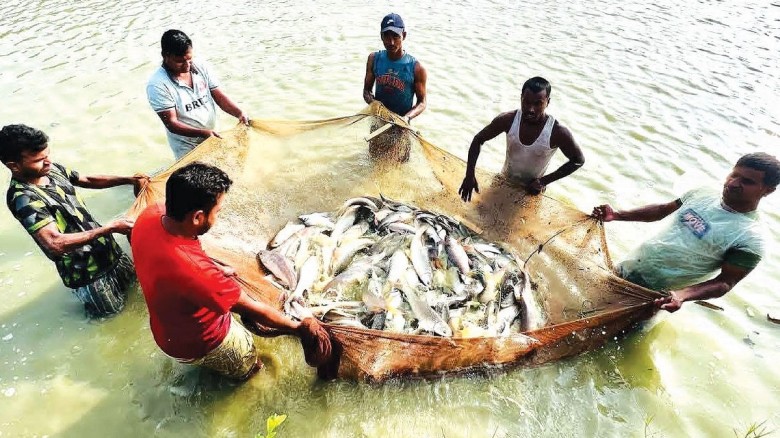
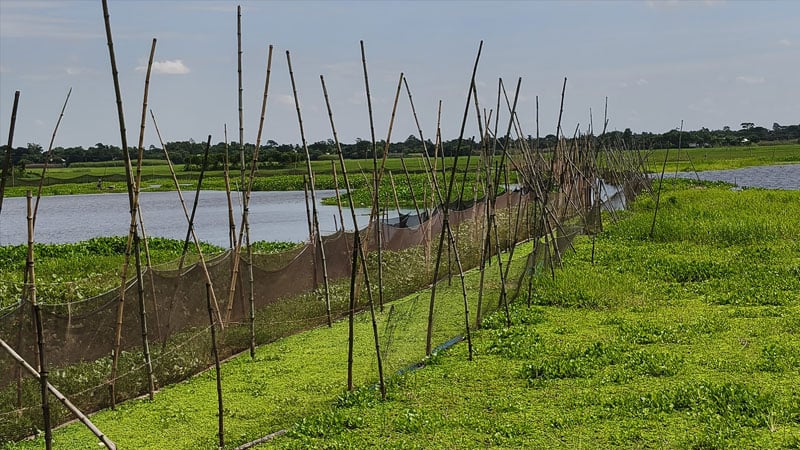
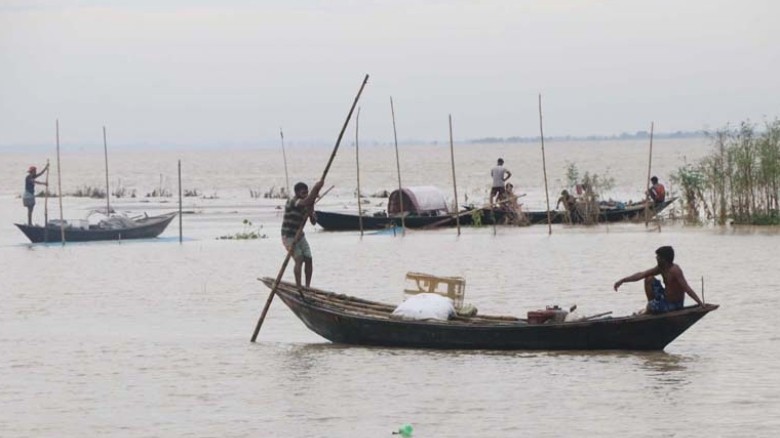
Farmers in Shibpasha haor in Ajmiriganj upazila, Habiganj, are growing rice, fish and a range of fruit and vegetables on the same land and earning through the year. Ponds dug one after another among wide paddy fields, with rows of mango, banana and papaya trees on their banks, are no longer an exception there.
According to the local fishermen's cooperative society, the union has 55 such farms. Together they produce about 2,500 tonnes of fish a year; at an average of Tk 320 a kilogram, that is worth about Tk 80 crore. Land that once yielded little is now a major source of income.
Khaled Chowdhury dug five ponds in Shibpasha haor in 2014, hoping to raise output. It took him about two years to see a profit. He has expanded steadily since, and now has 14 ponds on 140 bighas.
His ponds produce about 94 tonnes of fish a year, sold for about Tk 3 crore against production costs of about Tk 2 crore. The trees on the pond banks bring in another Tk 10 lakh or so a year. Fifteen workers are employed on the farm, and its fish go to Dhaka and other districts.
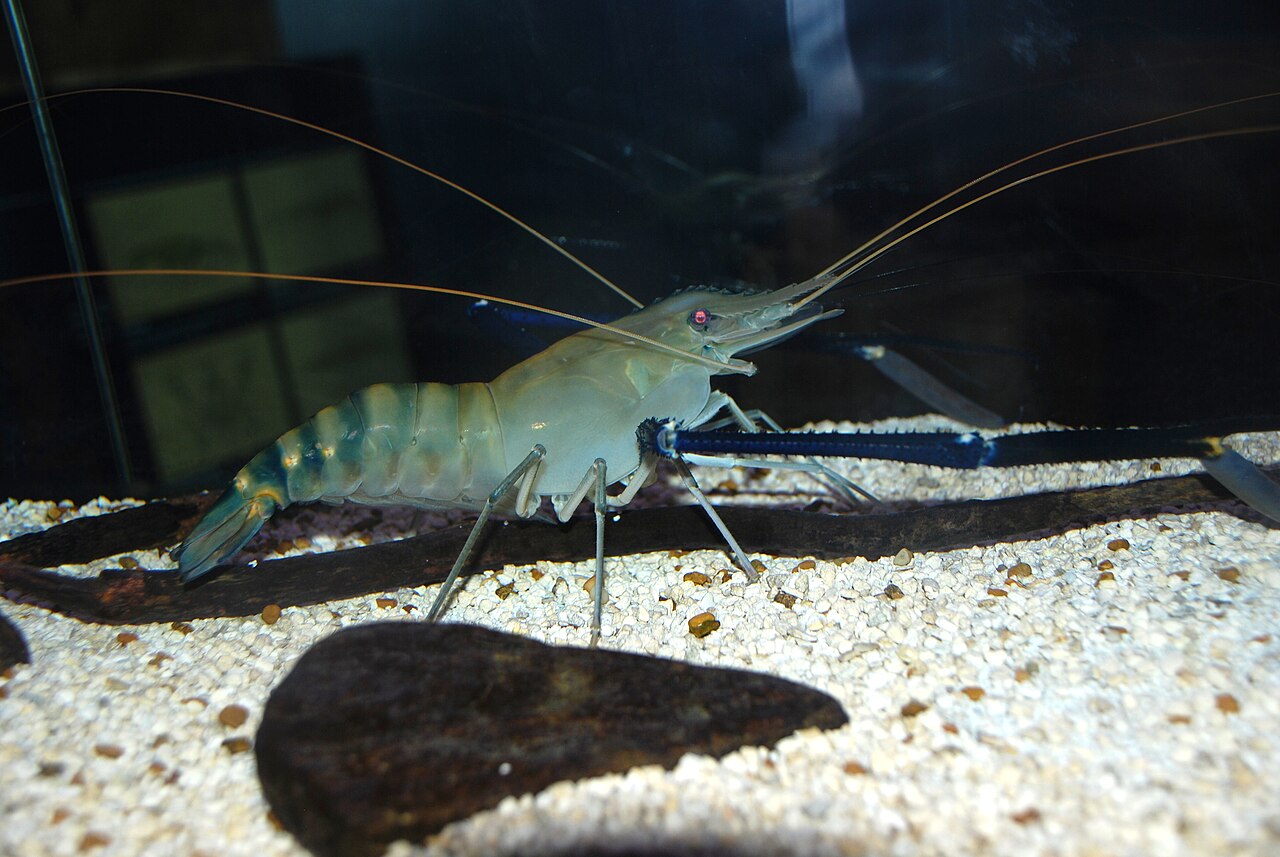
The growth shows in the district figures too. Habiganj produced 62,600 tonnes of fish last fiscal year, up from 58,500, 55,300 and 52,200 tonnes in the three years before. Tilapia, rui, catla, mrigal, kalibaus, silver carp and grass carp are among the species farmed in the district.
Shibpasha has become an example of how integrated farming - ponds, fish and fruit and vegetables on the banks - can reduce low-lying haor land's dependence on a single crop and raise farm incomes.
Reported by Krishi Shomoy's Habiganj correspondent.
Source: Krishi Shomoy
Comments
(0)