
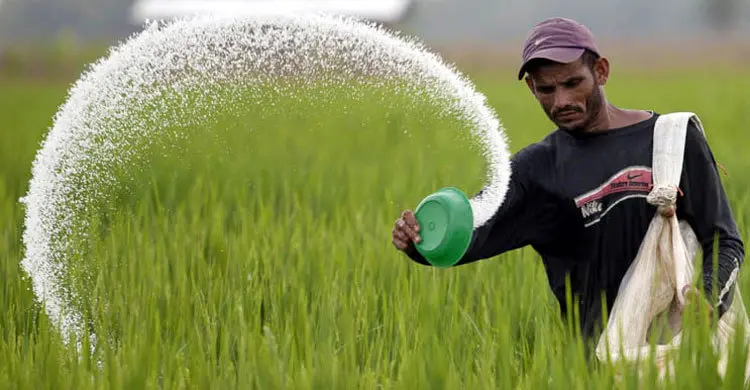
Fertiliser is essential to rice farming; without it, raising crop output becomes impossible. Balanced, measured, timely and correct use of fertiliser in rice is also vital, and using guti urea (urea briquettes) ensures that fertiliser is applied to the land in balanced doses. Here is how to use guti urea correctly. Today, the final part.
For randomly transplanted rice
Guti urea can also be applied in fields where rice has been transplanted at random. In that case, after placing the required number of briquettes in one spot, move forward placing them to the left, right and front at a distance of 40 cm (16 inches). It may not be possible to place briquettes at an equal distance from every hill, but the yield is still good.
What to do for the best results
- Use all other fertilisers needed apart from urea.
- Use good seed of high-yielding varieties.
- Apply briquettes in land that absorbs little water. Do not use guti urea in sandy soil.
- For a good yield, apply guti urea to rice transplanted in lines.
- Control pests in time.
- Irrigate on time so that there is no water shortage.
- Control weeds in time.
Other uses
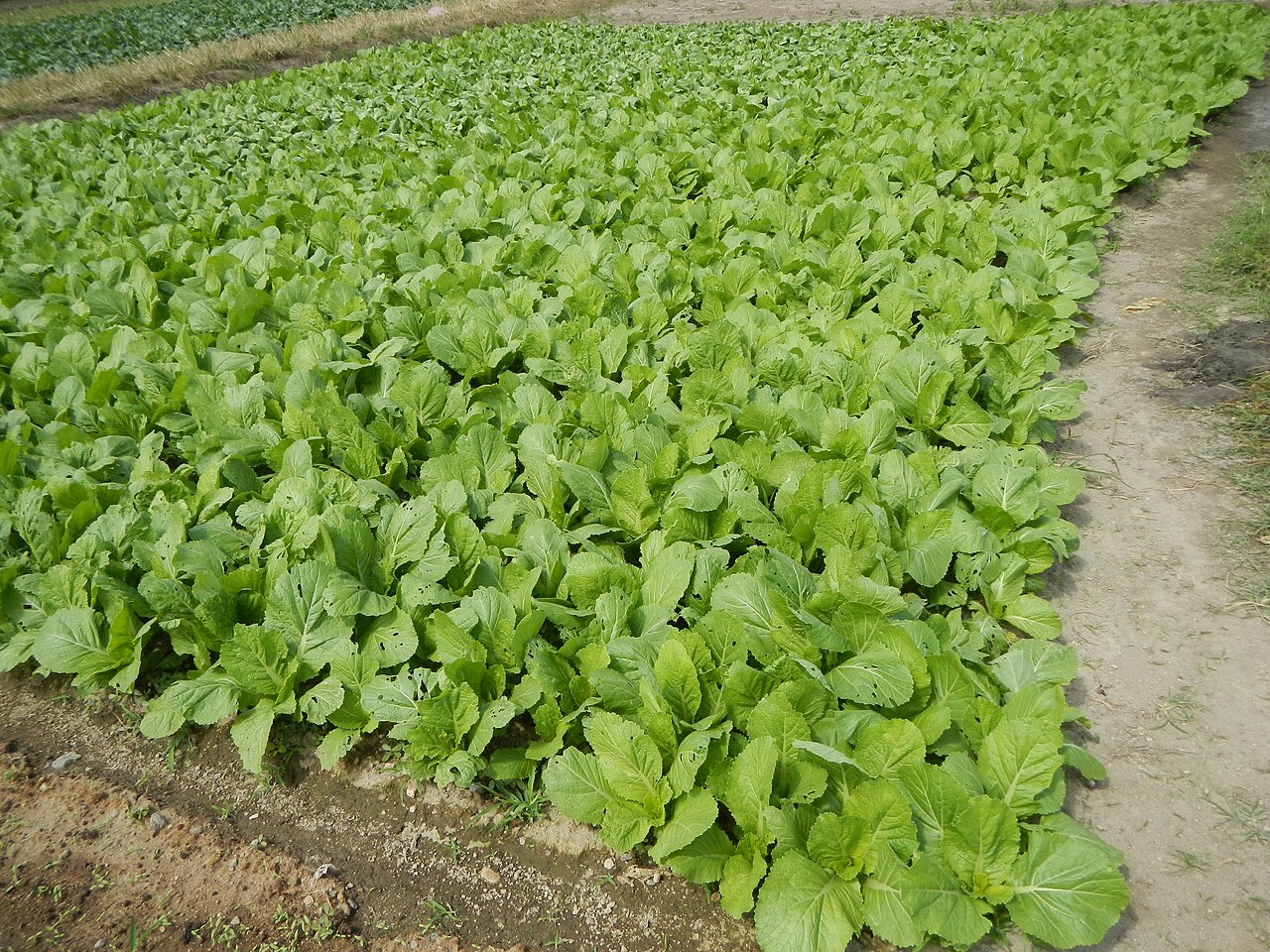
Profitable yields have been obtained in cabbage, cauliflower and aubergine using 10 to 20 percent less guti urea than the amount of urea. Some farmers are also using guti urea in fish ponds. Using guti urea rather than prilled urea is a profitable technology for raising crop production.
Differences from prilled urea
- Prilled urea is only 30 percent effective; guti urea is about 60 to 70 percent effective.
- Prilled urea escapes as nitrogen gas; guti urea cannot escape as gas.
- Prilled urea leaches deep into the soil with water; guti urea cannot leach down with water.
- About 30 to 40 percent more prilled urea must be applied than guti urea.
- Prilled urea must be spread two or three times; one application of guti urea is enough.
- Crop output is lower with prilled urea; guti urea raises output by 20 to 30 percent.
- Farmers profit less from prilled urea; guti urea brings more profit.
- Prilled urea pollutes air and water; with guti urea, air and water stay clean.
- Prilled urea brings more weeds; guti urea brings fewer.
Source: Jagonews24. First published in Bengali on The Agro News.

Comments
(0)