
Ashok Gulati, distinguished professor at the Indian Council for Research on International Economic Relations (ICRIER), and research fellow Subhodeep Basu argue in a Financial Express column that India's solar boom has yet to reach the farm gate, and set out how farmers could share in it. The views are the writers' own.
They note that India's installed solar capacity rose from 2.82 GW 12 years ago to 168.04 GW last month, making it the third-largest solar country after China and the US. About 74 percent is utility-scale, roughly 20 percent rooftop, where the PM Surya Ghar scheme gives a household Rs 78,000 in central subsidy for a 3kW system, and about 6 percent off-grid or hybrid.
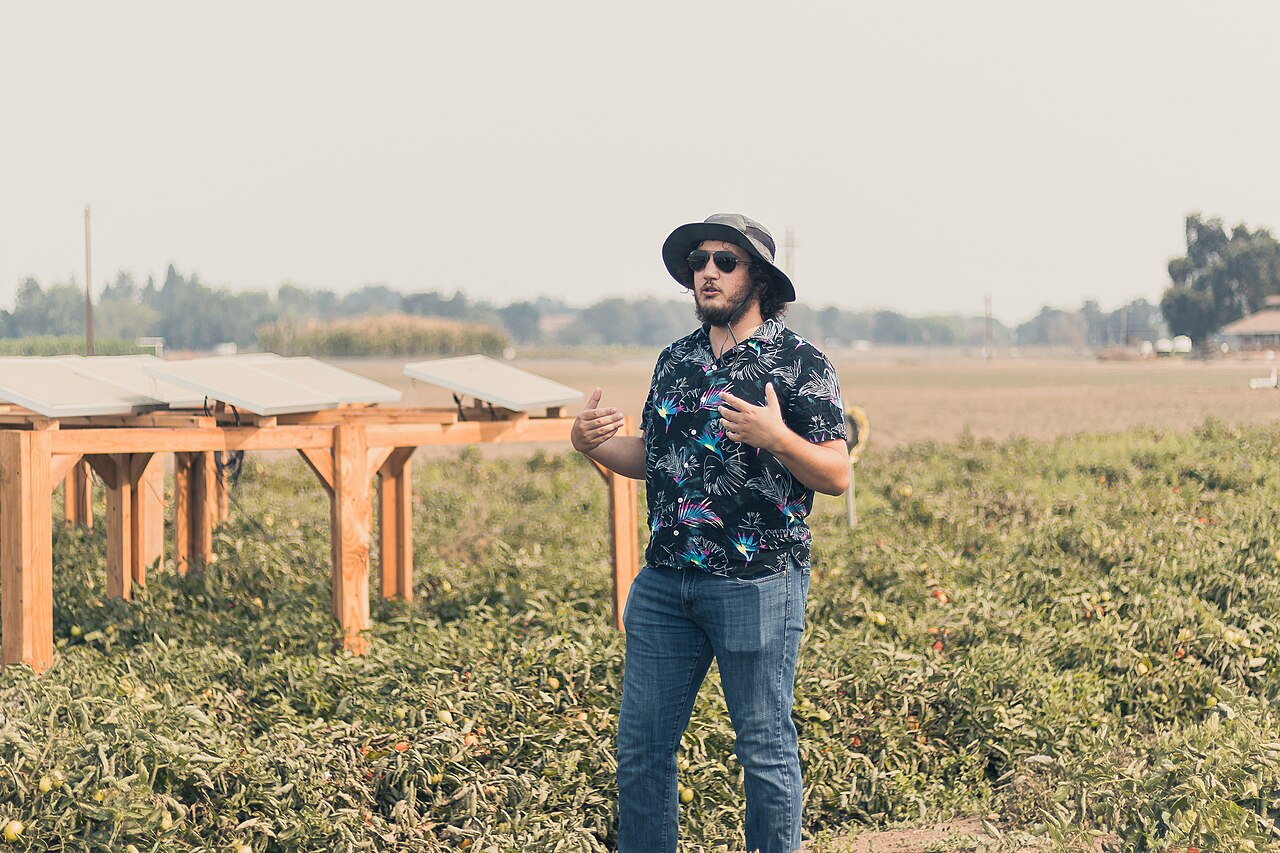
Where the government has not yet succeeded, they write, is PM-Kusum, whose component A lets farmers set up solar plants of up to 2MW on their land but offers no subsidy. They call for a capital subsidy under component A, for ground-mounted solar projects on farmland to be banned because they compete with food production, and for agri-photovoltaics instead: panels mounted about 11 feet high and spaced so the land beneath can be fully cultivated.
The authors cite an ICRIER pilot: a 600kW PM-Kusum-A plant in Rajasthan, financed by a Rs 1.4 crore SBI loan, Rs 60 lakh from farmers and Rs 35 lakh of Kotak Mahindra CSR funds, which they say raised farm income from about Rs 40,000 an acre from wheat and bajra to nearly Rs 4 lakh from energy sales and shade-tolerant horticulture.
They also point to the power subsidy. Agriculture uses nearly 260,000 GWh of electricity a year; citing the CAG, they put the average cost of supply at about Rs 8.5 per kWh against roughly Rs 1 recovered from farm consumers, with farming accounting for perhaps 85 percent of a Rs 2.35 lakh crore annual subsidy bill. A feed-in tariff of Rs 4.5 per kWh, about half the cost of supply, would make projects viable without extra spending, they argue.
Finally, they want the World Bank, which has approved an $820 million loan for PM Surya Ghar, to back solar cooperatives on the model of Operation Flood's dairy cooperatives, so that solar becomes a "third crop" for farmers, with finance at priority-sector rates for farmers and farmer producer companies.
Photo: UC Davis College of Engineering / Wikimedia Commons (CC BY 2.0)
Source: Financial Express Agriculture

Comments
(0)