
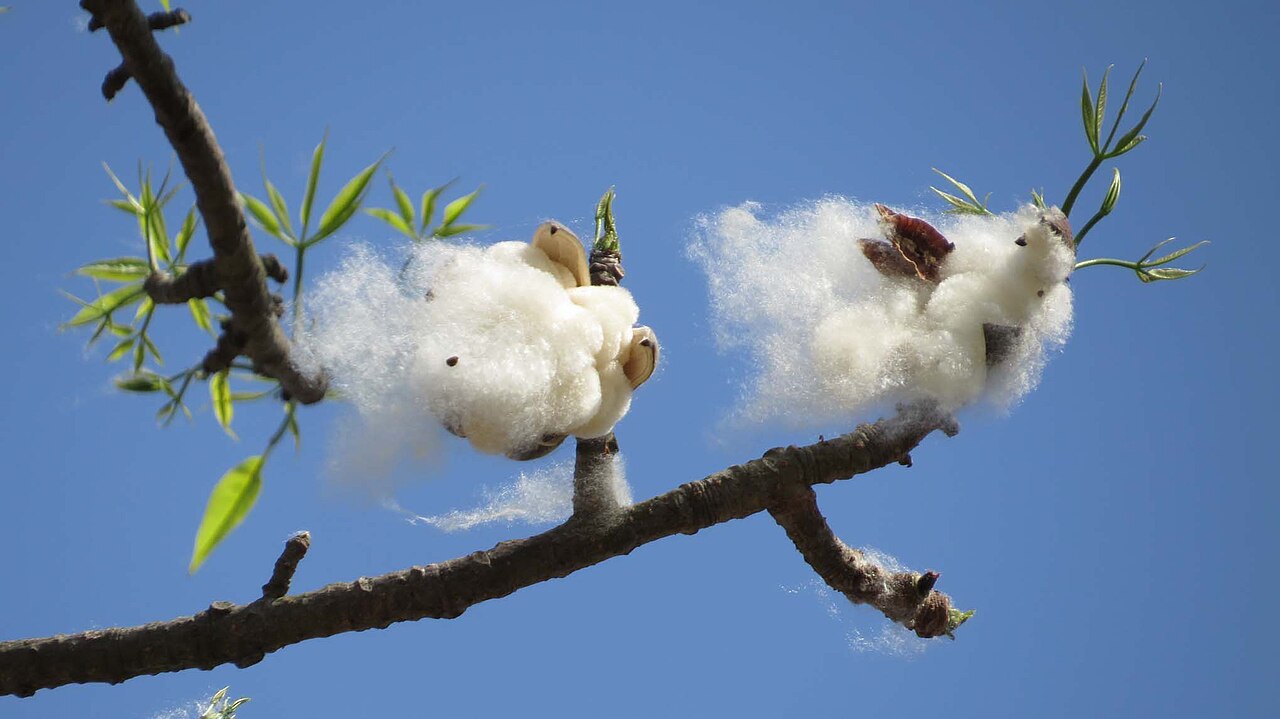
Cotton is an important cash crop in Bangladesh. With the right weather, land and care it gives good yields, and the same field can then grow boro rice, wheat, maize, potatoes or vegetables. A guide from the Agricare24 desk sets out the main steps.
Cotton grows best in warm, relatively dry weather. Loam and sandy loam soils suit it; the field must not hold standing water and should have plenty of organic matter. A soil pH of 6 to 7.5 is best, and lime can be applied to very acid land as needed.
Before sowing, about 1 to 1.5 tonnes of cow dung or compost can be applied per bigha, followed by three or four ploughings and laddering to leave the soil fine and level and free of weeds and debris. Depending on the variety, the sowing window runs from the start of Asharh to the middle of Shrabon (roughly mid-June to early August); it can shift with local weather and variety, and hybrids are better sown a little earlier.
The Cotton Development Board's high-yielding varieties may need about 1 kg of seed per bigha and hybrids 500 to 600 grams. In rows, about 90 cm between rows and 45 cm between plants can be kept. Seed should be sown shallow and covered lightly with soil; sown too deep, it struggles to come up.
Organic and chemical fertilisers should be applied according to soil fertility; organic matter improves the soil and its ability to hold water. Regular weeding, irrigation when needed and drainage are essential. Seed can be treated by approved methods to cut the risk of disease and pests, but approved doses and the advice of an agriculture officer must be followed for any pesticide or seed treatment.
After the flowers drop, bolls form; when they mature they split open to show the white fibre. People in the sector say that expanding cotton needs better seed, modern methods, pest and disease management, and training and advice for farmers.
Photo: Atikur.khokon / Wikimedia Commons (CC BY-SA 4.0)
Source: Agricare24


Comments
(0)