
By Muhammad Shafiqur Rahman, assistant manager, sales operations, Fair Distribution Limited.
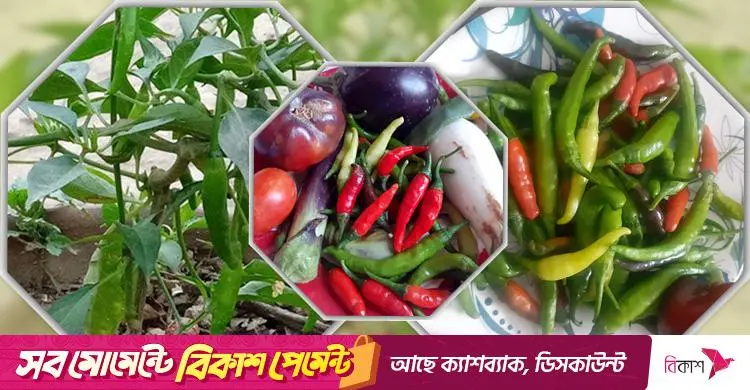
Chilli prices can suddenly shoot up, so as an alternative you can grow green chillies yourself. It does not take much space: a rooftop garden can produce plenty of chillies in a small area. You only need to know how to grow chilli plants in tubs, drums, beds, fruit crates, buckets or sweet pots. Then you can pick chillies whenever you like. Curry hardly tastes right without green chillies, and nothing compares with chillies from your own plants.
Where to plant
Chilli plants can be grown in tubs, half drums, buckets, beds, poly bags or sacks. You can buy good seed and raise seedlings; it is best to transplant them to their final place when they are a little taller and have three leaves. If you buy plants at the market there is no guarantee of a good variety, unless you buy them with chillies already on. In a fruit crate, keep two plants per crate; in a bed, keep one plant every one and a half feet. There are many chilli varieties, so they can add variety to a rooftop garden. But if the variety is poor, no amount of care will bring the expected results. Several disease-resistant chilli seeds are available on the market.
Soil
The soil for chilli plants must be loose and crumbly. It should contain 50 per cent vermicompost or cow-dung manure, with sand, mustard oilcake, horn meal, bone meal, cocopeat and some Biodarma Solid or Trichoderma. Tie the plant to a stick after planting. Chilli plants cannot tolerate waterlogging, so whatever container you use, there must be proper drainage. Chillies do well where the sun falls and like sunlight, but if there is excessive sun for a long stretch, it is better to give shade. If you keep chilli plants on a balcony, it is best to keep most of the plant outside so that it gets enough sun.
Care
When the plants flower, spray a good PGR (plant growth regulator); Mirkulan, Pranofix and Bolban are named as well-known PGRs. Spraying any micronutrient every 15 days will improve growth, and Agromin Gold is a popular one. Water in moderation: the base should be neither bone dry nor soggy. Spraying 2 ml of hydrogen peroxide dissolved in one litre of water every few days helps. There is no substitute for water from soaked mustard oilcake, the plant's "biryani". Once the plant has fruited, feed it well. It is good to break off the branches that grow near the soil at the bottom of the plant. Naturally, not every flower will become a chilli and some will drop, which is nothing to worry about. Flowers can drop because of heavy rain, drought, too little or too much water, or a lack of nutrients in the soil.
Pests and diseases
The biggest disease of chilli plants is leaf curl. For this, spray an insecticide such as Abom, Vertimec or one from the abamectin group. Spray neem insecticide once every seven days. Spraying Epsom salt will also help growth. Wash the leaves when watering. Another disease is wilting. For this, mix Bactaf, Autobac, Radi, Bactroban, Bactrol or Bismazol 20 WP at 2 grams per litre of water and drench the base of the plant late in the afternoon, twice at 12-day intervals. If raising seedlings from seed, treat the seed first. Keeping some naphthalene near the plants will keep many harmful insects away, and so will marigold plants, which contain substances insects dislike, just as they dislike neem insecticide. Insects also strongly dislike mint leaves.
Yield
If you have about ten chilli plants of different varieties and care for them properly, you will not only meet your own needs at all times but also be able to give chillies to others. Chilli plants yield continuously for a long time. To raise seedlings, choose cocopeat (coconut coir dust), which gives the highest seedling rate. Sometimes a chilli plant drops all its leaves and looks almost dead, but it does not actually die, and new leaves grow later. Losing sleep over it only harms you, though any dry branches should be cut off.
Source: Jagonews24. First published in Bengali on The Agro News.


Comments
(0)