
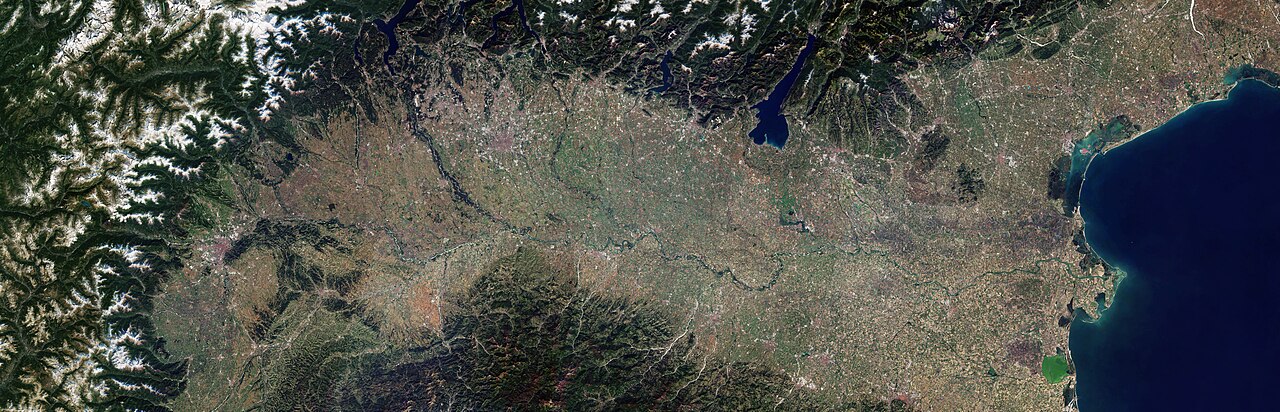
Half of Europe's population was exposed to poor, very poor or extremely poor levels of ground-level ozone during this summer's record heatwaves and wildfires, according to the European Commission's Copernicus Atmosphere Monitoring Service (CAMS), Euronews reports. Ozone forms near the ground through chemical reactions driven by sunlight and high temperatures, so the heat that gripped Europe from June to August pushed it to levels dangerous to health.
Unlike the ozone layer high in the atmosphere that shields the Earth from ultraviolet light, ground-level ozone is an air pollutant that can penetrate deep into the respiratory system and reach the bloodstream; people with asthma are most at risk. It is also a greenhouse gas: the UK charity Clean Air Fund, which calls it a "super pollutant", attributes about 0.23°C of present-day warming to it. "Ozone pollution is a stark reminder of how interconnected our atmosphere, climate, health, and livelihoods really are," said Laurence Rouil, director of CAMS, adding that it affects the health of ecosystems and "even governing our ability to grow food".
The findings come from Atmosphere Watch, the first edition of a new CAMS air-quality report. It traces the nitrogen oxides behind ozone mainly to the burning of fossil fuels, naming industry, solvents and road transport, with biomass burning adding to it as fires grow more extreme in hotter, drier conditions. Exposure worsened towards the south of the continent, where the heat was fiercest and longest, and smoke carried pollution far from its source: Belgium's worst wildfire in 100 years in August sent smoke across Germany to Poland.
Europe has cut other pollutants sharply. A 2025 Copernicus report found sulphur and nitrogen oxide emissions falling by about 3% to 5% a year across the EU over the past decade, with industrial nitrogen oxides down 39% and road-transport nitrogen oxides down 40% since 2015. But "ozone shows no clear downward trend and remains an issue", Atmosphere Watch says. The EU directive limits the maximum eight-hour daily average to 120 micrograms per cubic metre on no more than 18 days a year, with a long-term aim of 100 in line with World Health Organization guidance.
Worldwide, almost 40% of people, including 60% of Asia's population, have been exposed to extremely high ozone levels so far in 2026, and only 5% to levels rated good. Milan, Rio de Janeiro, Mexico City, Delhi and Cairo are among the cities with some of the highest exposures. Within the EU only Croatia, France and Spain have air-quality plans aimed explicitly at ozone; the European Environment Agency says the best performers focus on better ozone forecasting and on understanding its sources. The report is by Ruth Wright.
Photo: European Space Agency / Wikimedia Commons (CC BY-SA 2.0)
Source: Euronews, Green/Agriculture


Comments
(0)