
Green chilli was selling at Tk 400 a kilogram in two Dhaka kitchen markets on Friday, 31 July 2026, after weeks of continuous rain and flooding in parts of Bangladesh had unsettled the market for everyday goods. Of all the items on the shopping list, chilli was hurting ordinary buyers the most: every few days its price was crossing another hundred-taka mark.
Onion and egg prices had also begun to rise again, and vegetables had stayed expensive for two weeks, with most of them selling at around Tk 100 a kilogram. That was the picture at the Shantinagar and Segunbagicha markets in the capital that Friday, Jagonews24 reported in a story published at 10:30 am that day.
The government's own price monitor pointed the same way. In its retail price list for Thursday, 30 July, the Trading Corporation of Bangladesh (TCB), which collects prices from six Dhaka markets, put green chilli at Tk 320 to 400 a kilogram, against Tk 150 to 220 a week earlier and Tk 80 to 120 a month earlier. The same list showed local onions, brinjal and cucumber rising over the week.
Chilli up Tk 100 a kilogram in a week
Sellers and buyers in the retail and wholesale sections of the two markets said green chilli was selling at Tk 400 a kilogram. Shoppers buying smaller amounts paid Tk 40 for 100 grams and Tk 100 for 250 grams, while those buying half a kilogram or a full kilogram got it for Tk 20 to 30 less.
Bulu Mia, a trader at Segunbagicha market, said the price of green chilli had gone up by Tk 100 a kilogram in a week. Last week it had sold for Tk 280 to 300 a kilogram, he said, and the week before that for Tk 180 to 200.
TCB's list of 30 July recorded the latest increase in chilli on 29 July. By the corporation's own calculation, the price was about 94.6 percent higher than a week earlier and 260 percent higher than a month earlier.
The climb had been building for most of July. On 21 July, The Daily Ittefaq found green chilli selling above Tk 200 a kilogram in many Dhaka markets and as high as Tk 280 in some, against Tk 100 to 120 a month before. Prices varied by market that day: Tk 200 to 220 at the Mohammadpur Krishi Market, Tk 250 to 280 at Town Hall market, and about Tk 200 for good-quality chilli and Tk 160 for ordinary chilli at Karwan Bazar. A buyer at the Ashkona Hajj Camp market told the paper he had paid Tk 60 for 250 grams, where a week earlier the same amount had cost Tk 40.
Traders quoted by Ittefaq blamed the rain. They said continuous rain and floods about a week and a half earlier had cut the supply of vegetables, chilli among them, and that waterlogged fields in different parts of the country had ruined many crops, so supply had not recovered. The Bangladesh Meteorological Department had by then forecast another five days of rain across the country. A vegetable seller at Mohammadpur Town Hall said chilli supply in the wholesale market had fallen because of the rain while demand stayed the same, so the price rose quickly.
On the morning of 31 July, before the Jagonews24 report, Desh Rupantor described Thursday's markets in the same terms: after easing for a few days, chilli had risen again to Tk 340 to 400 a kilogram.
Rain-damaged chilli fields: the Faridpur example
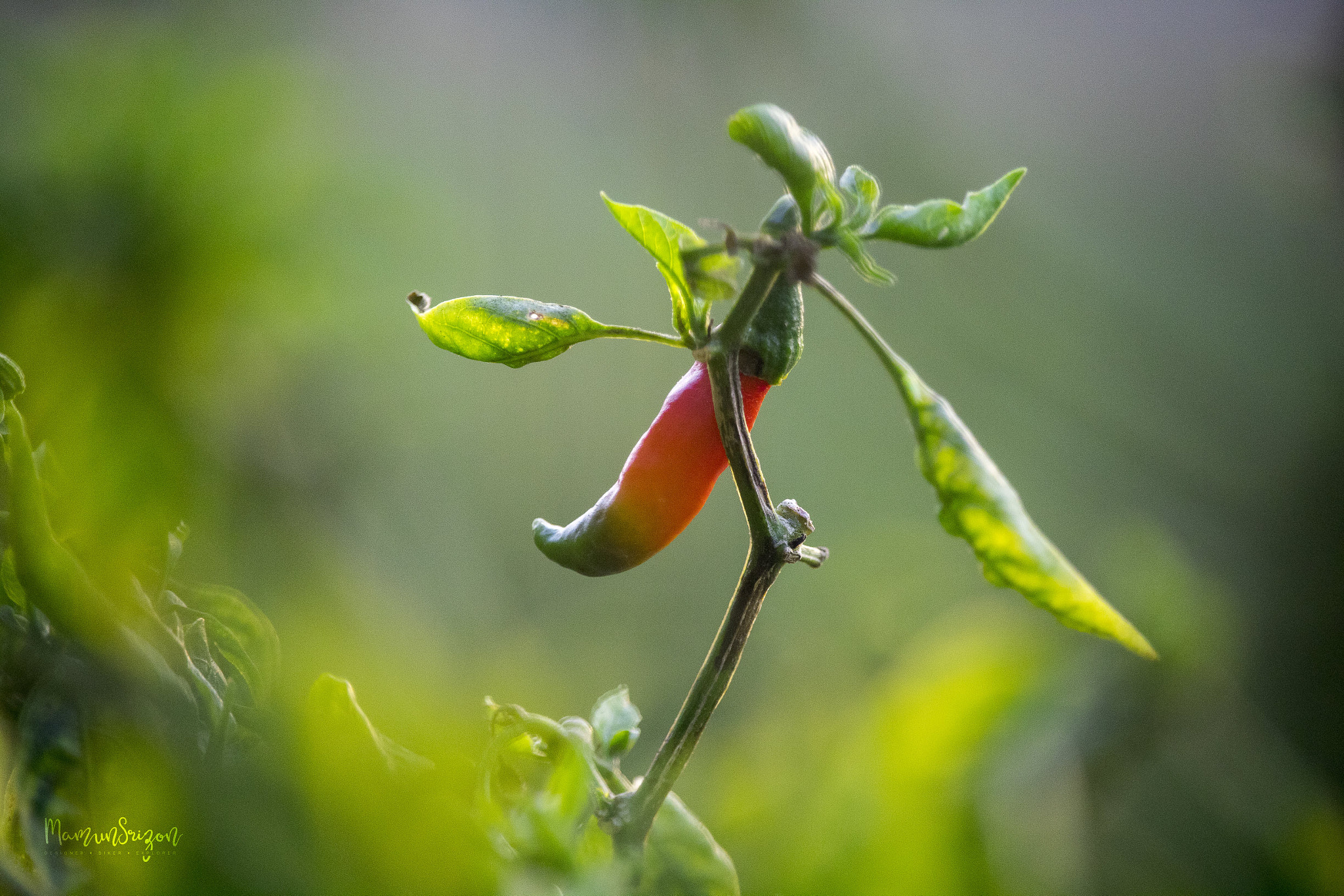
Reports from the growing districts showed what lay behind the shortage. The Daily Inqilab's Faridpur correspondent reported on 30 July that more than a week of continuous heavy rain had left chilli fields in Madhukhali, Sadarpur and Charbhadrasan, the district's main farming upazilas, under water, and that most of the plants had rotted or died.
The Madhukhali upazila agriculture officer told the paper that about 2,720 hectares of summer chilli had been planted in the upazila that season, and that water had entered most of that land. Agriculture officers in all three upazilas said lists of affected farmers were being prepared, that some farmers had already received government help, and that more would be brought under compensation in phases. Farmers in the three upazilas claimed that about three-quarters of the chilli fields had been damaged, the worst in the Raipur, Jahapur and Megchami unions.
According to the Department of Agricultural Extension (DAE) in Faridpur, chilli had been planted on 3,112 hectares in the district that season, with a production target of 5,706 tonnes, a target the paper said was now in doubt. In the town's markets, including the Haji Shariatullah Bazar, Chawkbazar, Tepakhola and Helipad bazars, chilli was selling at Tk 280 to 320 a kilogram depending on type, and retailers said supply had fallen sharply. The president of the Faridpur Krishak Samity, a farmers' association, called for quick compensation and rehabilitation for affected growers, warning that without help farmers might lose interest in chilli next season.
Chilli, a member of the nightshade family Solanaceae and a native of Mexico, is grown in Bangladesh in both the summer and winter seasons, according to Banglapedia, the national encyclopaedia. As a winter crop it is grown mostly in Cumilla, Noakhali, Faridpur, Barishal, Patuakhali and Bogura, and local varieties include Balijuri, Bona, Bain, Saita, Suryamukhi and Shikarpuri. Green chilli and dried chilli are both basic ingredients of Bangladeshi curries, and dried chilli also goes into curry powder, sauces and pickles.
DAE data cited by The Daily Star in July 2023 put the country's chilli production at 2.98 lakh tonnes in 2021-22, against a target of 3.24 lakh tonnes.
A price of Tk 400 a kilogram was not new. In late June and early July 2023, after bad weather damaged the crop, green chilli hit a record Tk 700 a kilogram in Dhaka and elsewhere during the Eid-ul-Azha holidays, The Daily Star reported. The agriculture ministry had announced import permits on 26 June 2023 for three months, and permission for 36,830 tonnes had been granted within about a week, though only about 93 tonnes had arrived by then. Prothom Alo reported on 6 July 2023 that the price, after falling to Tk 200, was back at Tk 400 a kilogram, and explained that local farmers usually meet the country's demand, with chilli imported from India when heavy or scant rainfall disrupts production and supply.
Floods and heavy rain across 43 districts
The July 2026 rain had struck farmland across much of the country. On 13 July, The Business Standard reported preliminary DAE figures showing that heavy to very heavy rain, hill torrents, floods and waterlogging had affected 28,610 hectares of cropland in at least 12 districts, out of 5,34,570 hectares under cultivation there. Aus rice, aman seedbeds and summer vegetables were the worst hit. The Flood Forecasting and Warning Centre of the Bangladesh Water Development Board warned at the time that the flood situation in the northeast could worsen over the next 24 to 72 hours, with the Khowai, Manu, Kushiyara and Surma rivers rising.
By 16 July, Independent Television reported, DAE put the damage at about 1.15 lakh hectares in 43 districts, including about 62,500 hectares of flooded aus and aman seedbeds, with more than five lakh farmers affected. The Department of Fisheries said fish and shrimp fry had been washed away, with losses above Tk 400 crore.
The agriculture ministry's final assessment, covering the rain and hill torrents from early July to 19 July, was reported by The Daily Star on 27 July and Desh Rupantor on 28 July. It put crop losses at Tk 477.97 crore, 48.33 percent of it in vegetables, about Tk 231 crore. Damage was reported in 43 districts with 8.17 lakh hectares under crops; 24,138 hectares were lost completely. The affected land would have produced 1,33,972 tonnes of crops, including 87,967 tonnes of vegetables, and 2,43,660 farmers lost crops.
Apart from vegetables, the list included aus rice on 12,783 hectares and aman seedbeds on 1,746 hectares, together worth Tk 188.55 crore, as well as chilli worth Tk 4.79 crore, ginger worth Tk 23 crore and turmeric worth about Tk 9.5 crore. The worst-hit districts were Brahmanbaria, Habiganj, Chattogram, Cox's Bazar, Rangamati, Bandarban and Khagrachhari, and a director of DAE's Field Services Wing said about 63,000 farmers there had been given seed of late aman varieties.
In Chattogram and Cox's Bazar alone, The Business Standard reported on 28 July, DAE counted Tk 140.82 crore of summer vegetables lost on 6,591 hectares out of 20,548 hectares planted, affecting 63,875 growers, and retail vegetable prices in Chattogram had risen by Tk 20 to 50 a kilogram. A vice-president of the Consumers Association of Bangladesh (CAB) told the paper that Chattogram's markets draw vegetables from all over the country and that the northern districts had not flooded; he alleged that some traders were using the floods as an excuse to raise prices while market monitoring was weak. An agricultural economist quoted by The Daily Star on 27 July said the losses were not large enough to threaten food security or disrupt supply, and that the main concern was market manipulation; he called for effective market management.
Onions dearer in spite of a good harvest
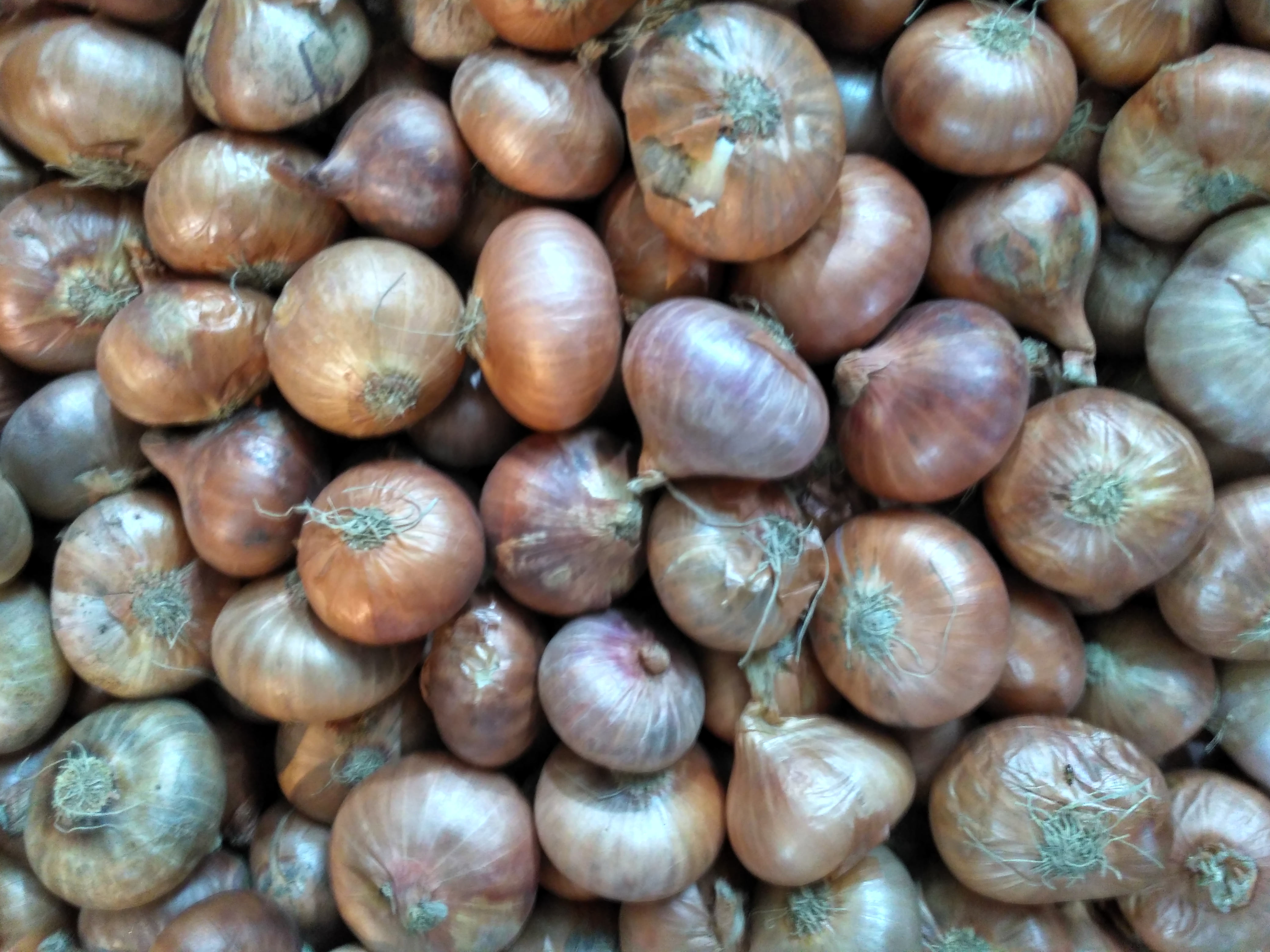
Local onions, which had sold for Tk 40 to 45 a kilogram depending on quality a week and a half to two weeks earlier, were selling for Tk 55 to 65 at the two markets on 31 July. Four days earlier they had cost Tk 50 to 60.
Enamul Haque, a seller at Shantinagar market, said onion prices had suddenly gone up in the wholesale market. Onions he had sold for Tk 40 a week earlier now had to be sold for Tk 60, he said, and good-quality, sorted onions from Pabna were selling for as much as Tk 65.
TCB's list of 30 July showed local onions at Tk 55 to 60 a kilogram, up from Tk 45 to 55 a week earlier and Tk 35 to 45 a month earlier, an increase the corporation put at 43.75 percent over the month. The list recorded the rise on 28 July. A year earlier, on 30 July 2025, local onions had cost Tk 60 to 65. The list gave no price for imported onions. Ittefaq had found onions at Tk 45 to 50 on 21 July, up from Tk 35 to 40 the week before.
Desh Rupantor reported on 31 July that the agriculture department said the onion harvest had been good, that no imports would be needed, and that in the department's view there was no logical reason for the sudden rise.
Earlier in the year, the national news agency BSS reported on 25 April 2026 that DAE had set a target of 42,64,100 tonnes of onions from 2,86,300 hectares in the 2025-26 fiscal year. The director general of the Department of Agricultural Marketing told BSS the country was on course to meet the target, supply was adequate and prices were stable, and that 900 storage houses had been built through two projects. BSS also reported that 86,398.84 tonnes of onion had been imported so far in 2025-26, against 4,73,811.27 tonnes in 2024-25, and that annual demand is usually 35 to 36 lakh tonnes. On 8 June, BSS reported a record harvest of 1,43,666 tonnes from 12,105 hectares in DAE's Rangpur region.
Pabna, known as the country's onion store, grows a quarter of the onions the country needs, The Daily Inqilab reported on 27 July. According to the district DAE office, onions were planted there on 54,335 hectares that season against a target of 53,750 hectares, and production reached 9,95,367 tonnes against a target of 8,45,473 tonnes. But many farmers in Sujanagar, Sadar and Santhia upazilas who had kept their crop on bamboo racks at home in the hope of better prices found it rotting and sprouting in the heat and humidity. At the Dubalia wholesale onion market in Pabna Sadar, a maund of onions sold for Tk 1,000 to 1,500, against Tk 2,500 to 2,600 at the same time the year before, while farmers claimed it had cost them about Tk 1,600 a maund to grow. An additional deputy director of DAE in Pabna said the district has more than a lakh onion farmers but only about 2,500 had been brought under improved storage methods.
Most vegetables near Tk 100, papaya, okra and pointed gourd apart
Vegetables had been selling at very high prices since a few days into July because of the continuous rain and the floods in some areas. Although one or two had become a little cheaper, most remained expensive on 31 July.
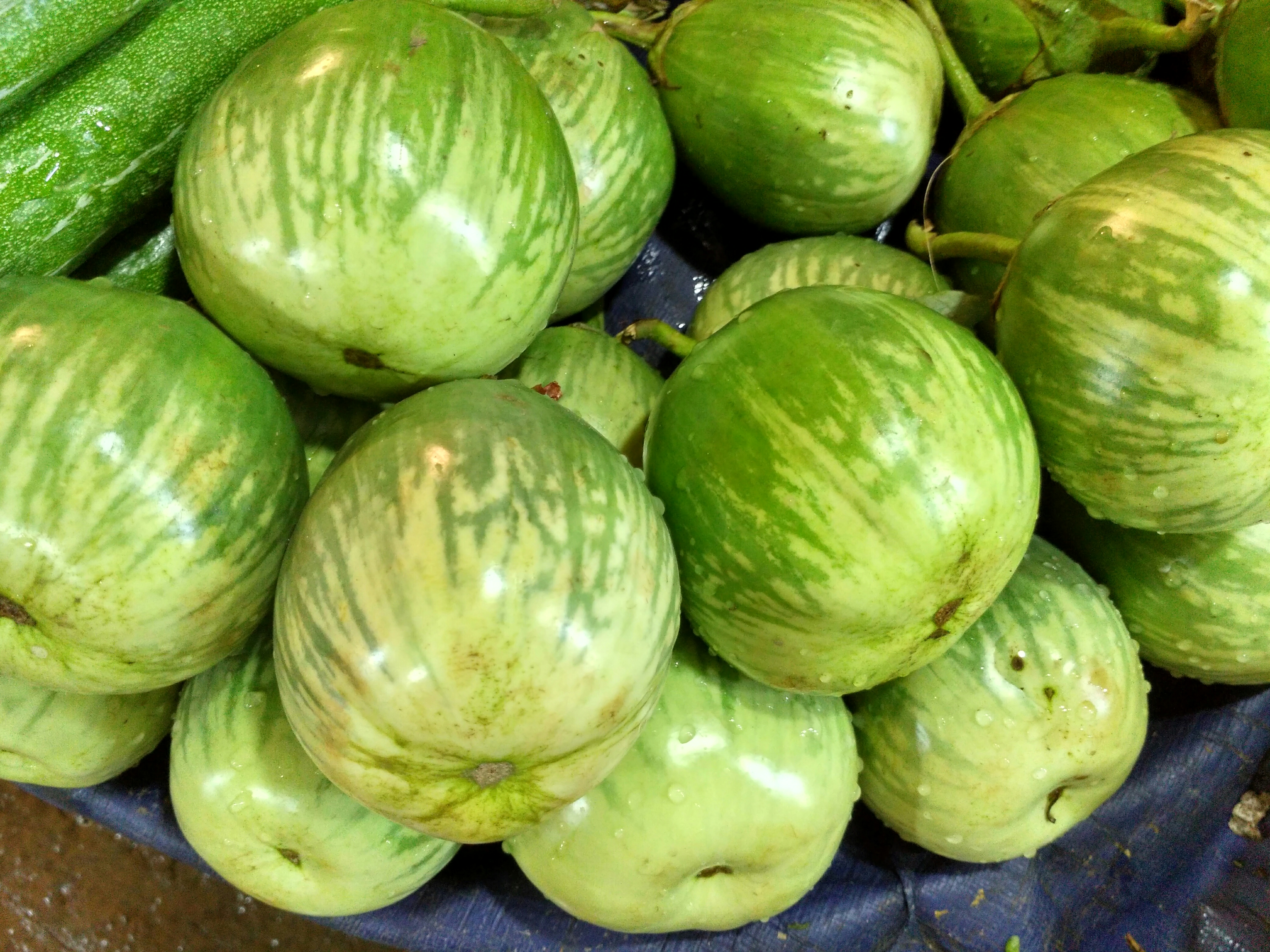
Long brinjals sold for Tk 120 to 150 a kilogram, round black brinjals had reached Tk 180 and white ones Tk 140, with prices varying by Tk 10 to 20 depending on quality in some places. Sponge gourd and pointed gourd had eased slightly, down from Tk 100 to Tk 60 to 80 depending on the market. Bitter gourd sold for Tk 120 to 140 a kilogram, taro corms (kochur mukhi) for Tk 80 to 100, yard-long beans for Tk 110 to 130 and snake gourd for Tk 90 to 100.
Rafiqul Islam, a vegetable seller at Segunbagicha kitchen market, said two or three vegetables had become slightly cheaper, but brinjal and some others had become dearer again over the week.
TCB tracks only a few vegetables. Its list for 30 July put brinjal at Tk 100 to 140 a kilogram, up from Tk 80 to 120 a week earlier and Tk 80 to 90 a month earlier, and cucumber at Tk 80 to 150, up from Tk 80 to 120 a week earlier and Tk 50 to 80 a month earlier. Potatoes, at Tk 22 to 30, were slightly cheaper than a week before.
The vegetables in these lists are mostly summer crops. Banglapedia lists pumpkin, bitter gourd, teasle gourd, ribbed gourd, ash gourd, okra, yard-long bean and Indian spinach among the main summer vegetables of Bangladesh, and notes that brinjal, pumpkin, okra and red amaranth grow in both seasons. It also notes that summer vegetable growing is constrained by adverse weather and pest attacks, and that some vegetables come mainly from particular areas, such as pointed gourd from Bogura.
Brinjal (Solanum melongena), like chilli a member of the Solanaceae family, is one of the most popular vegetables in the country, and Banglapedia names Islampuri, Khat Khatia, Dohazari, Volanath and Singnath among its well-known local varieties.
Eggs dearer, chicken steady
In the egg and chicken section, farm eggs had become a little more expensive again. They sold for Tk 145 to 150 a dozen on 31 July, against Tk 135 to 140 the week before and Tk 120 to 130 a month earlier. Broiler chicken sold for Tk 180 to 190 a kilogram and Sonali chicken for Tk 330 to 340.
TCB's figures, collected in other markets, did not yet show the egg increase. Its list of 30 July priced farm eggs at Tk 45 to 50 a hali (four eggs), the same as a week and a month earlier, against Tk 38 to 45 a year before. It put broiler chicken at Tk 180 to 200 a kilogram, the same as a week earlier but up from Tk 160 to 180 a month before and Tk 145 to 170 a year before, and local (deshi) chicken at Tk 600 to 750. Desh Rupantor, describing Thursday's markets, also called the broiler and egg market stable, at Tk 180 to 200 a kilogram for broilers and Tk 130 to 140 a dozen for farm eggs.
Bangladesh produces far more eggs than its estimated need. According to the Department of Livestock Services (DLS), which publishes figures from the Bangladesh Bureau of Statistics, the country produced 2,374.97 crore eggs in 2023-24, up from 1,099.52 crore in 2014-15. DLS put demand at 1,809.60 crore eggs, based on 104 eggs a person a year, and availability at 135.09 eggs a person. The country had an estimated 3,277.77 lakh chickens and 682.61 lakh ducks in 2023-24.
Sonali, the breed whose price shoppers checked alongside broilers, is a crossbred chicken made by mating Rhode Island Red cocks with Fayoumi hens. A paper in Livestock Research for Rural Development in 2004 explained that a 1999 study gave the cross its name, meaning "golden" in Bengali; that the bird was the basis of the semi-scavenging poultry model developed by DLS and BRAC for rural smallholders, in which chicks are reared in confinement for their first eight weeks before they scavenge in farmers' yards; and that DLS keeps both parent breeds on its farms to produce Sonali chicks for smallholders.
TCB's daily price list and other staples
TCB is a state-owned trading enterprise under the Ministry of Commerce, set up in 1972 by Presidential Order No 68 and headquartered at Karwan Bazar in Dhaka, according to Banglapedia. Its tasks include keeping watch on the supply and prices of essential goods; it imports onion, lentil, salt, dried chilli, dates and ginger in emergencies, and sells sugar, soybean oil, lentil and gram to low-income people through dealers.
Its daily retail list for Dhaka records the lowest and highest prices of dozens of essentials, from rice and lentils to vegetables, eggs and building rods, and compares them with a week, a month and a year earlier. The list of 30 July was compiled from the Sipahibag, Mirpur-6, Mohammadpur Town Hall, New Market, Rampura and Mohakhali markets. Prices at the neighbourhood markets visited for the Jagonews24 report can therefore differ from TCB's figures.
Among other items on the 30 July list, packaged flour (atta) had risen to Tk 60 to 65 a kilogram from Tk 55 to 60 a week before, while loose atta sold for Tk 45 to 50. Desh Rupantor, reading TCB's analysis, reported that over the month loose atta had risen by 4.40 percent, packaged atta by 8.70 percent and loose refined flour (maida) by 4.35 percent. Coarse rice was slightly cheaper at Tk 50 to 55 a kilogram, local garlic sold for Tk 100 to 120, imported ginger for Tk 160 to 200 and local dried chilli for Tk 320 to 380.
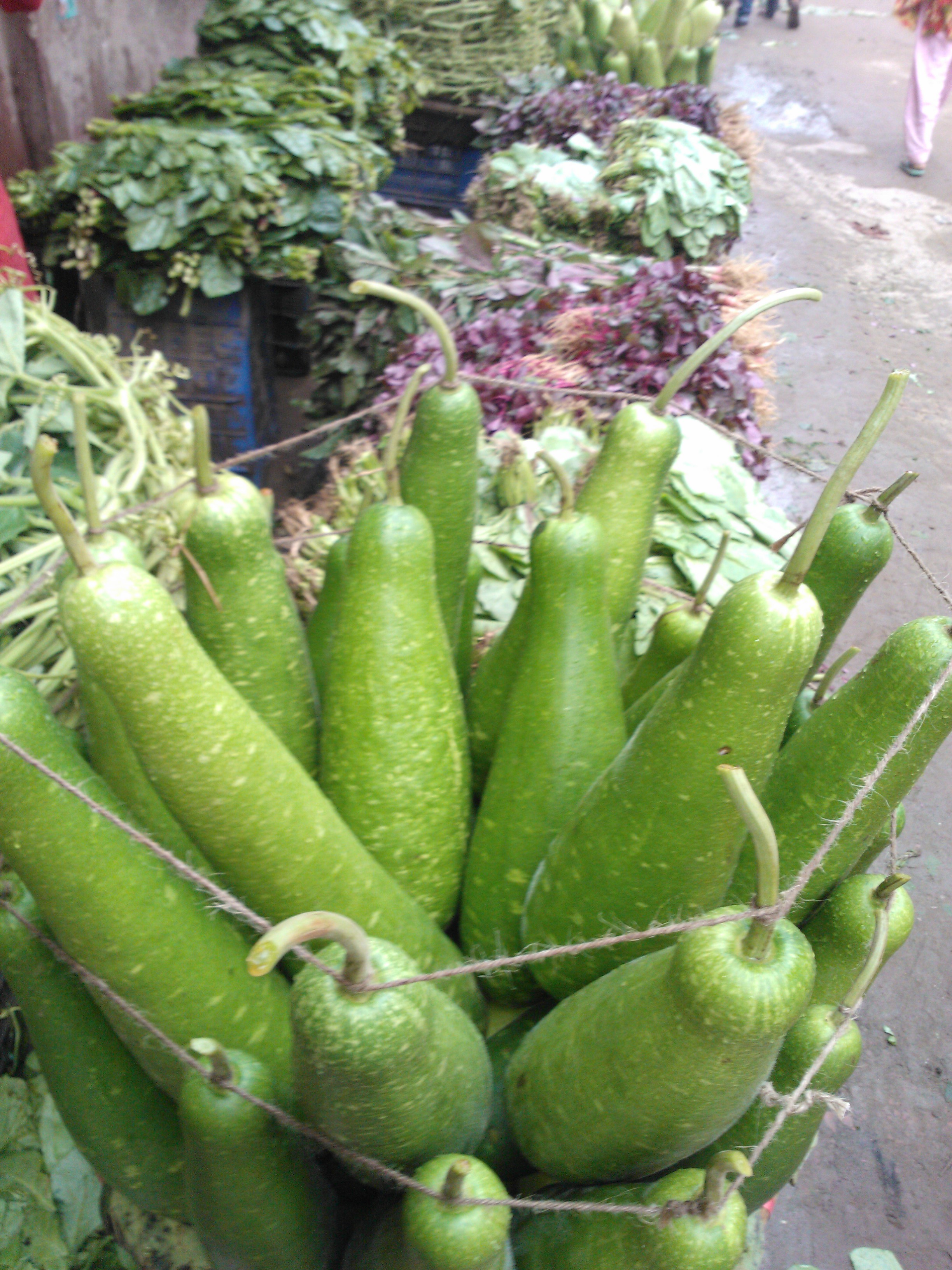
Photo: NahidSultan / Wikimedia Commons (CC BY-SA 3.0). Vegetables on sale at a market in Dhaka, Bangladesh.
Sources: Jagonews24 (31 July 2026), Trading Corporation of Bangladesh (daily retail price list for Dhaka, 30 July 2026), Desh Rupantor (28 and 31 July 2026), The Daily Ittefaq (21 July 2026), The Daily Inqilab (27 and 30 July 2026), The Business Standard (13 and 28 July 2026), The Daily Star (July 2023 and 27 July 2026), Independent Television (16 July 2026), BSS (25 April and 8 June 2026), Prothom Alo (6 July 2023), Department of Livestock Services (Livestock Economy at a Glance 2023-24), Livestock Research for Rural Development (2004), Banglapedia.
Comments
(0)