
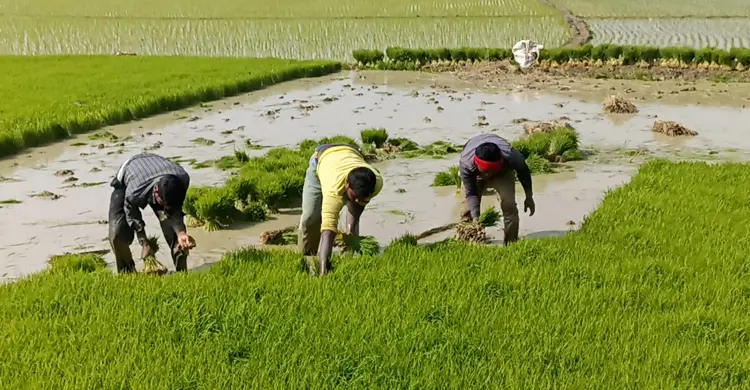
Food security is central to sustainable development in any country, and in Bangladesh food security first means rice security, or an adequate supply of rice. The government has taken various steps to raise rice production, in particular to encourage farmers to grow hybrid paddy, and is giving them incentives to do so. Those involved hope this will raise paddy and rice output.
The United States Department of Agriculture (USDA) had forecast that Bangladesh's rice production would fall in the 2023-24 fiscal year, because a severe heatwave at the start of the year cut Aus production. But soon after the forecast the weather turned favourable, and production in the current Aman season is expected to meet expectations.
A 3-4% rise planned for Boro
Against this backdrop the government wants to keep growth in the coming Boro season. To avoid the Aus shortfall, it initially plans to raise Boro production by three to four per cent, and is giving "special importance" to hybrid varieties this time, including incentives at farmer level.
According to the Department of Agricultural Extension (DAE), the target for the coming season of 2023-24 is 2 crore 17 lakh tonnes of Boro from 50 lakh 40 thousand hectares. Last season (2022-23) production was 2 crore 7 lakh tonnes, about two lakh tonnes less than the year before, when it was 2 crore 9 lakh tonnes.
The DAE said that to cover the shortfall, Boro would be grown on about two lakh hectares more than the target this season. Last season Boro was grown on 48 lakh 52 thousand hectares. Of the extra land this time, 1 lakh 92 thousand hectares will be under hybrid paddy, which at a yield of 4.95 tonnes a hectare is expected to give 9 lakh 50 thousand tonnes of additional rice.
Tajul Islam Patwary, director of the DAE's Field Service Wing, told Jago News: "We (the DAE) have prepared a plan with higher production targets. It will be finalised soon at an agriculture ministry meeting. This time we are giving importance to hybrid cultivation."
"By food security we first of all mean rice security. Hybrid paddy yields more and also helps raise production quickly," he said. "Production from the extra nearly two lakh hectares will be three to four per cent higher. Hybrid varieties have quickly become popular over the past few years."
USDA forecast and the Aman recovery
Because rice production has been satisfactory over the past few seasons, the country has not yet needed to import rice this fiscal year. But a USDA forecast in August said Bangladesh's rice production this year could be 7 lakh tonnes lower than before, and that Bangladesh might have to raise rice imports by 3 lakh tonnes to 10 lakh tonnes.
The USDA forecast cited a prolonged heatwave and low rainfall during the peak of the last Aus season, with similar weather at the start of the Aman season in July. At the time of the forecast Aus production was low. But although Aman production had been feared to fall this season, it did not fall but rose.
Abu Jafar Al Munsur, deputy director (monitoring) of the DAE's Field Service Wing, told Jago News: "The production target for last Aman was 58 lakh 59 thousand tonnes. We produced close to 60 lakh tonnes."
Heavy rain in August helped Aman production, though the heatwave early in the year cut Aus output. Aus was grown on 11 lakh hectares last year and on 10 lakh 45 thousand hectares this year, and production fell from 32 lakh tonnes to 29 lakh tonnes.
Incentives for hybrid cultivation
The government has been giving incentives for several years to encourage farmers to grow hybrid paddy. Most recently, in the 2022-23 fiscal year, 15 lakh farmers were given hybrid seed free of charge. This increased hybrid cultivation by 2 lakh hectares and raised rice production by 9 lakh 83 thousand tonnes.
For the coming Boro season, an incentive of Tk 90 crore will be given to expand hybrid cultivation and output, and distribution in the field will begin soon. Under it, 14 lakh 40 thousand small and marginal farmers will get, free of charge, the two kilograms of hybrid seed needed for one bigha. By the agriculture ministry's calculation, hybrid cultivation in Boro will rise by 1 lakh 92 thousand hectares, and the target for additional rice, at 4.95 tonnes a hectare, is 9 lakh 50 thousand tonnes.
Boro costs will rise
The cost of growing Boro will rise this time across irrigation, pesticide, labour, fertiliser and other items, and may rise further in the coming days, worrying farmers. They say that in the northern region Boro cultivation now costs an extra Tk 5,000 a bigha compared with two or three years ago, while at the end of last season they did not get a fair price for their paddy and could not recover their costs.
Fazlul Haque, a farmer from Kola village in Badalgachhi upazila, Naogaon, said he is preparing to grow Boro on about seven bighas this year. "Boro will cost much more this year than last season. Last year the cost of irrigation water per hour (over the whole season) rose by about Tk 2,000. Fertiliser, pesticide and seed are also dearer," he said.
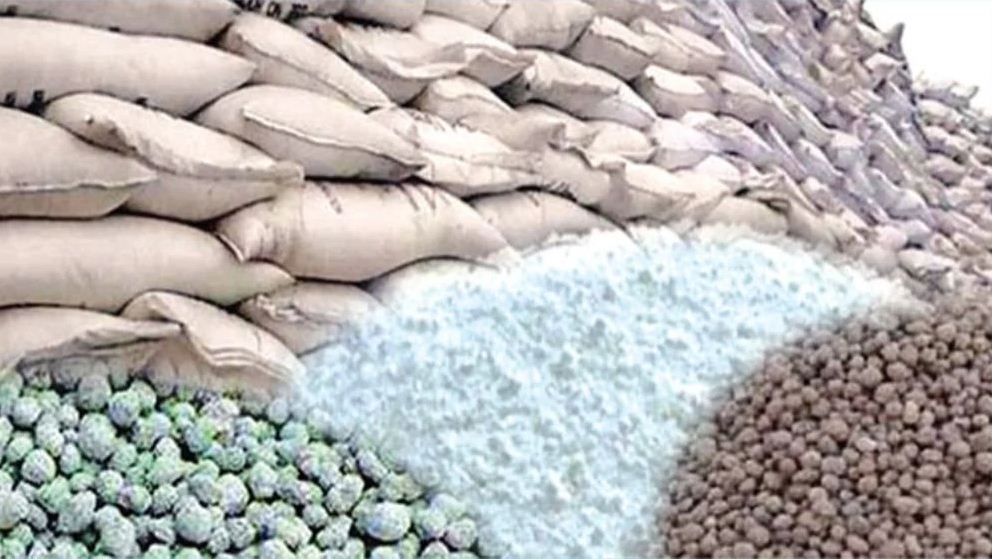
Several farmers said seed paddy that cost Tk 200-250 a kg last year now costs Tk 350. After the government raised fertiliser prices, spending on fertiliser has risen from Tk 2,000 to Tk 3,500. They will also pay more for pesticide, transplanting wages, labour, threshing and transport.
According to the Bangladesh Rice Research Institute (BRRI), the cost of producing a kilogram of Boro rice this season will rise by Tk 3 to about Tk 41, and the cost of paddy has risen from Tk 28 to about Tk 31 a kg, owing to dearer fuel oil, electricity and fertiliser since last year.
M Asaduzzaman, economist and former director of the Bangladesh Institute of Development Studies (BIDS), told Jago News: "Farmers' costs have risen abnormally. Incentives are needed not only for hybrid but for other varieties too. And if farmers get a good price for their crop, enough production is possible. If they don't get the price, they will lose interest."
Rice production has grown
Bangladesh produced 3 crore 80 lakh tonnes of rice in 2021-22 and 3 crore 90 lakh 95 thousand tonnes in 2022-23. The country now produces at least 50 lakh tonnes more rice than ten years ago; in 2010-11 production was 3 crore 37 lakh 80 thousand tonnes.
Rice is grown in three seasons. Boro, the largest, is planted in December and January and harvested in April and May. Aus follows Boro, and Aman is planted in the full monsoon. Aus and Aman depend on rain, while Boro depends on irrigation.
In the last fiscal year (2022-23), 2 crore 7 lakh tonnes of Boro, 1 crore 54 lakh tonnes of Aman and 29 lakh tonnes of Aus were produced. Over the past decade Boro production has grown the most, while Aus production has fallen.
Source: Jagonews24. First published in Bengali on The Agro News.
Comments
(0)