
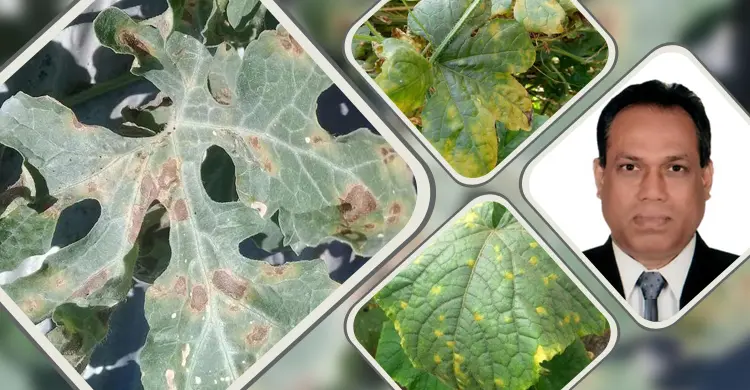
Yellowing leaves are seen in sweet pumpkin, brinjal, tomato, ash gourd, lychee, mango, jujube, bitter gourd, bottle gourd, ridge gourd, snake gourd and all gourd-family vegetables. The yellowing of leaves in sweet pumpkin, pointed gourd, watermelon, khira, mustard, bottle gourd, ash gourd, bitter gourd, sponge gourd and cucumber can have various causes. In Bangladesh, the main reason gourd-family crops turn yellow is downy mildew, which is a fungal disease.
Gourd-family plants turn yellow because of nutrient deficiency, waterlogging, excess irrigation, water shortage, fungal diseases such as powdery mildew and downy mildew, and the viral disease mosaic virus. Insect pests are another cause: aphids and whiteflies suck the sap of the plants and spread from one plant to another.
Downy mildew is essentially a fungal disease. From October to February it causes heavy damage to gourd-family crops in farmers' fields. This article focuses on downy mildew in these crops.
Symptoms
The disease first appears on older leaves. Angular, patch-like spots ranging from white or yellowish to brown appear on the upper surface of infected leaves, with similar spots on the underside. It gradually spreads to other leaves. Infected plants produce fewer flowers and fruit, and the fruit is tasteless. In severe cases the leaves turn yellow or black and die. The leaves slowly turn yellow and eventually begin to dry up. The disease can also affect flowers, which may become deformed, and the general growth of the plant is held back.
Conditions that favour the disease
According to the article, powdery mildew spreads more in weather with cool nights and warm days, during drought or low rainfall, with excessive use of nitrogen, and where light and air movement are poor. The best time for the disease to spread is October to February, and it is seen more in winter. It can also appear when excess water stands in the field. Poor field drainage and failure to clear weeds can also help it spread.
Prevention
- Sow seed early and use resistant varieties; do not collect seed from infected fields.
- Use mulching paper in the field, plough the soil and dry it well in the sun, apply Trichoderma to the soil and grow cold-tolerant varieties.
- Ensure good drainage and enough light and air movement around the plants.
- Baking soda spray: spraying a mixture of one spoon of baking soda in one litre of water can reduce the disease.
- Spray neem oil.
- Chop one kilogram of papaya leaves finely, mix them into one litre of water and shake well, soak for 12 hours, then add 10 litres of water, strain and spray.
- Remove infected leaves quickly and destroy crop residues completely by burning or burying them.
- Use balanced fertiliser and watch the field regularly.
Chemical control
- Start applying fungicide as soon as the first symptoms appear.
- Apply a mancozeb-group (contact) fungicide every two to three days.
- Apply a carbendazim-group systemic fungicide every seven days.
- Apply azoxystrobin and cyproconazole (systemic), a multi-purpose fungicide, every seven days.
Cautions
- Spraying too much contact fungicide can cause flowers and fruit to drop.
- Spraying too much systemic fungicide can hold back plant growth.
- Fungicide will not work if rain washes it off.
- Follow safety rules when spraying any chemical.
Source: Jagonews24. First published in Bengali on The Agro News.


Comments
(0)