
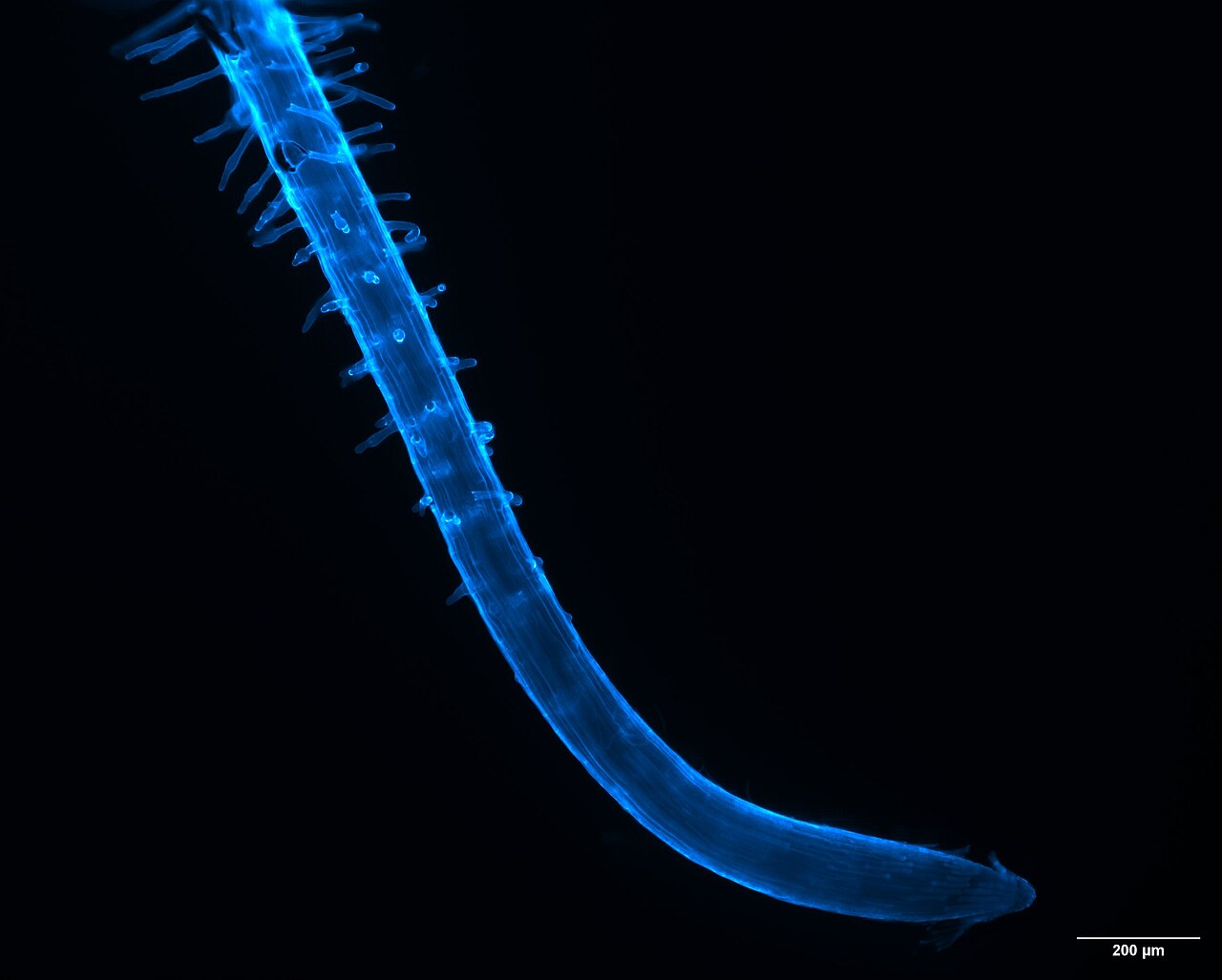
A bacterium that lives harmlessly inside plant roots sharply improved drought survival across five plant species, including wheat, rapeseed and tomato, in a study published online on 14 August in Nature Plants, Global Agriculture reports. The work, led by Salma Balazadeh at the University of Göttingen's Albrecht-von-Haller Institute for Plant Sciences in Germany, traces the effect to a hormone signalling pathway the bacterium switches on in the roots.
The microbe is an endophyte, one that colonises plant tissue and usually benefits its host. The team, with more than two dozen co-authors in Europe, Asia and South America, isolated the strain, named Flavo98, from a bacterial collection contributed by the microbiologist Jos Raaijmakers, formerly of Leiden University. In tests on the model plant Arabidopsis thaliana, under laboratory drought imitated with polyethylene glycol or low-moisture agar, inoculated plants grew markedly more root hairs, the fine extensions that increase a root's capacity to take up water and nutrients.
Genetic analysis showed a two-step chain: the bacterium activates two ethylene-related genes, ERF115 and ERF114, which switch on a small signalling protein, CEP5, and together they tell root cells to make more and longer root hairs specifically when water is short. Treated Arabidopsis survived drought and rewatering at around 85%, against minimal survival in untreated plants, went on to produce significantly more seed, and in the most affected root zones the share of cells forming root hairs roughly doubled.
Because a result confined to a model plant has limited value for farming, the team repeated the tests in wheat, rapeseed, camelina and tomato and found the same mechanism at work, with comparable drought-mitigation effects in all four crops. That consistency suggests the pathway is widely conserved in flowering plants and a realistic target for breeders and makers of biological products.
The authors stress that drought tolerance in the field depends on many genes and mechanisms, and that this pathway alone will not make a crop drought-proof. Their next step is to explore whether breeding programmes can fine-tune the ERF-CEP5 module directly, or whether Flavo98 itself could become a seed or soil-applied biological product that gives the same effect without genetically modifying the crop. Global Agriculture notes that rainfed wheat, oilseed and vegetable areas such as India's, where erratic monsoons already drive demand for drought-mitigation inputs, would be natural early markets for such a product.
Photo: Megan Gerber / Wikimedia Commons (CC BY 4.0)
Source: Global Agriculture
Comments
(0)