
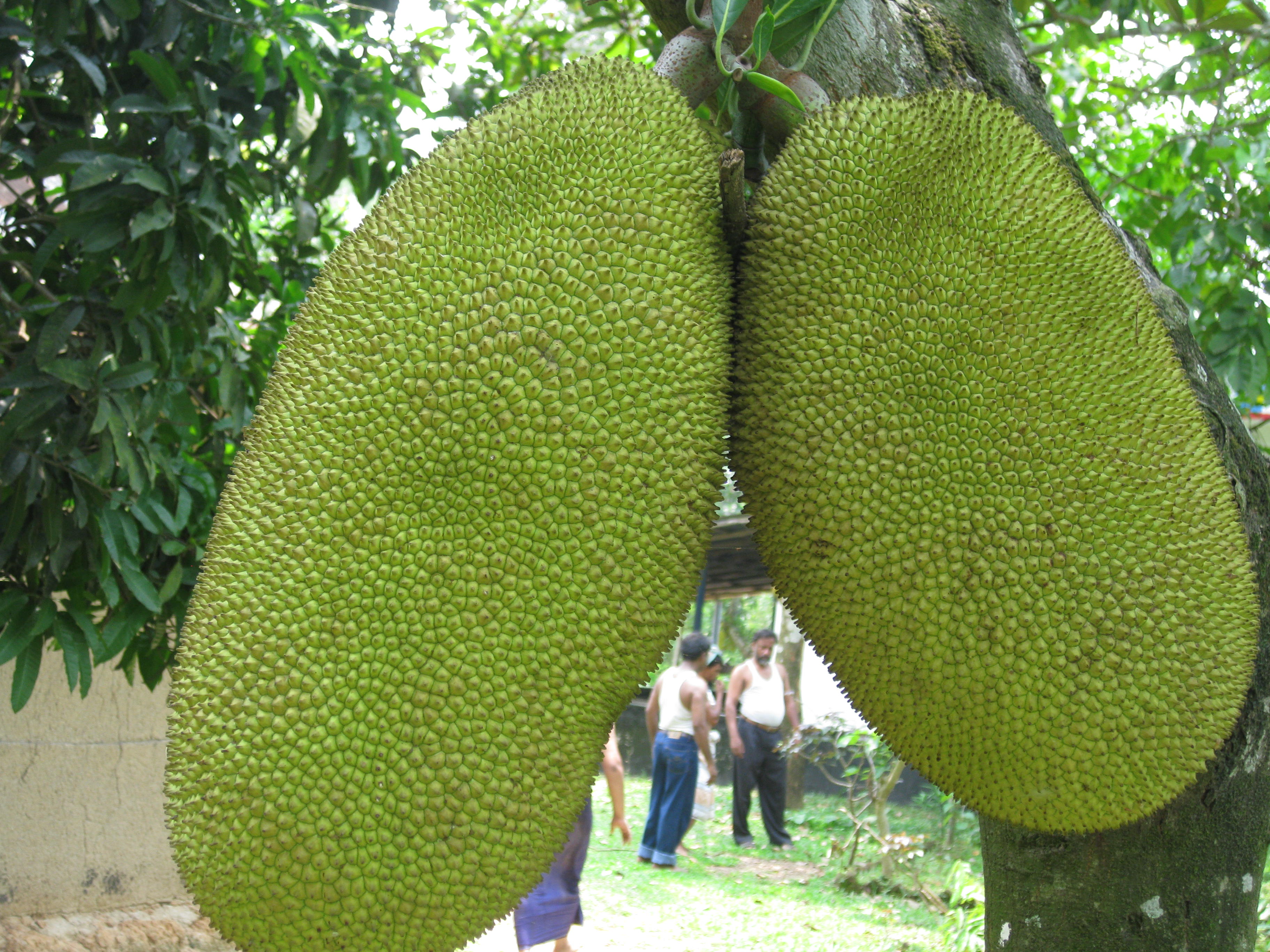
Jackfruit from Gazipur, the district just north of Dhaka, was selling in record quantities at the haats of Sreepur and Kapasia upazilas in late June 2025, and traders there said the fruit was going regularly to 15 countries, including countries in the Middle East. Jagonews24 reported this on 26 June 2025, two months after the government added Gazipur jackfruit to the country's list of geographical indication (GI) products. The same report carried the complaints of growers: no cold storage in Sreepur, no separate place to sell seasonal fruit at the markets of Kapasia, and no bank loans or government training aimed at jackfruit.
Gazipur's own figures show why the trade matters. According to the district office of the Department of Agricultural Extension (DAE), jackfruit was grown on 9,103 hectares in Gazipur in the 2023-24 fiscal year and produced 2,49,792 tonnes. The report described the area near Dhaka as producing on average about 2.5 lakh tonnes a year.
A GI certificate for the national fruit
Gazipur jackfruit received its GI certificate on 30 April 2025. On that day the Department of Patents, Industrial Designs and Trademarks (DPDT) under the Ministry of Industries handed certificates for 24 products to their representatives at a World Intellectual Property Day 2025 discussion meeting at the Foreign Service Academy in Dhaka, according to The Daily Star Bangla and bdnews24.com. Gazipur jackfruit was registered as GI product No. 46. With the 24 new entries, the total number of GI products in Bangladesh stood at 55, the papers reported.
Other farm products in the same round included Narsingdi lotkon, Madhupur pineapple, Magura's Hajirapuri lychee, Kishoreganj's Rata Boro rice, Barishal hog plum, Dinajpur's bedana lychee, Naogaon's Naqfazli mango and Sundarbans honey. Jagonews24 noted that while many Bangladeshi products had been recognised as GI products over the years, this time the national fruit itself had been recognised. The original report credited the recognition to Sreepur's jackfruit; the registered name in the April 2025 list is Gazipur jackfruit, which covers the whole district, with Sreepur as its largest growing upazila.
GI registration in Bangladesh rests on the Geographical Indication of Goods (Registration and Protection) Act, 2013 (Act No. 54 of 2013, dated 10 November 2013). The Act defines a GI product as an agricultural, natural or manufactured product that is identified as coming from a particular country, territory or region, where its special quality, reputation or unique characteristics are essentially attributable to that geographical origin. Its users are recorded in a register kept under the Act.
Local administrators had been promoting the fruit as Sreepur's brand. The district administration built a large jackfruit sculpture on the upazila administration premises, with the official slogan "Green and lush Sreepur, full of sweet jackfruit" ("Sabuje shyamale Sreepur, mishti kanthale bharpur").
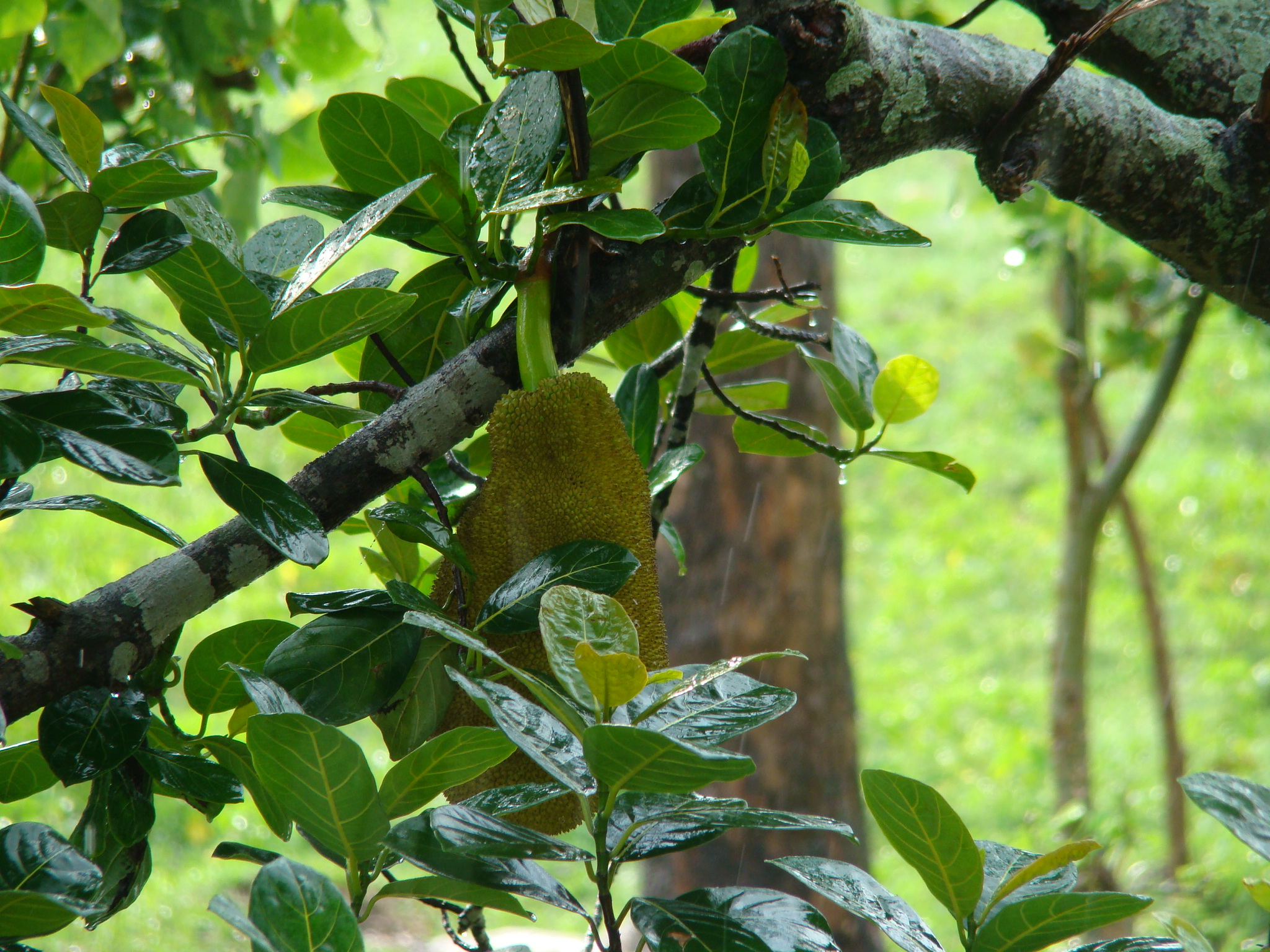
Where Gazipur's jackfruit grows
The district DAE gave the area under jackfruit in each of Gazipur's five upazilas for 2023-24:
- Sreepur: 3,552 hectares
- Gazipur Sadar: 2,050 hectares
- Kapasia: 1,760 hectares
- Kaliganj: 1,191 hectares
- Kaliakair: 550 hectares
Md Rafiqul Islam Khan, deputy director of the DAE in Gazipur, said: "In the 2023-24 fiscal year, jackfruit was grown on a total of 9,103 hectares in Gazipur, producing 2,49,792 tonnes. Jackfruit farmers are given training and advice on marketing, maintaining quality and other matters."
Three types of jackfruit are grown in the area, the report said: khaja, gala and durosa. Banglapedia, the national encyclopaedia, describes these as the three main types found in Bangladesh. Khaja has a hard pericarp and firm flesh; gala is very juicy, with soft pulp; and durosa (also written dorosa) lies between the two, fairly firm and juicy.
Kapasia and Sreepur, which the report called the country's "jackfruit capital", again had a bumper crop in 2025. With easy road links, traders from Dhaka and other parts of the country were travelling to remote villages to buy fruit directly from farmers, either by the tree or by the whole orchard.
Banglapedia lists jackfruit first among the main fruits of both upazilas. Sreepur covers 462.94 square kilometres in nine unions (Kaoraid, Gazipur, Gosinga, Telihati, Prahladpur, Barmi, Mawna, Rajabari and Sreepur), with the Banar, Kaoraid and Labandaha as its main rivers; its other fruits include papaya, pineapple, banana, mango, litchi and guava. Kapasia, to its east, covers 356.98 square kilometres in 11 unions on the Shitalakshya, Old Brahmaputra and Banar rivers.
Jainabazar and the highway haats
The biggest jackfruit haat sits at Jainabazar in Sreepur, beside the Dhaka-Mymensingh highway. According to local people and traders, thousands of jackfruits were sold there every day. Trading went on almost round the clock and was busiest from dawn to dusk. Hundreds of people worked bringing fruit from orchards to the market, buying and selling, and loading and unloading vehicles. Many orchards stand around Jainabazar, and good road links and lodging and food for visiting wholesalers had made it the largest jackfruit market in the area.
Large and small haats were also held at Nagarhaola in Gazipur union, Chakpara in Mawna union, Tepirbari in Telihati union, Rajabari bazar in Rajabari union, Chhatir Bazar, and Kewa and Channapara in Sreepur municipality. Along the highway, big jackfruit markets were held at Seedstore, Mawna Chowrasta bazar, Bagher Bazar, Baniarchala and Bhabanipur bazar. The season runs from the start of the Bengali month of Jyoishtha to the end of Asharh, roughly mid-May to mid-July.
Wholesale buyers come from far away for good fruit at low prices. Many traders from Karwan Bazar, Jatrabari, Hemayetpur and Uttara in the capital buy at these haats, and truckloads go to districts across the country. Because demand is high, orchard owners often sell their trees to wholesalers while the fruit is still small (muchi). In June 2025 orchard owners were picking ripe fruit at dawn and bringing it to market by van and handcart, with women of the household helping with the harvest. By late afternoon rows of trucks lined the highway as jackfruit was loaded in front of the depots. The seasonal trade gives work to at least several thousand labourers, the report said, and because jackfruit is so plentiful locally it sells very cheaply in season.
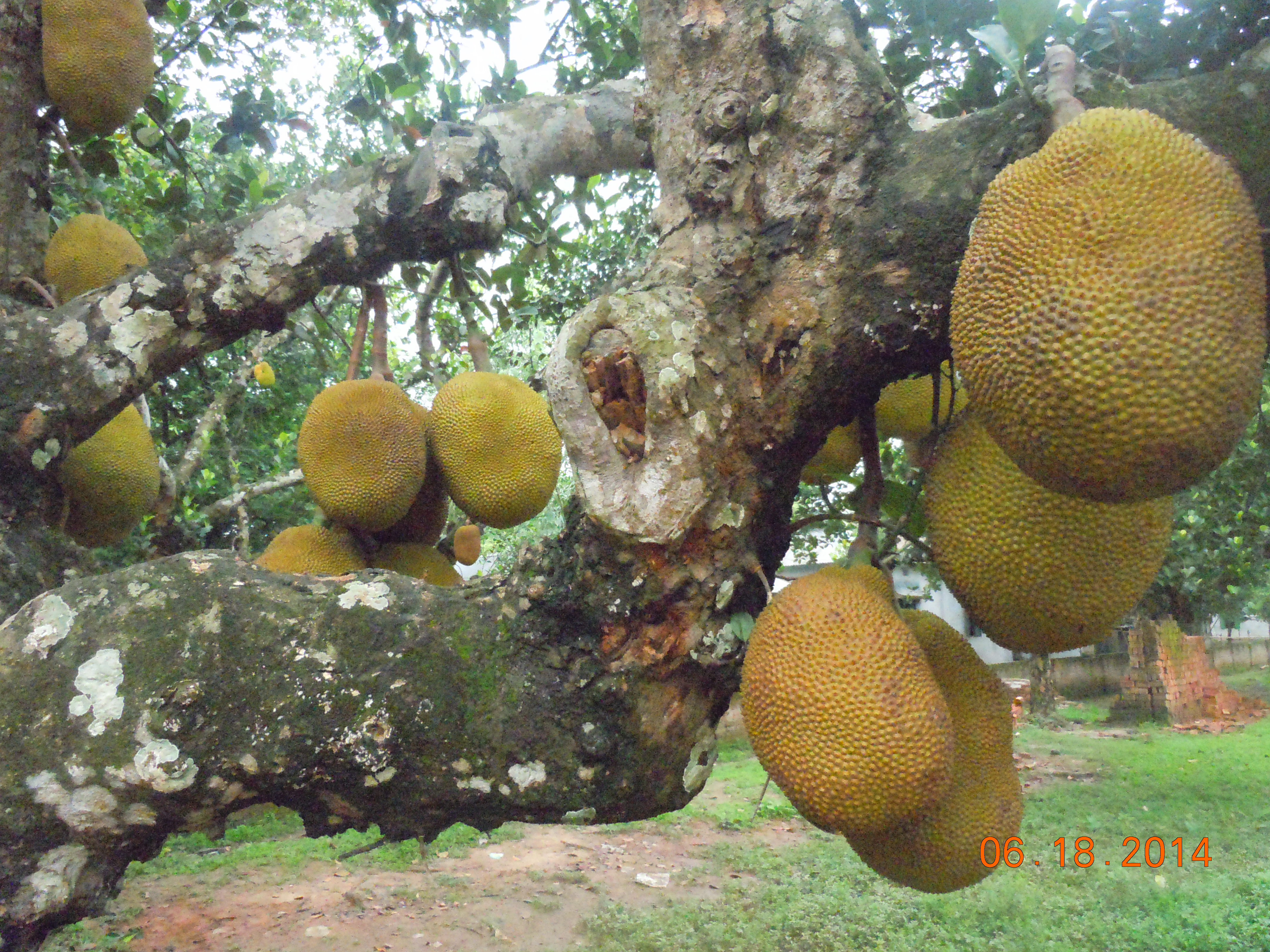
Exports to 15 countries
On exports, Kamal Hossain of Gorgoria Masterbari bazar told Jagonews24 that Sreepur jackfruit was exported to many countries and went regularly to 15 countries, including countries in the Middle East. According to the report, these varieties are exported every year to Europe and the Middle East through the DAE. Local people also said that when the season starts, jackfruit buyers and traders from countries including India, Pakistan and Sri Lanka come to the area, and through them jackfruit leaves every day in trucks and pickups for the airport and onward to other countries. The report did not give export volumes for Gazipur, and no official count of the 15 countries was published with it.
National export volumes have been small beside the harvest. In June 2023 the director of the DAE's Plant Quarantine Wing told The Daily Star that Bangladesh had exported 469 tonnes of jackfruit up to 15 June in that fiscal year, and 1,300 tonnes in the year before. The same report cited a DAE estimate that Bangladesh produced nearly 19 lakh tonnes of jackfruit in fiscal 2021-22, most of it eaten at home, with the Dhaka region producing the most, followed by Chattogram.
The Food and Agriculture Organization of the United Nations (FAO), in a January 2025 feature on Bangladesh's jackfruit, described the country as the world's second-largest producer of the fruit. It noted that many jackfruits rot before reaching markets because of outdated subsistence farming and poor storage, and that to reach wider international markets Bangladeshi jackfruit needs more modernisation, such as vacuum packaging, and compliance with international standards.
Storage, markets and credit: the growers' complaints
Kamal Hossain complained that no cold storage had been built in Sreepur to keep jackfruit, and that fruit worth lakhs of taka rots every season for lack of storage. Local people in Kapasia said the 32 haats and bazars in the upazila's 11 unions had no separate market or space for seasonal fruit, which caused farmers problems and harassment. Even Kapasia Sadar bazar, the largest market in the upazila, had no separate arrangement. As a result, they said, many farmers could not take their jackfruit to market themselves; middlemen (forias) paid below the market price, and farmers were forced to sell cheaply.
Growers also said that although jackfruit is one of the upazila's main cash crops, there was no government initiative for its cultivation and no bank loan facility, and that government training on raising production would bring higher yields. The DAE's deputy director, as quoted above, said farmers were given training and advice on marketing and maintaining quality.
Research shows how much is at stake. A study by scientists of the Bangladesh Agricultural Research Institute (BARI), published in the Bangladesh Journal of Agricultural Research in 2017, measured post-harvest losses of six major fruits in the hill regions of the country. It found that jackfruit lost 380 kilograms per tonne, about 38 per cent of production, at the farmer and trader levels, the highest of the six fruits studied. Losses on farms came mainly from insects, bats, squirrels and monkeys, while traders lost most during transport. The study covered the hill districts, not Gazipur, but it points to the same weak links of handling and transport that Gazipur's growers described.
Ripe jackfruit does not keep long. Julia Morton's reference work Fruits of Warm Climates (1987), published online by Purdue University, notes that ripe jackfruit deteriorates quickly and turns brown, but that cold storage at 11 to 13 degrees Celsius and 85 to 95 per cent relative humidity can keep ripe fruit for three to six weeks. That is the kind of facility Sreepur's traders said they lacked.
Why the land suits jackfruit
Agricultural experts quoted in the report said all the unions of Kapasia and Sreepur have the soil and climate jackfruit needs, so farmers give it priority and plant new orchards on high land every year. The area is free of floods, which makes the crop easy to grow. Farmers begin harvesting Boro paddy in Baishakh (mid-April to mid-May), and the jackfruit selling season begins before the paddy harvest is over.
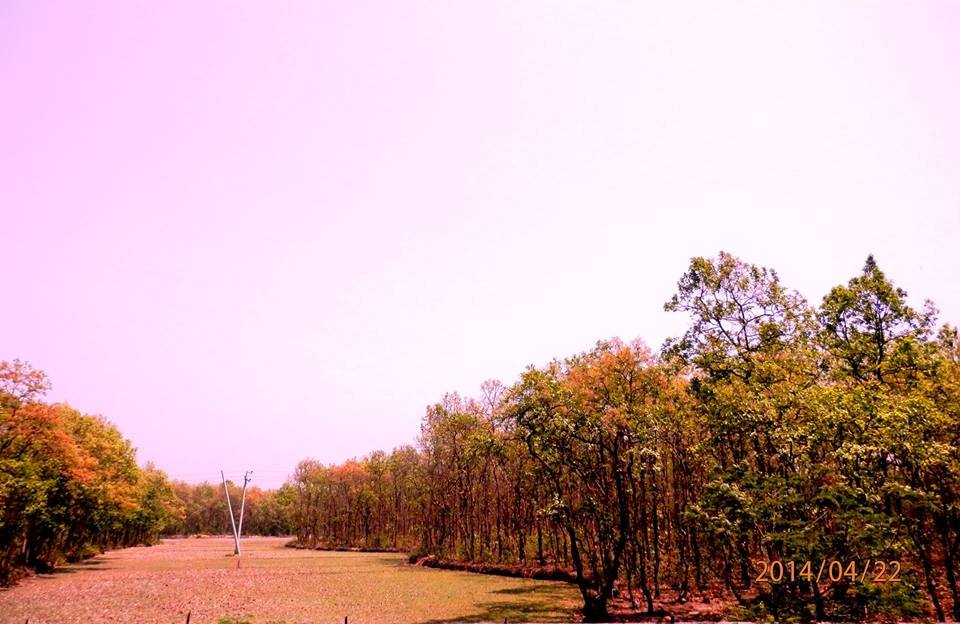
That high land is part of the Madhupur Tract, an old terrace of 4,244 square kilometres that runs from just south of Jamalpur to Fatullah in Narayanganj. Banglapedia describes it as one to ten metres above the surrounding floodplains, with red or brown soils formed on Madhupur clays that are low in nutrients and slightly acidic. Its southern part is known as Bhawal Garh. Sal was once the dominant tree in its forests. The encyclopaedia notes that jackfruit gardens are common on the higher land of the tract and that large quantities are shipped out from April to June.
Flood-free ground matters for this tree. Morton notes that the jackfruit tree prefers rich, deep soil of medium or open texture and cannot tolerate waterlogging: if its roots touch water, it will not bear fruit or may die. It cannot tolerate drought, and young trees are sensitive to frost.
Gazipur district itself covers 1,806.36 square kilometres and was formed in 1984. It is bordered by Mymensingh and Kishoreganj to the north, Dhaka, Narayanganj and Narsingdi to the south, Narsingdi to the east, and Dhaka and Tangail to the west. Banglapedia lists 17 rivers in the district, including the Old Brahmaputra, Shitalakshya, Turag, Bangshi, Balu and Banar. The 2011 census counted 3,403,912 people in the district.
The fruit itself
Jackfruit (Artocarpus heterophyllus) belongs to the mulberry family, Moraceae. Morton writes that its origin is uncertain but that it is believed to be native to the rainforests of the Western Ghats of India; Banglapedia describes it as native to the Indian subcontinent. The evergreen tree grows 9 to 21 metres tall, and all its parts contain a sticky white latex. Its fruit is the largest borne by any tree: usually 20 to 90 centimetres long and 4.5 to 20 kilograms in weight, occasionally up to 50 kilograms. Each fruit holds 100 to 500 seeds, surrounded by the yellow, fragrant bulbs that are eaten. Fruits mature three to eight months after flowering.
Banglapedia describes jackfruit as the national fruit of Bangladesh. In BBS figures for 2000 to 2007 that the encyclopaedia cites, it ranked third among fruits by area and second by production, on 25,110 hectares with an annual output of 4,69,500 tonnes, about 22 per cent of the country's fruit production. The DAE estimate of nearly 19 lakh tonnes for 2021-22, cited above, is a more recent figure from a different agency.
Almost every part of the tree is used. The ripe bulbs are eaten fresh or preserved; the unripe fruit is cooked as a vegetable; the large seeds are boiled or roasted; the rind and leaves feed livestock; the latex is used as a sealant; and the yellow heartwood is a valued timber that also yields a yellow dye, according to Banglapedia. Morton adds that the wood is used for furniture, construction and musical instruments. Per 100 grams, Banglapedia (citing Acedo, 1992) gives the ripe aril 94 to 98 calories and 22.4 to 24.0 grams of carbohydrate.
Research and support behind the crop
Much of the country's jackfruit research happens in Gazipur itself. BARI, which grew out of the Agricultural Research Laboratory set up in Dhaka in 1908 and became the Bangladesh Agricultural Research Institute in 1976, has its central station on 165 hectares at Joydebpur in Gazipur. It is responsible for research on all crops except rice, jute, sugarcane and tea, and its divisions include Postharvest Technology. BARI has released three jackfruit varieties, BARI Kanthal-1, BARI Kanthal-2 and BARI Kanthal-3, The Daily Star reported in June 2023. Banglapedia also records that Bangladesh Agricultural University maintains an orchard of 84 jackfruit germplasm accessions, of which 21 of 45 studied in detail were identified as superior.
Jackfruit is also Bangladesh's choice under FAO's One Country One Priority Product (OCOP) initiative, which Bangladesh joined in 2022. A national task force for the initiative, co-chaired by an additional secretary of the Ministry of Agriculture and the FAO Representative in Bangladesh, held its first meeting in Dhaka in July 2023 to support a sustainable jackfruit value chain. The work focuses on environmentally friendly development of the chain, including climate-smart practices and better production, storage, processing and marketing.
In its January 2025 feature, FAO described a farmer in Sreepur upazila who attended its training on modern techniques in 2023, including the proper use of manure, fertilisers and pest control; his next harvest yielded 30 per cent more fruit, and he sold it at more than double the previous year's price. It also described an entrepreneur in Gazipur who turns about 100 kilograms of jackfruit a day into pickles, jam, burgers, cakes, pizzas and plant-based leather with five employees. Local markets now sell a range of jackfruit snacks and desserts, the agency noted. Processing of this kind is one answer to the waste that Sreepur's traders described: fruit that cannot be sold fresh can still be turned into products that keep.
Photo: Mazhar Zarif / Wikimedia Commons (CC BY-SA 4.0)
Sources: Jagonews24, The Daily Star Bangla, bdnews24.com, Geographical Indication of Goods (Registration and Protection) Act 2013 (bdlaws), The Daily Star, Food and Agriculture Organization of the United Nations (FAO), Banglapedia, Bangladesh Journal of Agricultural Research, Purdue University NewCROP (Morton, Fruits of Warm Climates)
Comments
(0)