
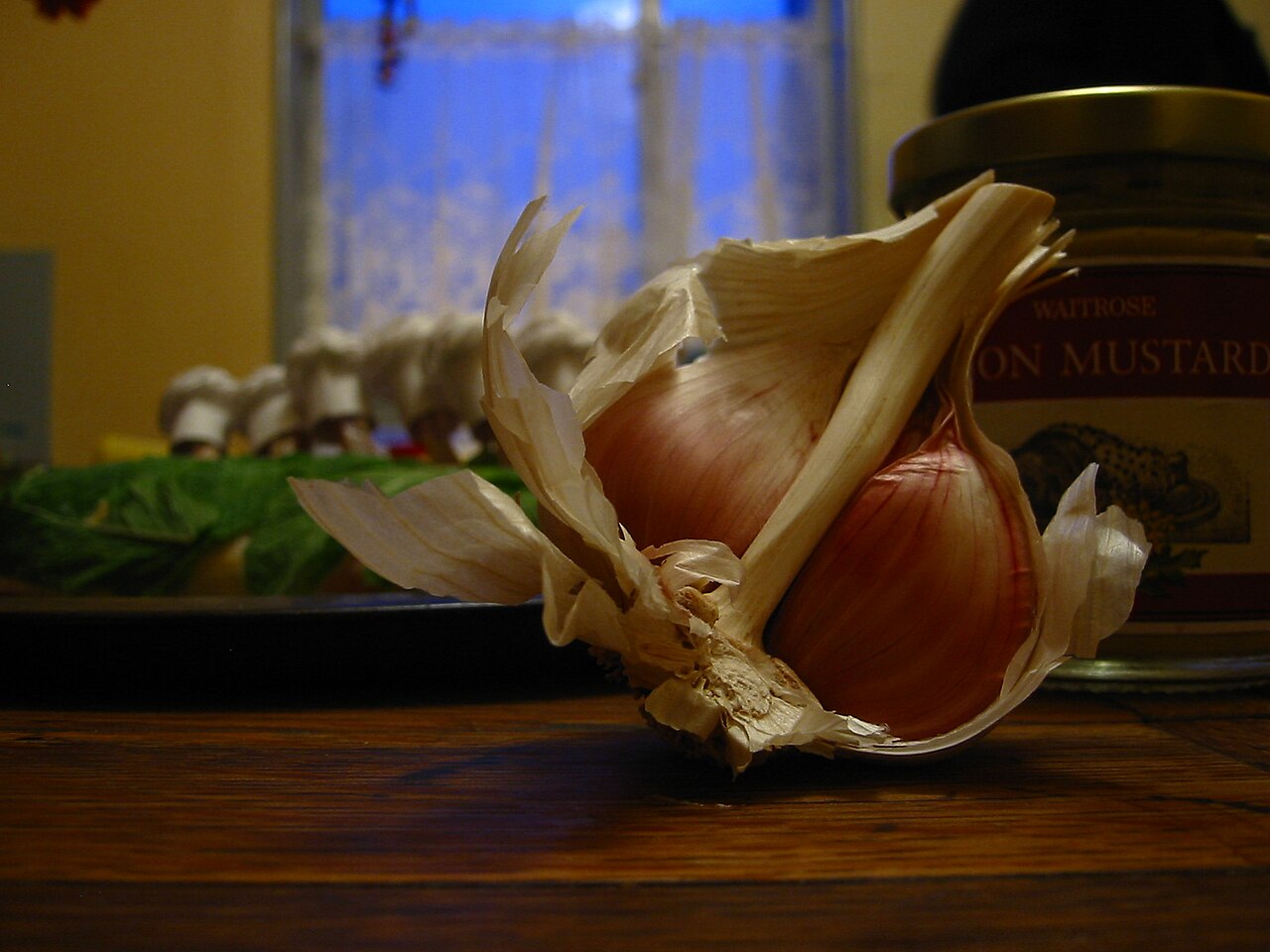
September is the time for home gardeners to plant garlic, says University of Missouri Extension horticulturist David Trinklein. Garlic (Allium sativum) is a cool-season crop that does not occur in the wild and is thought to have arisen in central Asia; it has been used as food and medicine for more than 7,000 years, and some 600 cultivars exist today.
Hardneck types produce a flower stalk (scape), taste stronger and peel more easily but store only three or four months; softneck types are more productive, easier to grow and store six to eight months, and are what most supermarkets sell.
Garlic grows best in sun, in well-drained but moisture-retentive soil rich in organic matter, at pH 6 to 7; lime is advised below 5.8, based on a soil test. Plant individual cloves 2 to 3 inches deep, pointed end up, about 6 inches apart, separating them from the bulb only on planting day. Trinklein advises against planting supermarket garlic. Without a soil test, 1 to 2 pounds of a 10-10-10 fertiliser per 100 square feet can be worked in before planting, with extra nitrogen when leaves appear in spring.
Garlic competes poorly with weeds and needs moderate watering, stopping once leaves begin to dry. In the Midwest it is harvested from mid-July to early August the following year and stores best at 32 to 38 F with about 60 percent humidity. Pests such as thrips and onion maggots and diseases such as botrytis can be limited with good sanitation and rotation.
Photo: Jeremy Keith / Wikimedia Commons (CC BY 2.0)
Source: Morning Ag Clips
Comments
(0)