
Artificial intelligence and automation are arriving on farm machinery along four distinct paths, Chris Hunsaker, chief executive and founder of Acuitus Ag, told the Farm Equipment Manufacturers Association's fall convention in New Orleans. His remarks were carried by Ag Equipment Intelligence's On the Record broadcast, hosted by Kim Schmidt.
The first path is the major equipment makers building their own end-to-end systems, purpose-built for their machines. Hunsaker gave John Deere as an example: its autonomous solution puts cameras on tractors and sensors on tillage equipment, and the system runs fully autonomously.
In the second, a maker partners with a specialist. Kubota and Bobcat work with the startup Agtonomy, which supplies the intelligence behind the automation while the manufacturer integrates the hardware, bringing a fully autonomous tractor and some implement functions to market. These systems rely mainly on cameras, with other sensors such as lidar or radar depending on the job, and Hunsaker said many choices have to be made for each use.
The third path is a third party supplying the whole solution: a retrofit autonomy kit fitted to an existing tractor, with some implement integration, in which the tractor maker has no involvement. He cited a California company as an example.
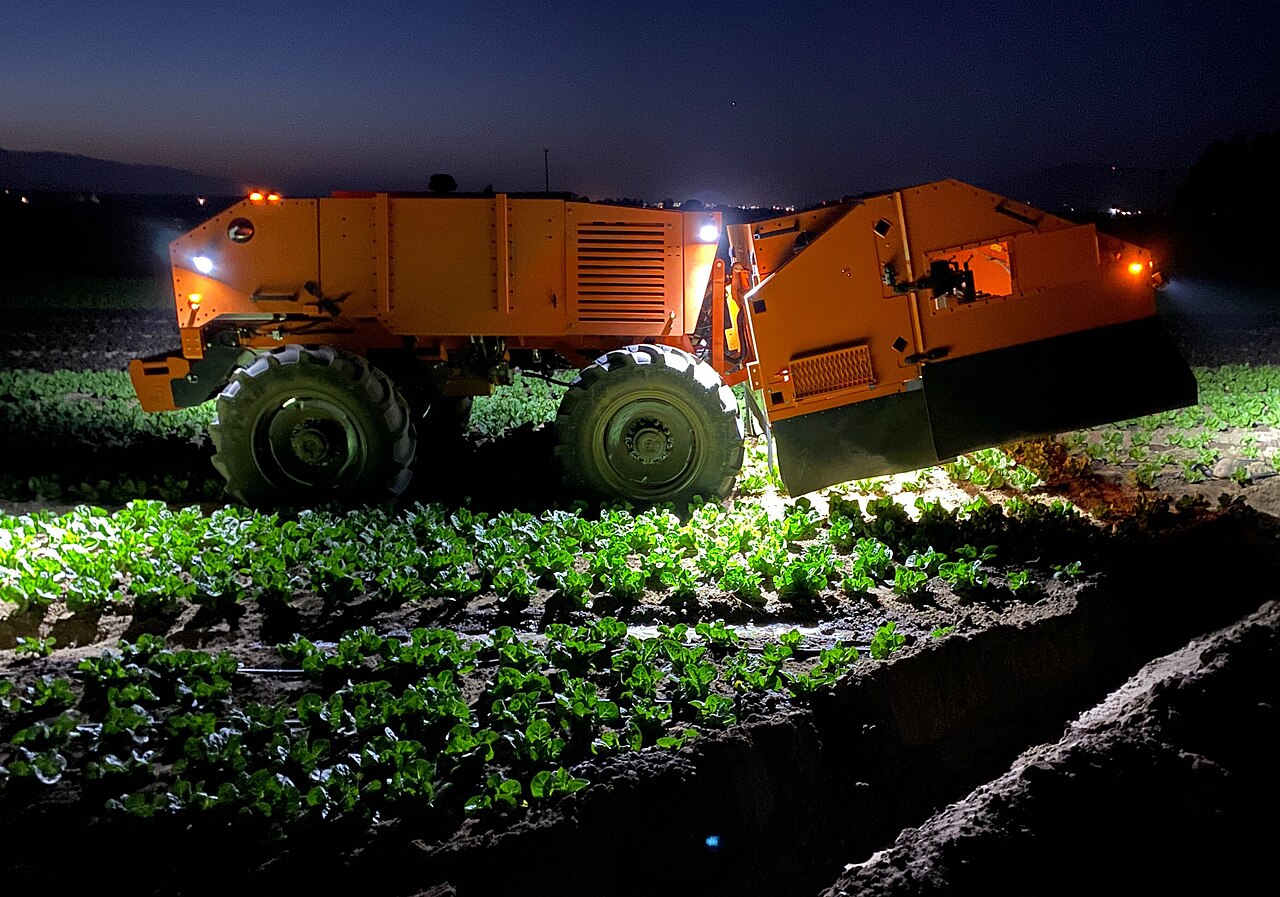
The fourth is machines designed from the ground up. Hunsaker described a Seattle startup's mechanical weeder that carries a large solar panel on top, runs on electric motors and weighs about 200 pounds. It hoes between and within the rows, tells weeds from the crop, and works by day or night. "It's going to be really interesting to see how it kind of converges as time goes on," he said.
Photo: PaulineCant / Wikimedia Commons (CC BY-SA 4.0)
Source: Precision Farming Dealer
Comments
(0)