
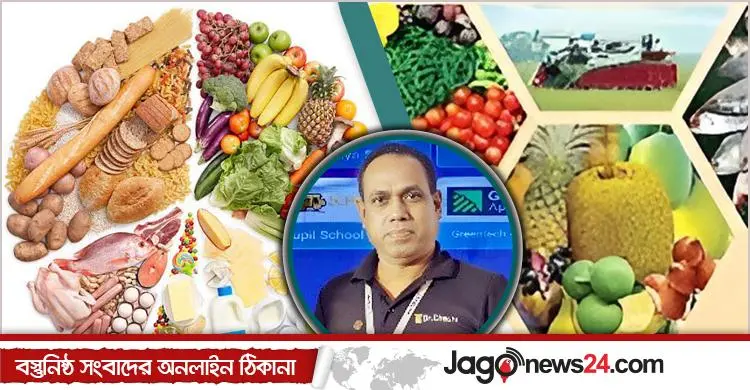
"Fish and rice make a Bengali" is our identity. Food is culture, food is belief, and that is our essential refuge. Food is not just a need of the stomach; it expresses our culture, heritage and sense of self. Every region's plate carries its history, and its cooking speaks the language of its civilisation. In every season, every festival and every family moment in Bengal, food is at the centre. Whether panta-ilish or payesh, luchi with chholar dal or khichuri, each hides a story, a chapter of culture.
"With good food we build the dream of tomorrow" is not just a message but a responsibility. Food that has nutrition, quality and care builds a healthy body, a lively mind and a hopeful future. If the body is a temple, food is the offering, and if that offering is made with care and good sense, the future too will be bright and prosperous. Let us become conscious about food, value local and basic foods, and build a healthy nation, a healthy society and a bright future through nutritious, safe and moderate eating.
Even today, hundreds of millions of people around the world do not get enough nutritious food, while food waste, climate change and inequality deepen the problem. So food is not only a basic right but the foundation of a sustainable future. Building awareness about climate change, farm technology, sustainable farming, rural development, poverty reduction and healthy eating habits is essential.
Good agricultural practice, good food
Food is the fundamental basis of human existence, and its quality is the biggest challenge. In the modern world, filling the stomach is not enough; food must be safe, nutritious and of good quality. Good, or safe, food is now not just a demand but an unavoidable condition of survival.
Bangladesh too has kept pace with the developed world in moving towards good food production. The government has already formulated the "Bangladesh Good Agricultural Practices" policy, which organises agriculture not only around productivity but in the light of safety, quality, the environment and social values. The policy has four pillars: safe food and better quality, economic stability, a sustainable environment and social acceptability, which have given farming a new horizon. Standards have also been set so that the fruit and vegetables that come from the farmer's sweat and labour are safe, of good quality, environmentally friendly and grown with regard for the health and welfare of farm workers. Through this emerges the dream of sustainable farming, in which nature is protected with the same dignity as people.
Without food safety, a healthy life, a beautiful world or human progress is impossible. So let us all practise good food and build a safe future for people and all living things, because this struggle is our eternal fight for survival.
Producing good food hand in hand
Food is the most basic need of human life, and there is no substitute for safe, nutritious and sufficient food for a healthy, balanced life. But rapid population growth, climate change, shrinking farmland, excessive chemical use in farm production and imbalances in the market system are threatening food security. So today "producing good food hand in hand" is not just a slogan but a real effort in which people at every level of society must come together.
Food production is not the farmer's responsibility alone. The farmer sows the seed, prepares the land and gives his labour, but without the right technology, financial support, marketing and a fair price, he loses interest in sustainable production. Consumers, for their part, want safe food free of toxic pesticides and adulteration. Connecting these two sides needs the combined cooperation of the government, research institutions, private enterprise and ordinary people. Only when everyone joins hands will good food production be possible.
First, the use of modern technology in farming must be encouraged. Innovations such as drip irrigation, smart farming, organic fertiliser, biopesticides and climate-resilient seed varieties must reach farmers, and the government and NGOs have a very important role here. Second, transparency and accountability in food production are essential. Bringing the whole supply chain, from production to the consumer's hands, under digitalisation and monitoring would greatly reduce adulteration and waste.
Third, fair prices for farmers must be ensured. Unless the dominance of middlemen in marketing farm produce is curbed, farmers will never get their due share. Cooperative-based markets, easy loans from agricultural banks and digital platforms can make farmers' incomes more secure.
Fourth, building awareness among consumers is equally important. When demand for safe food rises, farmers will also become more interested in organic and sustainable production. If families and society come forward together to demand safe food, positive change in farm policy and the market system will surely follow.
Above all, food production is not just an economic or technical matter but also a social and moral responsibility. Only by combining respect for the farmer's labour, protection of nature and priority for the consumer's health can we truly achieve "producing good food hand in hand".
Good food, the path to a better tomorrow
Food is the most important of people's basic needs, but filling the stomach is not enough; people need healthy, safe and nutritious food. Good food plays a big role not only in protecting personal health but in the progress of society and the state. So it can be said that "good food is the path to a better tomorrow".
If a person eats food rich in the vitamins, minerals, protein, carbohydrates and fat they need every day, their body will be strong, their immunity will rise and they will stay mentally fresh. Poor-quality or adulterated food, on the other hand, can cause various illnesses over the long term, such as diabetes, high blood pressure, malnutrition or complex diseases like cancer. So the right eating habits are the basis of a person's capacity to work and of a healthy life.
The importance of good food to society is even clearer. Only a healthy generation can take society forward, and there is no substitute for nutritious food for children's proper development. If a child does not get enough vitamins and minerals in childhood, their physical and mental growth is stunted, and in future they cannot become a productive citizen. So alongside developing education and health, ensuring food quality is equally important.
Good food is also immensely important economically. A healthy, capable workforce drives a country's economy. If farmers strive to produce safe, quality food and people consciously consume it, the domestic food industry will flourish too, reducing dependence on imports, increasing exports and strengthening the national economy.
Adulteration of food, meanwhile, is a big problem. The unchecked use of chemicals, formalin, artificial colours and pesticides threatens human health, harming not only consumers but also the farmers who produce the food. So to ensure food safety, all three parties, the government, producers (farmers) and consumers, must act responsibly.
Several things matter in ensuring good food. First, food production by organic and natural means must increase, that is, farm produce must be grown through good agricultural practice. Second, modern technology must be used in food storage and transport. Third, the media, educational institutions and health workers must work together to raise public awareness. At the same time, we must change our own eating habits. Rather than growing more addicted to fast food or junk food, we should keep local vegetables, fruit, fish and milk in our diet. If trust in local food grows, farmers will benefit and the rural economy will be strengthened.
Finally, good food plays an important role not only in building healthy bodies but in building an advanced, aware and prosperous nation. If today's generation pays attention to eating healthy food, the next generation will inherit a healthy and productive society. So today we must pledge to build the path to a better tomorrow through good food.
Source: Jagonews24. First published in Bengali on The Agro News.


Comments
(0)