
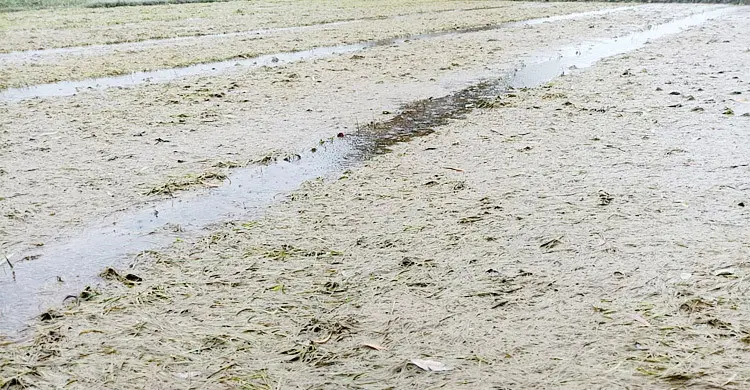
The ongoing flood has caused extensive crop damage across the country. Farmland has gone under water, and vegetables, rice and other crops have been damaged. Some crops may not survive at all. It will take farmers time to recover from these losses, but they also need to think about what to do now.
Cleaning up the fields
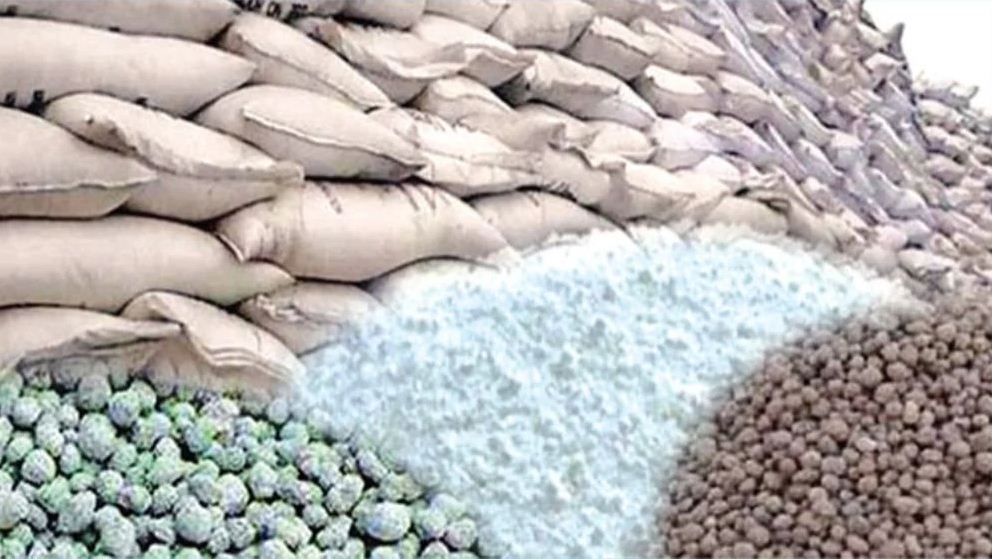
On land that was not damaged or only partly damaged, water hyacinth, silt, sand and debris brought by the flood should be cleared as quickly as possible. For five to seven days after the water recedes, mud-covered rice plants should be washed with clean water, using a spray machine if needed. Fertiliser should not be applied straight after the water recedes, as the plants may rot. After 10 days, when the seedlings start growing new leaves, apply 8 kg of urea and 8 kg of potash per bigha.
Where floodwater did not reach, 2-3 tillers should be left on growing aman plants (30-40 days after transplanting), and the remaining tillers pulled up with their roots and immediately transplanted in another field. If seedbeds cannot be made because higher land is flooded, seedlings should be raised in floating or dapog seedbeds.
Varieties and fertiliser for late planting
After the water recedes, photoperiod-sensitive high-yielding varieties such as BR5, BR22, BR23, BRRI dhan34, BRRI dhan46 and BRRI dhan54, and local varieties including Nazirshail, should be planted. Short-duration BRRI dhan57 and BRRI dhan62 can also be planted. Seedbeds can be made until 30 August. Because late planting needs quick tillering, the recommended TSP, gypsum and zinc, along with two-thirds of the urea, should be applied during land preparation. The rest of the urea should be applied within 25-30 days of transplanting.
On high and medium-high land, sprouted seed should be broadcast directly on the field. This may bring the crop in five to seven days earlier than transplanting. Rice plants that escaped flood damage need full care, including weed control, protection from pests and diseases, balanced fertiliser and supplementary irrigation as needed.
Disease and pest control
After the flood, bacterial leaf blight may break out as soon as the seedlings are fully established. In that case, mix 60 grams of Thiovit and 60 grams of potash fertiliser in 10 litres of water and spray it over 5 decimals of land. To protect plants from stem borer, brown and white-backed planthopper, leaf roller and rice hispa at this time, use hand nets and perching depending on the pest, and approved insecticides if needed.
Aman rice should not be transplanted after 15 September in the north of the country, or after 20 September in the central and southern regions. In that case, early rabi crops should be grown instead. For more information, farmers can contact their nearest sub-assistant agriculture officer or the upazila agriculture office.
Source: Jagonews24. First published in Bengali on The Agro News.
Comments
(0)