
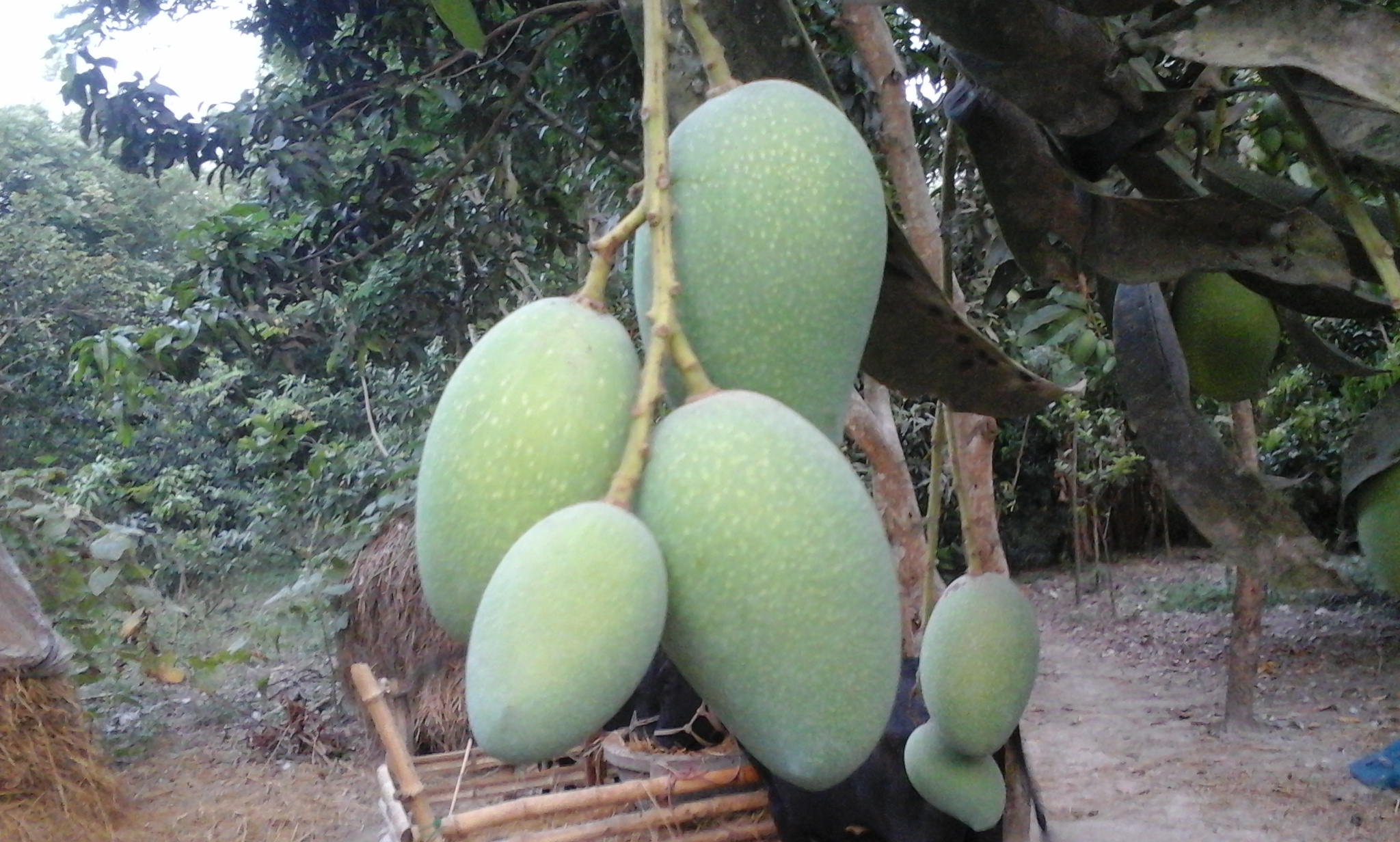
In mid-April 2024, before ripe mangoes had reached Bangladesh's markets, the lifestyle desk of the news site Jagonews24 published five dishes that can be made with green, unripe mango. The piece, which appeared on 18 April 2024, explained how to make a green mango chutney, a green mango salad, a mango rice, a chicken curry cooked with green mango, and a katla fish dish in a mango and mustard sauce known as aam katlar rasa. It noted that most households already enjoy green mango chutney, mango dal and sour mango dishes, and offered the five recipes as a change from those familiar ones.
The original recipes give no measured quantities. Salt, sugar, chillies and spices are added to taste, as is usual in home cooking in Bengal, and no amounts have been added here. The dishes are set out below as the paper published them, with the ingredients of each one listed and the method given step by step. The background that follows, on the mango tree, its varieties and harvest, how much of it Bangladesh grows, what mango flesh contains, and the katla fish and mustard used in the last dish, comes from Banglapedia, the Department of Agricultural Extension (DAE), the Bangladesh Agricultural Research Institute (BARI), the United States Department of Agriculture (USDA), FishBase and news reports published before April 2024.
Why green mango in April
The paper began by saying that summer is many people's favourite season because of mangoes, the juicy fruit that appears in the hot months, and that few people do not love it. Green mango, it added, has plenty of admirers of its own. Because ripe mangoes had not yet come to market in mid-April, it called this the best time to eat mangoes green.
That timing reflects the way the harvest is managed in the main growing districts. In Rajshahi, the district administration sets a calendar each season that fixes the date from which each variety may be picked. On 3 May 2023 the state news agency BSS reported the calendar for that year, agreed at a meeting chaired by the deputy commissioner. Local and indigenous varieties could be harvested from 4 May, Gopalbhog from 15 May, Ranipachhand from 20 May, and Himsagar or Khirshapat from 25 May. Langra followed from 6 June, Amropali and Fazli from 10 June, Ashwina and BARI Aam-4 from 10 July, Gormati from 10 July and Ilamati from 20 August. The administration said it would take action against the harvesting of immature mangoes.
The same BSS report said Rajshahi district had 19,578 hectares of mango orchards in 2023 and a production target of about 2.58 lakh tonnes for that season. Under a calendar of this kind, the fruit on the trees in April is still unripe.
Cooking with green mango is an old habit in the region. Banglapedia, the national encyclopedia of Bangladesh, notes that green fruits are added to curries or dal for extra flavour, and that both green and ripe mangoes are made into jam, jelly, squash, chutney and pickle (achar). The five dishes in the Jagonews24 piece take that habit further: two use the mango raw, one stirs it through tempered rice, and two cook it in a curry or a sauce.
Five green mango dishes
Green mango chutney
The first dish is a ground chutney. The paper suggested serving it with ordinary dal and rice, saying it would bring a simple lunch to life.
- Ingredients: green mango, cut into pieces; ginger; green chillies; coriander leaves; salt; sugar; a little dried chilli powder.
- Cut the green mango into pieces.
- Add the ginger, green chillies, coriander leaves, salt, sugar and a little dried chilli powder.
- Grind everything together well, and serve the chutney with dal and rice.
Green mango salad
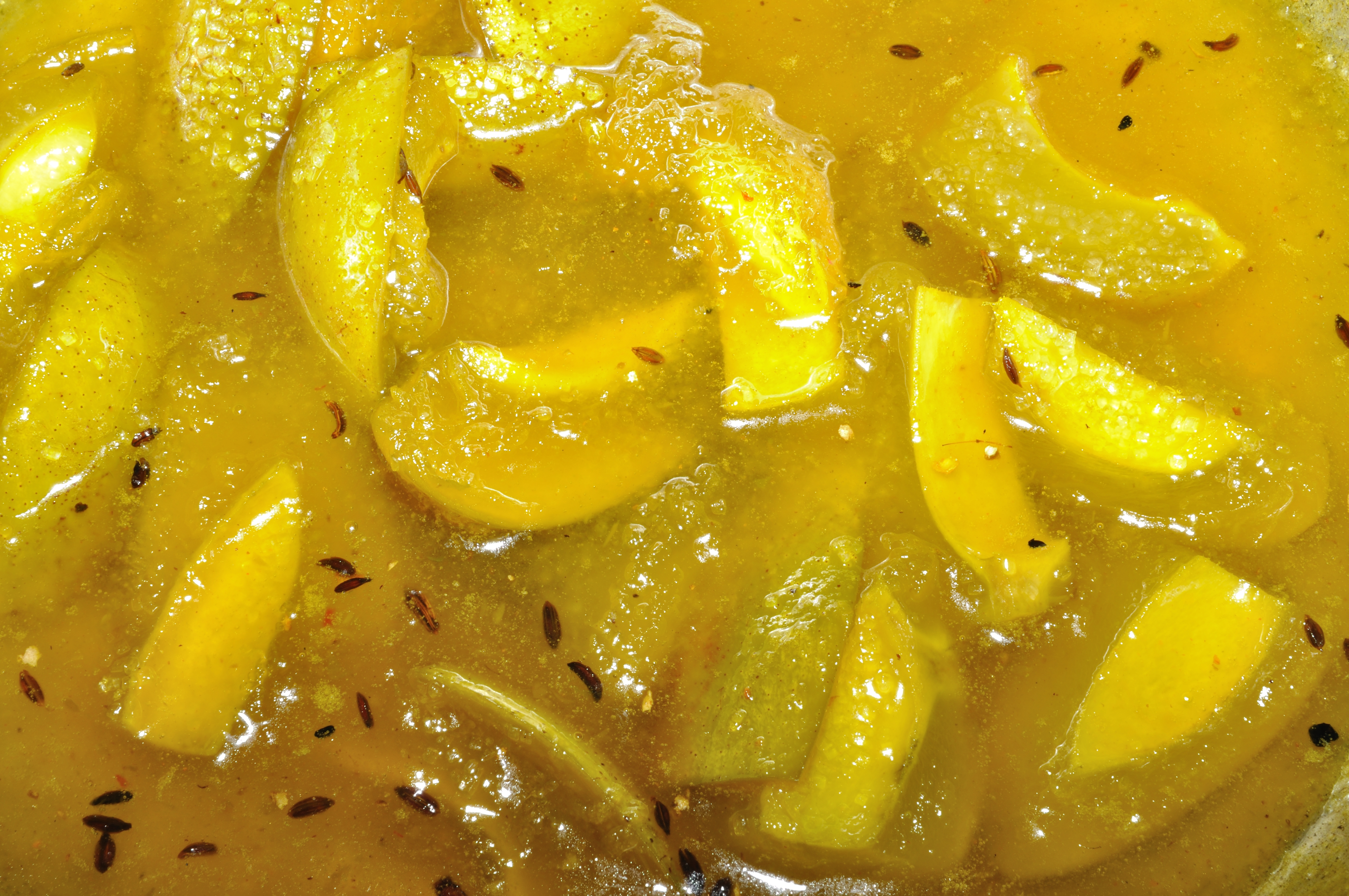
The salad uses the mango in long thin strips, with a coarse dressing of chilli, ginger, coriander, molasses, tamarind and black salt. The paper suggested eating it cold on a hot day.
- Ingredients: green mango; a few green chillies; chopped ginger; chopped coriander leaves; molasses (gur); tamarind extract; black salt (bit lobon); chopped onion; chopped nuts; lemon juice.
- Shred the green mango into long strips.
- Put a few green chillies, the chopped ginger, chopped coriander leaves, molasses, tamarind extract and black salt in a blender and give it one turn. The mixture does not need to be very smooth.
- In a bowl, mix the mango strips, chopped onion, chopped nuts, lemon juice and the blended mixture well.
- Serve the salad cold.
Mango rice
The third dish is a rice tempered with mustard seeds, chana dal and curry leaves, into which grated green mango is stirred.
- Ingredients: rice; green mango; oil; nuts; mustard seeds; dried chillies; chana dal (split Bengal gram); chopped ginger; green chillies; curry leaves; salt; turmeric.
- Cook the rice and take it off the heat while the grains are still a little firm.
- Wash and peel the green mango and grate it.
- Heat oil in a wok, add the nuts, stir them lightly and set them aside.
- Add a little more oil to the same wok and temper it with mustard seeds, dried chillies, chana dal, chopped ginger, green chillies and curry leaves.
- Add salt and turmeric, stir, and fry on a low flame.
- When the spices are a little fried, add the grated mango.
- After about five minutes, add the rice and mix well.
- Scatter the chopped nuts on top and serve.
Mango chicken curry
In the fourth dish, chicken is marinated, cooked down (kosha), and finished with pieces of green mango, which go in when the meat is partly cooked.
- Ingredients: chicken; turmeric powder; cumin powder; chilli powder; green chilli paste; ginger paste; onion and garlic paste; oil; dried chillies; bay leaves; white cumin; green mango, cut into pieces; water; chopped coriander leaves.
- Rub the meat well with the turmeric powder, cumin powder, chilli powder, green chilli paste, ginger paste and onion and garlic paste, and keep it in the fridge.
- Take it out after about an hour.
- Heat oil in a wok and temper it with dried chillies, bay leaves and white cumin.
- Add the marinated meat and cook it down well, then add a little water.
- Cover the wok for a while and cook it down a little more.
- When the meat is partly done, add the green mango pieces and cover again for some time.
- When the sauce has thickened and clings to the meat, take it off the heat, scatter chopped coriander leaves on top and serve hot.
Mango katla rasa
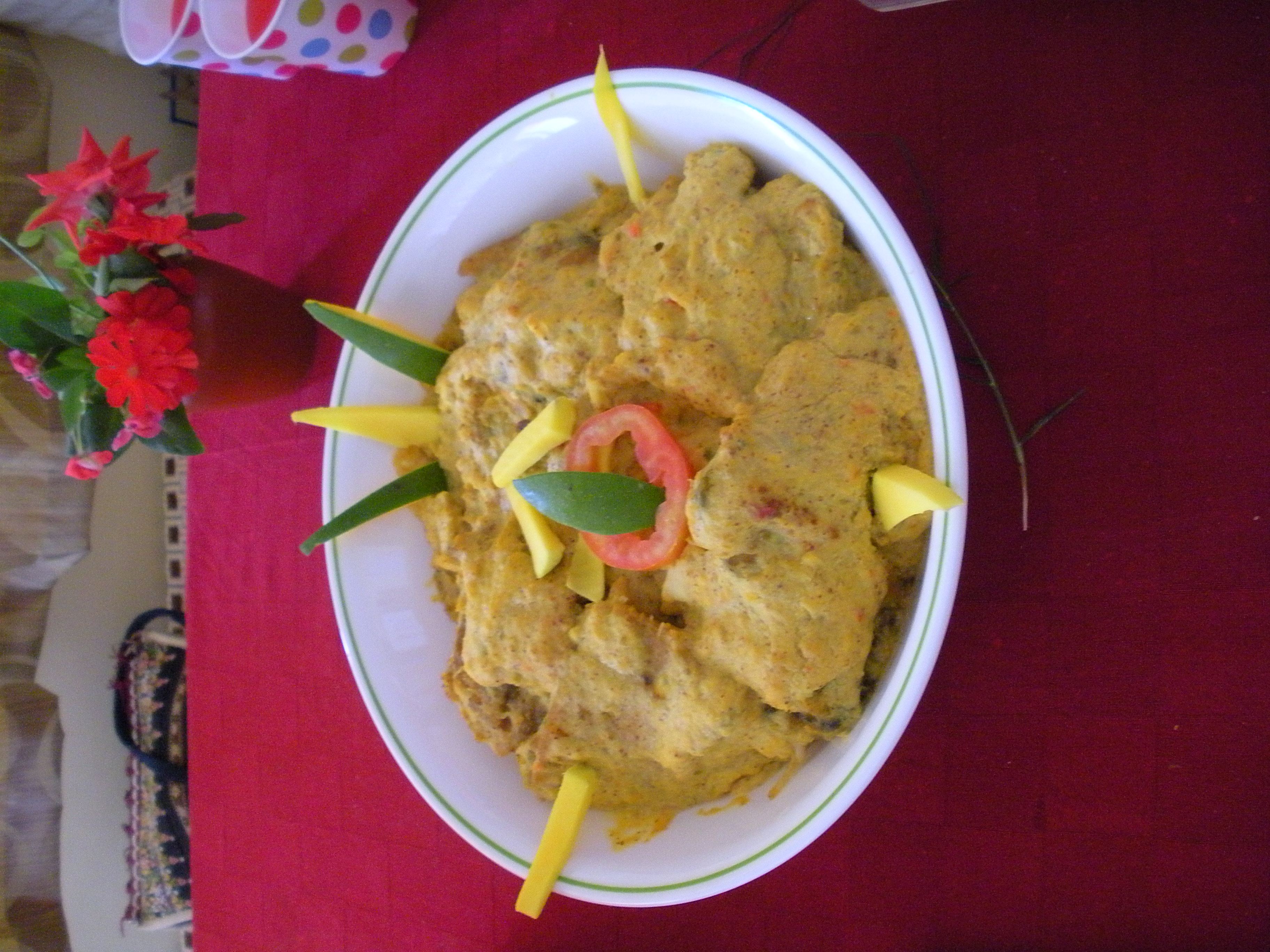
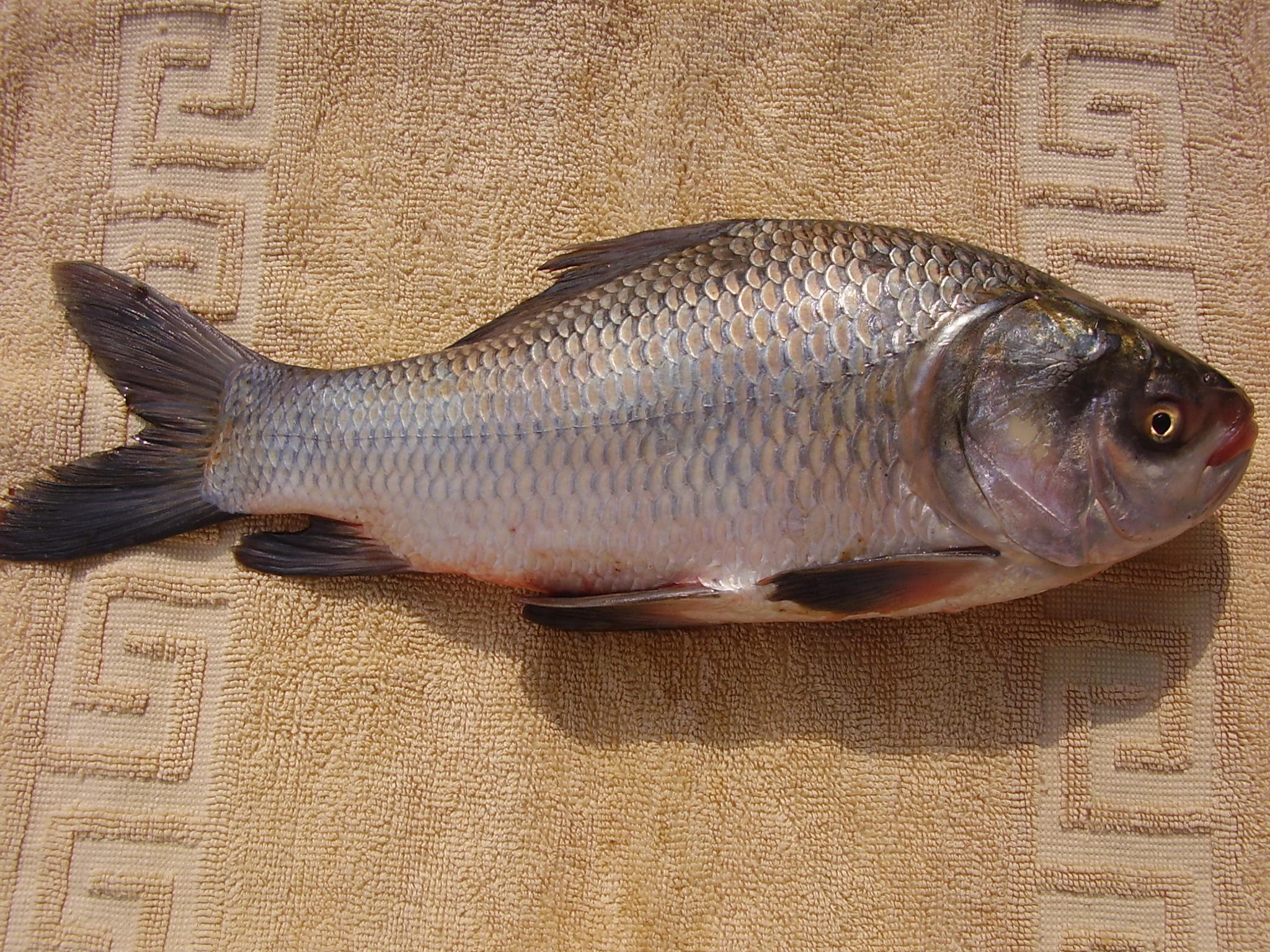
The last dish pairs green mango with katla, a carp found widely in Bangladesh. The mango is boiled soft and mashed, then cooked with mustard paste and a little sugar into a sauce in which the fried fish is finished.
- Ingredients: pieces of katla fish; salt; turmeric; oil; black cumin (kalojira); green chillies; green mango, cut into long pieces; water; mustard paste; sugar.
- Rub the fish pieces with salt and turmeric, heat oil in a wok and fry them lightly. Take the fish out.
- Temper the same oil with black cumin and green chillies, then add the mango cut into long pieces.
- Add salt and turmeric to taste and stir. Add a little water and cover the wok.
- When the mango is well boiled, mash it thoroughly with a dal masher (dal ghutni). Add the mustard paste and cook it down well.
- When the oil separates from the spices, add water as needed and sugar to taste.
- When the sauce comes to the boil, add the fried fish, cover and cook for about five minutes.
- Uncover and serve with hot rice.
The mango tree: its nature and its history
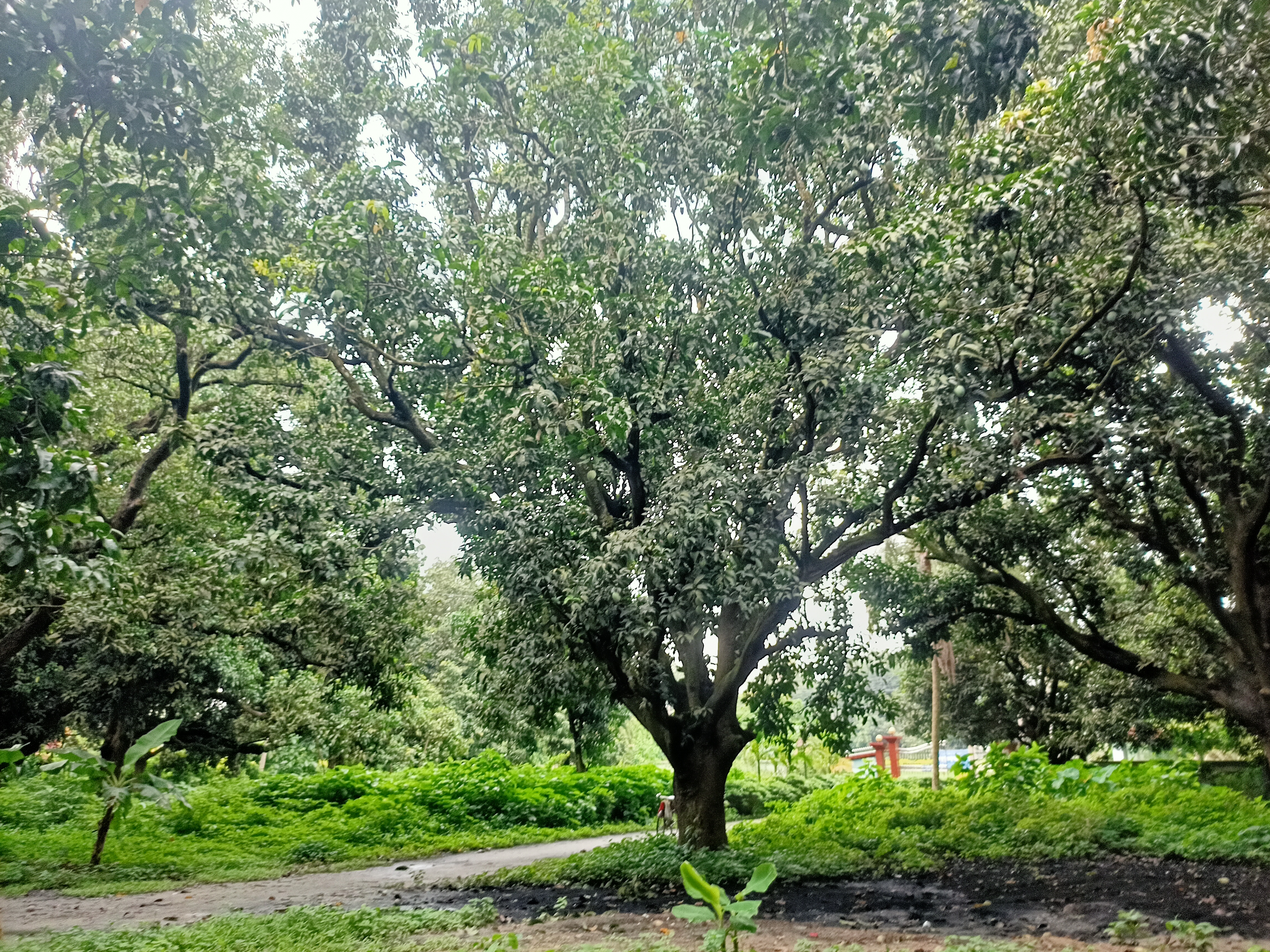
The mango is Mangifera indica, of the family Anacardiaceae. Banglapedia says its origin is lost in antiquity, but that the species is considered native to eastern India, including Bangladesh, Assam and Myanmar. It is an evergreen tree with a large, thick trunk and a dense crown, and trees planted with plenty of space can grow to more than 20 metres in height and 30 metres in width.
Its small, fragrant flowers are borne in large panicles at the ends of the branches. A single inflorescence may carry 100 to 250 buds, yet only about one or two flowers in a thousand become a mature fruit. The fruit is a one-seeded drupe. It may be oval, round, heart-shaped, kidney-shaped or long and slender, and when ripe it ranges from green to yellow, orange and red. In size it runs from that of a plum to fruits of 750 grams to one kilogram.
Mango grows on almost any soil except shallow soils less than a metre deep or those with rock or sticky clay beneath, and does best at a soil pH of 5.5 to 7.5. Trees grafted from elite cultivars begin to bear from about their fourth year and stay productive to about 45 years, while trees grown from seed can go on bearing for 60 years or more.
The fruit has a long history in the subcontinent. Banglapedia records that the Sanskrit name am means stored food or provisions, and that the Chinese traveller Hwen T'sang, who visited India between 632 and 645 AD, is credited with bringing the mango to the attention of the outside world. The Mughal emperor Akbar, who reigned from 1556 to 1605, planted about 100,000 trees in an orchard near Darbhanga, which is considered the first organised mango orchard of the subcontinent. The English word comes from the Tamil man-key or man-gay, which the Portuguese took up as manga. The tree reached Brazil around 1700 and the West Indies around 1740.
In Bangladesh, about three dozen insect pests attack the mango from the nursery to the mature tree. The major ones are mango hoppers, fruit weevils, stem borers, shoot borers and fruit flies. Fungal diseases include anthracnose, sooty mould, leaf blight, die back and powdery mildew, and a bacterial leaf spot also causes damage. Banglapedia lists old and unproductive trees, poor management, neglect of pests and diseases, trees grown from seed and indiscriminate felling among the reasons yields have been low.
Varieties, BARI's new lines and geographical indications
Bangladesh's mangoes fall into two main groups, according to Banglapedia: elite varieties propagated by grafting, and local seedling types known as deshi or guti am. About 100 cultivars are found in the country. The commercially important elite varieties are grown mainly in Rajshahi, Chapainawabganj and Dinajpur, and include Fazli, Langra, Gopalbhog, Himsagar, Khirsapat, Ashwina, Kishanbhog, Kuapahari, Lata Bombai, Foria, Bombai, Kohitoor, Lakshmanbhog, Mohanbhog and Misribhog. BARI has mango research centres at Rajshahi, Chapainawabganj and Joydebpur, and the DAE distributes grafts of the elite varieties.
Newer varieties bred in the country have been spreading. In August 2021 The Daily Star reported that BARI had developed 17 mango varieties and Bangladesh Agricultural University 25. BARI Aam-3, a hybrid of the Dasheri and Neelum varieties released in 1996, had been widely available since 2009-10, was grown in at least 30 districts including the Rajshahi region, and reached markets from 15 June to mid-August. BARI Aam-4, a hybrid of the Florida variety M3896 and the local Ashwina released in 2003, was grown on 4,000 to 5,000 hectares, supplied about one per cent of national output and came to market from late July through August. A BARI senior scientific officer told the paper that research was aimed mainly at late and off-season production, and that developing a variety takes five to six years.
Several of the country's mangoes have also been registered as geographical indication (GI) products, a status that ties a product's name to its place of origin. On 27 January 2019 Khirsapat, also known as Himsagar, of Chapainawabganj became Bangladesh's third GI product, after Jamdani and hilsa, The Daily Star reported. BARI had applied for it in February 2017 on behalf of the district's growers, and the certificate was issued by the Department of Patents, Designs and Trademarks under the industries ministry. In July 2023 the news agency UNB reported that the Langra and Ashwina mangoes of Chapainawabganj had been recognised as GI products on 25 June, on an application by the Horticulture Centre in Chapainawabganj, whose chief scientific officer confirmed the news.
How much mango Bangladesh grows
Mango output has grown several times over since the mid-2000s. Banglapedia gives a figure of about 6,39,820 tonnes from roughly 6,41,525 acres for 2005-06. By the 2020s it was several times that. In May 2023 the Horticulture Wing of the DAE told The Business Post that the country's highest production up to then had been in FY2020-21, with 25,00,570 tonnes on 1,98,578 hectares. In FY2021-22 output was 23,50,499 tonnes on 2,02,968 hectares; the wing's director (in charge) said production had dropped that year because of natural calamities.
The area under mango had risen to 2,02,968 hectares in FY2021-22 from 1,67,760 hectares in FY2015-16, a horticulture development officer of the wing said. For fruit as a whole, he said, about 105 lakh tonnes had been produced on 6.3 lakh hectares in FY2010-11, and more than 143 lakh tonnes on 7.34 lakh hectares in FY2021-22. In May 2023, despite drought and heat waves that season, the wing forecast a record of nearly 25.5 lakh tonnes of mangoes for FY2022-23.
The officials put the growth down to more land coming under commercial orchards, new farmers entering mango growing and new methods. Farmers were adopting high-density planting, in which a single tree may bear fewer mangoes but the orchard as a whole produces more; the wing described the change as a shift from making maximum use of land to making maximum use of sunlight. Seedlings of several varieties were available from the wing's 77 horticulture nurseries and centres. The wing's director said the biggest change was in the Naogaon region, where farmers were moving from rice to mango orchards.
What mango flesh contains
The USDA's FoodData Central database, in its SR Legacy entry for raw mango published in April 2019, gives the following values for 100 grams of the edible part: 60 kilocalories, 83.5 grams of water, 15.0 grams of carbohydrate, 1.6 grams of dietary fibre, 0.82 grams of protein and 0.38 grams of fat. The same 100 grams carry 36.4 milligrams of vitamin C, 168 milligrams of potassium, 43 micrograms of folate and 640 micrograms of beta-carotene, equal to 54 micrograms of vitamin A (as retinol activity equivalents).
These figures describe mango as it is generally eaten and are not separate values for green fruit. The Food Composition Table for Bangladesh, published in 2013 by the Institute of Nutrition and Food Science of the University of Dhaka with the Food and Agriculture Organization (FAO), analyses ripe Fazli and Langra mangoes rather than green ones. Several of the five dishes also add sugar, molasses, salt or oil, so anyone following a diet for diabetes, blood pressure or another condition should ask a doctor how such dishes fit into it.
Katla, the fish in the fifth dish
Katla, the fish in aam katlar rasa, is a large carp. FishBase, the global fish database, lists it as Labeo catla (Hamilton, 1822), of the carp family Cyprinidae, though it is long known by its older name Catla catla. It is native to Pakistan, India, Bangladesh, Nepal and Myanmar and has been introduced elsewhere. The largest recorded fish measured 182 centimetres and the heaviest published weight is 38.6 kilograms. It has a deep body, a large upturned mouth with a prominent lower jaw and conspicuously large scales.
Adult katla live in rivers, lakes and culture ponds and breed in rivers. They feed at the surface and in mid-water and are mainly omnivorous, while the young eat insects, detritus and phytoplankton. FishBase lists the species as Least Concern on the IUCN Red List, assessed in 2009, and as highly commercial both in fisheries and in fish farming. Banglapedia gives its local names as catla or katal, says it is widely distributed in Bangladesh, and notes that in mixed pond culture the exotic bighead carp, a filter feeder, competes with katla for food. Katla is usually farmed in ponds together with rohu and mrigal, and consumers prefer fish of one to two kilograms.
Farmed carps such as katla are part of a fisheries sector that has grown quickly. The Daily Star reported in July 2023 that Bangladesh produced 47.59 lakh tonnes of fish in FY2021-22, up more than 55 per cent from 30.62 lakh tonnes in FY2010-11.
Mustard, coriander and the other ingredients
Mustard paste gives the katla dish its sharpness. Banglapedia describes mustard (sarisa) as an oilseed herb of the family Cruciferae, grown in Bangladesh as a winter (rabi) crop, and names Brassica napus and Brassica nigra among its species. Only a few decades ago mustard oil was the country's only cooking oil, pressed in wooden mills called ghani that were turned by bullocks; the oil is now extracted in electric mills. About 0.24 million hectares are under mustard, with comparatively large areas in Chittagong, Sylhet, Dhaka, Tangail, Jessore, Bogra, Sirajganj and Pabna.
Most of the other flavourings in the five recipes are crops grown in the country. Banglapedia lists ginger, garlic, turmeric, onion, chilli and coriander among the spices commonly cultivated in Bangladesh, and notes that young coriander leaves are a common flavouring for vegetable and fish curries. In these recipes coriander leaves are ground into the chutney, blended into the salad dressing and scattered over the chicken curry; ginger goes into four of the five dishes; and green chillies into all of them.
The two raw dishes rely on the mango's own sourness, sharpened in the salad by tamarind extract and lemon juice and balanced by sugar in the chutney and molasses in the salad. In the cooked dishes the sourness is set against other flavours: the mango rice is tempered with mustard seeds, dried chillies, chana dal and curry leaves; the chicken with dried chillies, bay leaves and white cumin; and the katla with black cumin and green chillies, before sugar is added to the mustard sauce.
Photo: Niriho khoka / Wikimedia Commons (CC BY-SA 4.0). The top picture shows green mangoes in Bangladesh, as background.
Sources: Jagonews24 (18 April 2024), Banglapedia, BSS (3 May 2023), The Business Post (29 May 2023), The Daily Star (16 August 2021, 27 January 2019, 31 July 2023), UNB (5 July 2023), USDA FoodData Central, Food Composition Table for Bangladesh (INFS and FAO, 2013), FishBase, Wikipedia.
Comments
(0)