
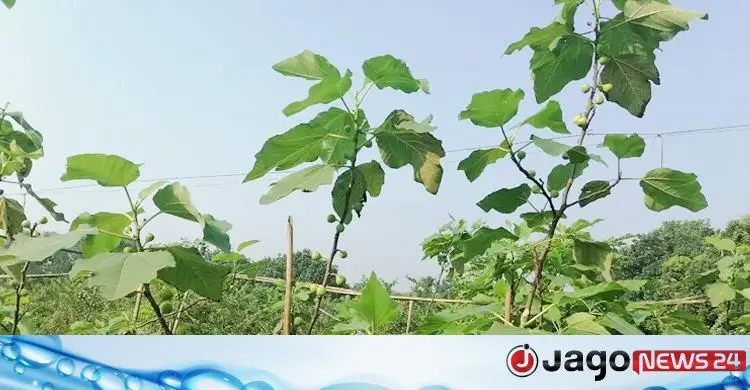
Bangladesh has built a proud and enviable position in agriculture on the world stage. The spread of tin, or fig (dumur), cultivation has opened up another alternative opportunity. Some describe these orchards as farm-fresh or organic gardens, and in many places agro-tourism has grown up around them. Many kinds of exotic or minor fruits are grown in these orchards, and one of them is the tin, or fig.
The fig has between 600 and more than 1,900 varieties, most of them growing in tropical regions. Its name has long been linked with horticulture in the Mediterranean. While Saudi Arabia and Bangladesh call the fruit tin or dumur, in other countries, notably India, Turkey, Egypt, Jordan and the United States, it is known as anjir.
The tree and its fruit
The virtues of the tin and the olive are mentioned in Surah At-Tin of the Holy Quran. Fig trees are generally slender, fast-growing and tend to spread in different directions, so they are wider than they are tall. Although the fig is grown in extreme climates, in dry and cold countries, Bangladesh has shown that it can be produced 365 days a year in a temperate climate.
There is no approved fig variety. The fig trees that grow in Bangladesh's villages are jagdumur, which has various species: some fruits weigh 20 to 30 grams, others 50 to 60 grams, and they turn red or yellow when ripe. There is also another valuable species called the Egyptian fig, a very juicy and much larger fruit. It can be eaten in two ways: fresh, straight from the tree, or dried in the sun and kept in glass containers to eat all year.
Each tree bears one kilogram of fruit in its first year, 7 to 11 kg in the second and up to 25 kg in the third. Yields keep rising in this way for 34 years in a row, and the tree lives for about 100 years. Full yield comes within three months. The fig-shaped fruit, from the top of the tree to its base, catches everyone's eye, and fruit forms at the base of every leaf.
The fig is a composite fruit that develops from hundreds of separate pedicellate droplets lining the receptacle wall, formed from individual female flowers enclosed by receptacle tissue in a hollow shell. This composite fruit is called a syconium. The skin of a mature fig is tough, leathery and white, and inside are seeds within separate ripe droplets of sweet gelatinous pulp; the whole interior is edible. Besides its distinctive fruit, the fig's pollination biology is also distinctive. On wild fig trees, both functional male and female flowers exist in the same syconium, while the female flowers of edible figs are usually large and produce juicy fruitlets.
Growing figs in fields and on rooftops
Because fig trees grow fast and are bushy, they stay low and their stems are very soft. Figs can therefore be propagated by cuttings and also raised from seed. Each tree grows 6 to 30 feet tall and bears at least 70 to 80 fruits. Besides open fields, good yields have been had from figs grown in tubs on rooftop gardens. The wholesale price of a two-month-old seedling is Tk 520 and the retail price Tk 720.
Figs have been grown successfully without any chemical fertiliser, by mixing organic manure and compost into the soil and planting them in the sun, in fields and in rooftop tubs, which has sparked strong interest among rooftop gardeners. Fig trees also fruit much faster than other fruit trees: a cutting starts bearing 4 to 5 months after planting.
So from 2 to 3 months after planting, tub-grown trees should regularly be given a little rotted mustard-cake water, every 10 to 15 days. The mustard cake should be soaked in water at least 10 days before use, and the rotted water then diluted and applied at the base of the tree. After one year, part of the soil in the tub should be changed: remove soil with roots to 2 inches wide and 6 inches deep and refill with fresh soil mixed with manure. This is best done before winter and at the end of the rainy season. The soil in tubs or drums should be loosened a little every 10 to 15 days.
Nutrition and medicinal claims
According to the article, figs contain plenty of vitamin A, vitamin B1 and vitamin B2, along with almost every essential nutrient, such as calcium, magnesium, iron, phosphorus, sodium, manganese and potassium. They are said to be effective against diseases caused by deficiencies of vitamin A, calcium and potassium, and are rich in carbohydrates, sugar, fat, protein, thiamine, riboflavin, calcium and iron.
The article also lists many medicinal properties. It says figs help relieve constipation, and help reduce body weight, ease stomach problems and keep the heart healthy by controlling high blood pressure. It describes figs as effective for epilepsy, paralysis, heart disease, diphtheria, enlarged spleen and chest pain, and says they help lower acidity and maintain the body's pH balance.
It says fig leaves reduce diabetic patients' need for insulin, in which case fig leaf juice should be taken every morning with breakfast. It also says figs help prevent cancer and that the sap of the fig tree is effective in relieving the pain of insect bites and stings.
Source: Jagonews24. First published in Bengali on The Agro News.
Comments
(0)