
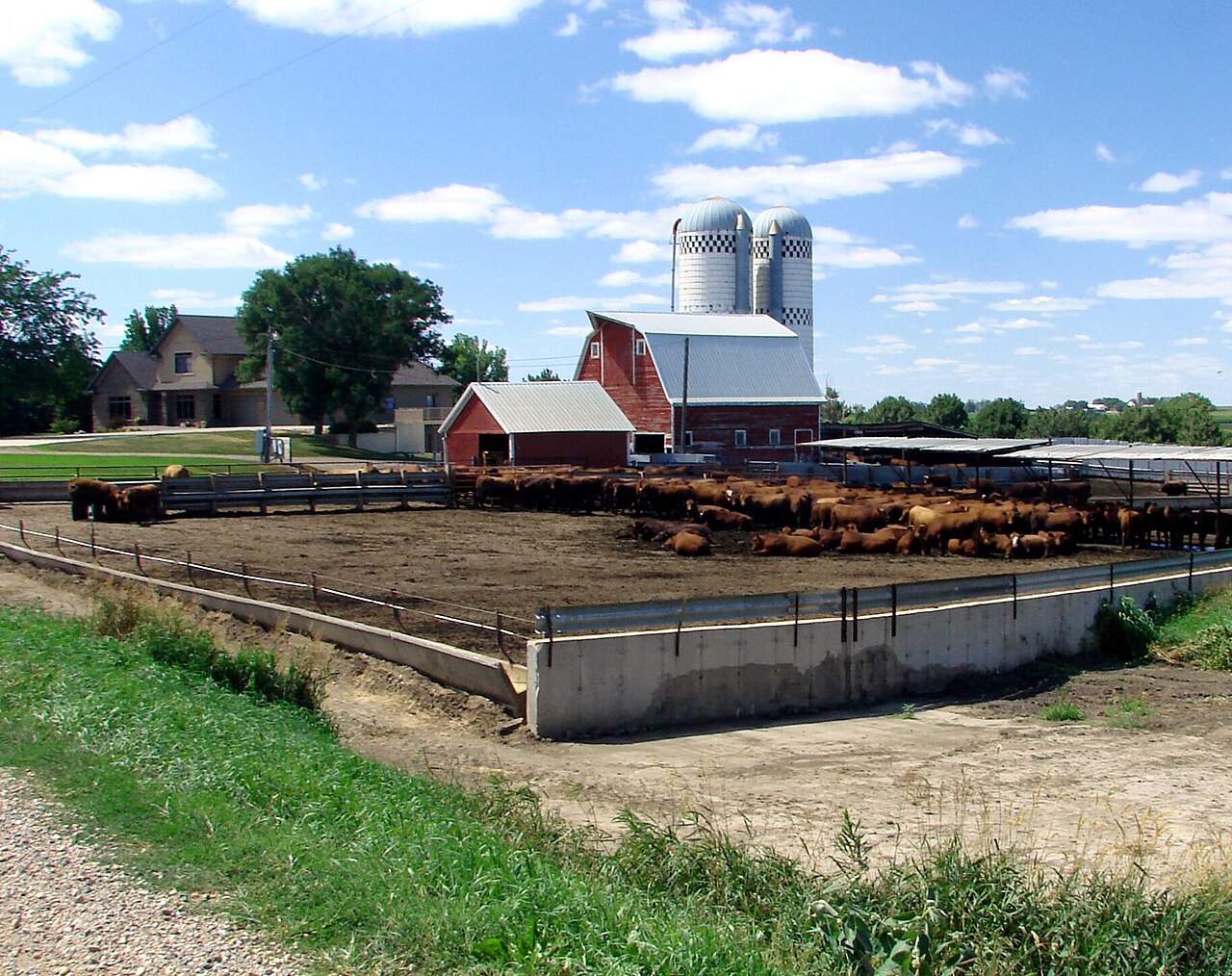
Two research projects funded through the Foundation for Food & Agriculture Research (FFAR) offer US cattle producers ways to use fewer antibiotics: a set of models that predicts which groups of cattle actually benefit from preventive treatment for respiratory disease, and a blood test that predicts liver abscesses with 80% accuracy.
Bovine Respiratory Disease (BRD) is the most common and costly disease in North American cattle, causing more than $1 billion in annual losses for US beef operations by recent estimates. Researchers led by Dr Brad White of Kansas State University built models to predict which groups of cattle are most likely to benefit from metaphylaxis, the practice of treating a whole group with antibiotics on arrival. Their first analysis found that treating the entire group did not improve animal health enough to outweigh the cost in 72% of the groups studied, and that the age of the cattle and the severity of their health challenges strongly affected the value of treatment.
Unnecessary antibiotic use raises the risk that resistant bacteria survive and multiply, leaving producers with fewer reliable treatments when BRD strikes. With further testing in commercial feedyards, the researchers say, the models could help producers decide when group treatment is worth it.
The second project, led by Dr Dale Woerner of Texas Tech University, found that liver abscesses in beef-on-dairy crossbred cattle are linked to changes in the rumen rather than to inherited traits. That makes breeding an unlikely fix; management that improves rumen health is the more promising route, and blood tests that predict abscesses with 80% accuracy offer a chance of earlier detection. Liver abscesses cost the beef industry an estimated $256 million a year through slower growth, poorer feed efficiency and losses at processing.
Both projects belong to the International Consortium for Antimicrobial Stewardship in Agriculture (ICASA), a public-private partnership created by FFAR to research the judicious use of antibiotics in animal agriculture.
Photo: inkknife_2000 / Wikimedia Commons (CC BY-SA 2.0)
Source: Morning Ag Clips
Comments
(0)