
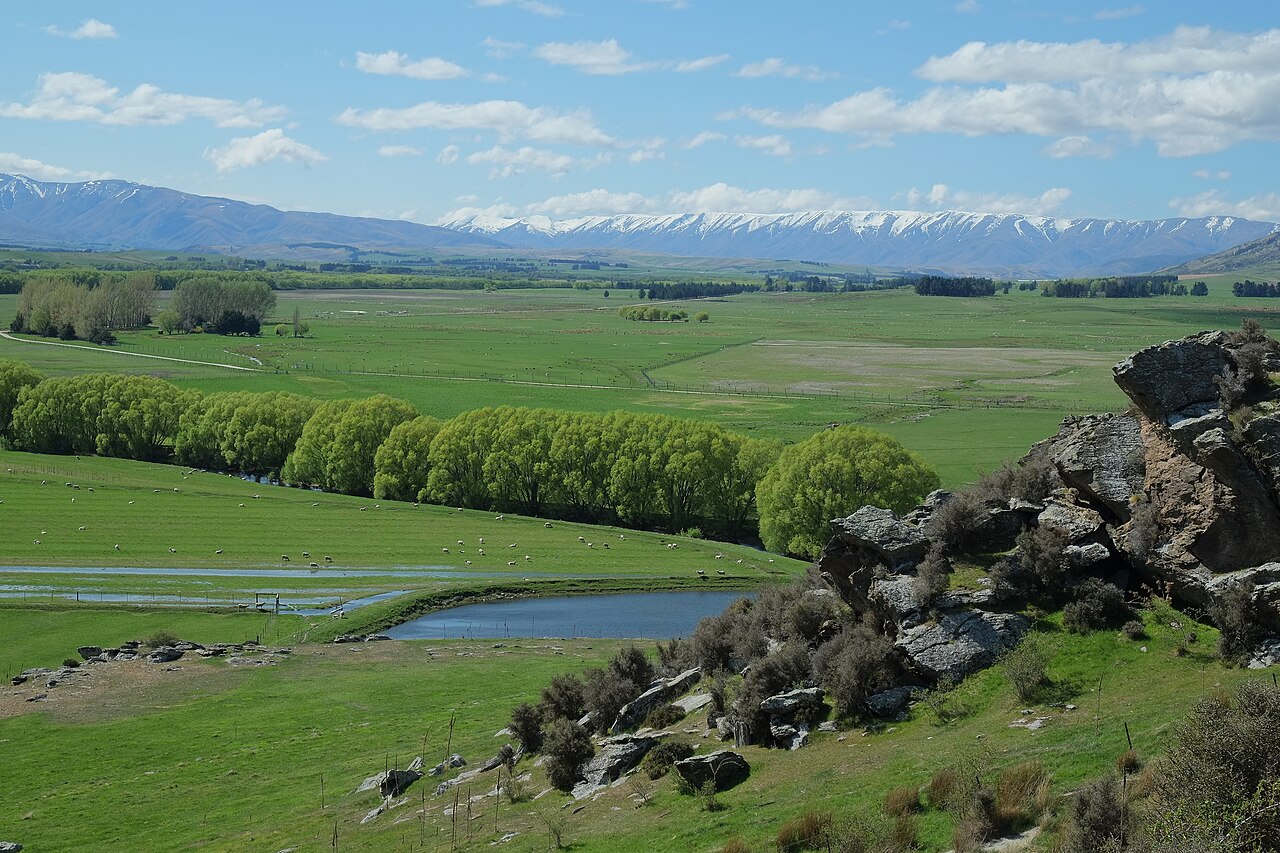
The dispute over Wānaka's wastewater has moved from Central Otago's Manuherekia Valley to Parliament, with Otago Federated Farmers president Anna Gillespie writing to Local Government Minister Simon Watts to demand that councils be stopped from exporting urban waste into rural districts. The consent at issue allows sludge from the Wānaka and Albert Town treatment plants to be spread on farmland at Lauder.
Under the consent, granted by Otago Regional Council without public notification, up to 2,000 cubic metres of sludge a year can be spread across 178 hectares of a former sheep and beef farm, plus a further 3,600 cubic metres of grease-trap, sump and winery wastewater. The sludge, mainly de-watered organic matter left after micro-organisms digest the town's sewage, was previously trucked three hours to a Southland landfill. Queenstown Lakes District Council has contracted SJ Allen Ltd to dispose of it.
"Primary producers are held to exacting standards under national and regional freshwater rules, facing rigorous enforcement over diffuse nutrient runoff and stock exclusion," Gillespie wrote. "In stark contrast, an urban territorial authority can avoid upgrading its municipal treatment facilities by having high-pathogen urban waste trucked out of sight and out of mind into a neighbouring rural district." Sending it to a basin that receives only 450–500 mm of rain a year, she said, "is not a long-term waste strategy – it is an abdication of municipal responsibility", and fast-track consenting, including 250 new homes recently approved for Wānaka, must not outpace infrastructure.
Manuherekia farmers and their catchment group have invested heavily in freshwater improvements alongside the Jobs for Nature programme, and independent monitoring shows the catchment still meets strict macroinvertebrate and water-quality guidelines. Gillespie is asking the government for a national policy barring councils from sending sludge across district boundaries in place of adequate local treatment, for proof of wastewater capacity before major housing approvals, and for the consent to be revoked so that Wānaka's waste does not become Lauder's problem. The piece appears in Federated Farmers' section of Farmers Weekly.
Photo: Pseudopanax / Wikimedia Commons (public domain)
Source: Farmers Weekly NZ
Comments
(0)