
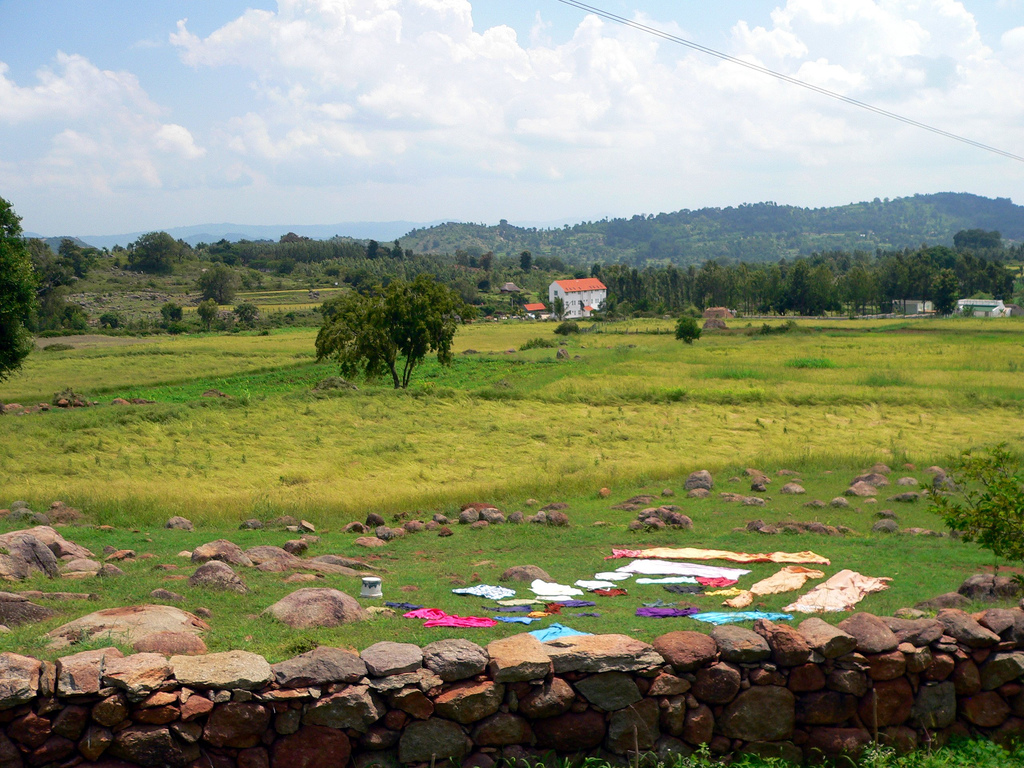
A severe El Nino could deepen water stress in the Indian state of Tamil Nadu and threaten its farms, Mongabay India reports. The Indian National Centre for Ocean Information Services (INCOIS) puts the probability that the El Nino phase lasts until April 2027 at 80 to 100 percent, and the India Meteorological Department (IMD) says the 2026 southwest monsoon ended on 30 September with a 12.6 percent rainfall deficiency, the worst since 2015. The shortfall was sharpest in the Western Ghats catchments that fill the state's reservoirs.
India saw 16 El Nino events between 1951 and 2025, and the major drought years of 1982, 1987, 2002, 2009 and 2015 all coincided with one, although not every El Nino brings drought. For the northeast monsoon, which began on 15 October and on which Tamil Nadu depends for its water, Tamil Nadu Agricultural University (TNAU) projects 468 mm of rain against a seasonal average of 464 mm. The rain may fall unevenly, heavy on the coast and thin in the interior.
Rainfed farming is the most exposed, since less rain means less irrigation water and soil moisture. The crops at risk include paddy, groundnut, maize, cotton, pulses, sugarcane, millets and coconut, and livestock faces water and fodder shortages. Thirteen districts, mostly in the north and centre, have been flagged as vulnerable: Ariyalur, Perambalur, Tirupattur, Vellore, Tiruchirappalli, Cuddalore, Kallakurichi, Kanchipuram, Ranipettai, Tiruvallur, Tiruvannamalai, Villupuram and Pudukkottai.
Groundwater offers little cushion. The Central Ground Water Board's 2025 assessment classed 103 of the state's 313 assessment units as over-exploited, heavy El Nino rain tends to run off rather than recharge aquifers, and seawater is pushing into coastal aquifers along the state's 1,076 km coastline.
Akshay Deoras, a senior research scientist at the University of Reading, said El Nino can lift northeast monsoon rain in Tamil Nadu, as in 2015, but with a weak October outlook "it would be prudent to prepare for the possibility of drought." He advised putting drinking water first.
An expert committee the state formed in July has recommended desilting water bodies, early warning systems, livestock management and micro-irrigation in the short term, and statewide aquifer management in the long term. Nambi Appadurai of World Resources Institute India, a committee member, called for a move from relief to preparedness, while environmental activist G. Sundarrajan said the recommendations have not yet been put into practice. The Indian Council of Agricultural Research's 2026 contingency plan advises drought-tolerant, short-duration varieties, rainwater harvesting and soil moisture conservation.
The report is by Krithiga Narayanan.
Photo: Arul Prasad / Wikimedia Commons (CC BY 2.0)
Source: Mongabay India

Comments
(0)