
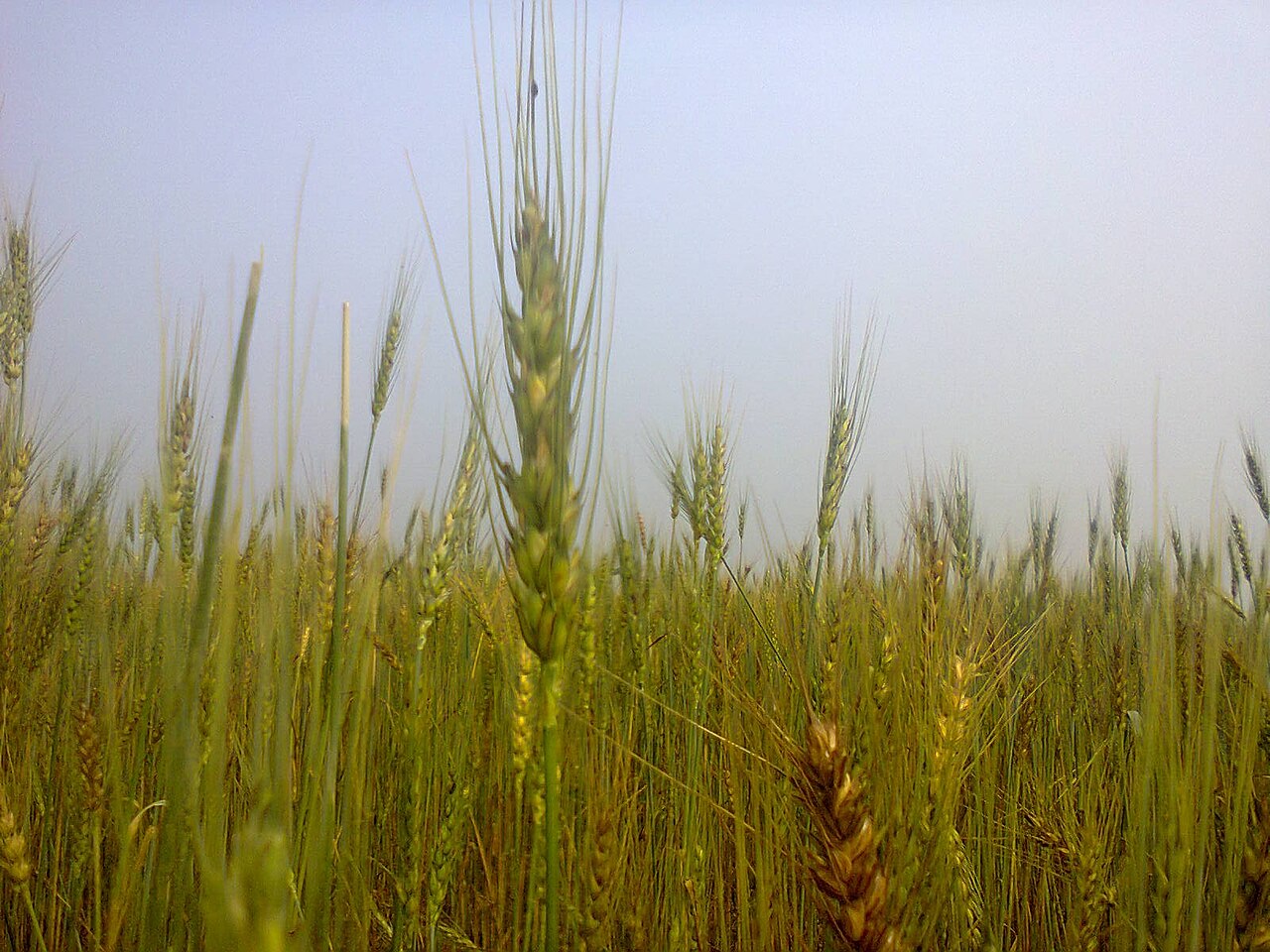
Wheat blast, a fungal disease, first appeared in Bangladesh's wheat fields in 2016 and wiped out the entire crop of many farmers that year. It is now spreading through wheat-growing areas, yet the country has no durable blast-resistant wheat variety. Rozana Binte Azad, a researcher from Gurudaspur in Natore, is working on the problem, as an interview-based profile by Biggani.org (first published in August 2024, updated on 18 November 2026) describes.
What the technology is: winter wheat varieties grown in cold countries carry a blast-resistance gene called Rmg8. Through controlled pollination, Rozana is crossing that wheat with local spring wheat varieties to develop new lines.
How it works: local wheat already carries a chromosome segment called the 2NS translocation, which helps resist blast and several other diseases. Rmg8 is now being added to it. Scientists call this gene stacking: putting several resistance genes in the same plant, so that if one fails another still protects it.
Where the work is done: after a degree in agriculture from Bangabandhu Sheikh Mujibur Rahman Agricultural University, Rozana enrolled for a master's at the Institute of Biotechnology and Genetic Engineering (IBGE), where her research continues. According to the profile, advanced gene-stacked lines are giving satisfactory results both in the laboratory and in the field.
Why it matters to farmers: the aim is a new high-yielding, blast-free wheat variety that protects farmers' fields and strengthens food security. These are still research lines, not released varieties; they must pass further field trials and approval before farmers can sow them.
Rozana grew up in a family of teachers: her father, A K Azad, is an assistant professor of economics at a college, and her mother, Rahema Khatun, was a schoolteacher. Her advice to young researchers is that a scientist's greatest assets are patience, curiosity and the ability to think in new ways, and that thinking outside established methods and staying open to discussion and criticism are the keys to innovation.
Photo: Milon / Wikimedia Commons (CC BY-SA 4.0)
Source: Biggani.org
Comments
(0)