
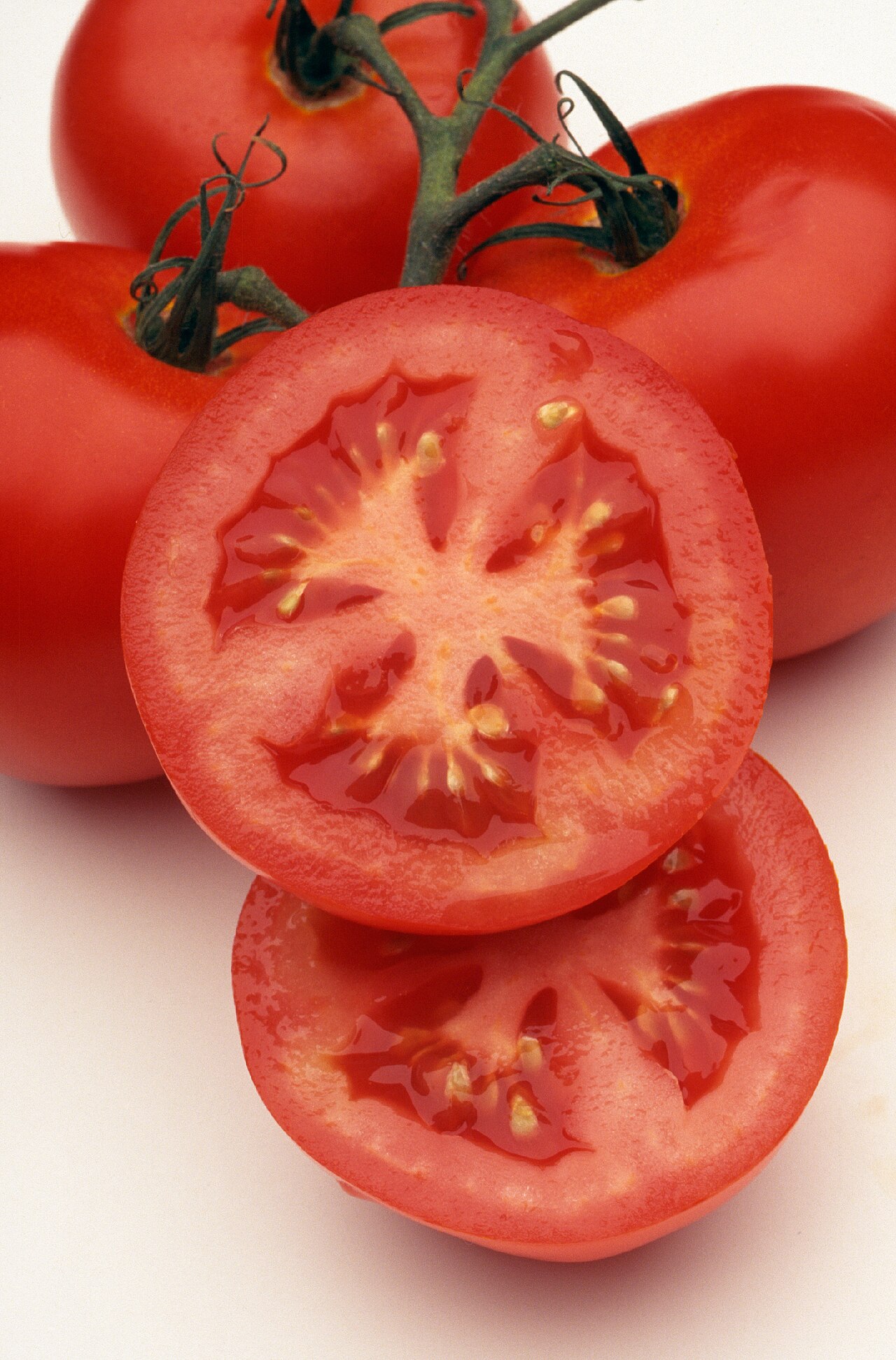
Tomato growers in Kamalganj, Moulvibazar, are doing well by combining two techniques: grafting and plastic mulch. Together they let farmers grow tomatoes even in summer, when prices are high. Krishi Shomoy's Moulvibazar correspondent reports that the method has been in use for five or six years and is spreading quickly because of good yields.
How it works: a tomato scion is joined to the sturdy stem and roots of wild brinjal (titbegun). This strengthens the root system, reduces disease and raises yields. Mulch paper laid over the beds, with seedlings planted through it, keeps the soil covered, stops weeds and shields the crop from direct sun and some insects; one laying of paper can serve several crops.
Md Jalal Uddin, deputy director of the Department of Agricultural Extension in Moulvibazar, said BARI Tomato-8 is grafted onto wild brinjal roots, which works because the two plants are closely related. If the method spreads, he said, home-grown tomatoes would be in the market all year. The district grows summer tomatoes on about 21 hectares at an average of 30 tonnes a hectare, and winter tomatoes on 1,221 hectares at 30 to 35 tonnes a hectare.
The crop is now grown in Adampur, Madhabpur and Sadar unions of the upazila. It is not cheap: farmers put the cost at Tk 3-4 lakh for 30 decimals, and each field needs six or seven labourers a day. Prices are good, though. Early in the season farmers sold wholesale at Tk 100 a kilo; now they get Tk 50 to 60.
Farmer Atiqur Rahman planted 15,000 grafted seedlings on mulch this year at a cost of Tk 12 lakh. He has been selling at Tk 60 a kilo for 15 days and hopes to sell Tk 30 lakh worth of tomatoes. Gias Uddin of Adampur grows summer tomatoes on about 2 acres and says the yield is good but the cost high. Abdus Salam of Tilakpur village says mulch keeps weeds down and the plants grow fast.
There are problems too. According to the report, while most farmers have succeeded, some have lost plants to insect attack just as fruit set, and say they got no help from the agriculture office. Farmers also graft seedlings themselves and sell them to other areas.
Photo: CSIRO / Wikimedia Commons (CC BY 3.0)
Source: Krishi Shomoy

Comments
(0)