
A short walk along the Balu river from Khalapara bazar in Demra, on the edge of Dhaka, brings you to Dhitpur, where nature lover Ashik Didar has built a small green kingdom of plants from many countries on about two bighas of land. Agriculturist and nature writer Mrityunjoy Roy describes a mid-Kartik morning there with seven other nature enthusiasts.
The seating area is packed with ferns, succulents, calatheas and ornamental taro. Each frond of the bird's nest fern is 3 to 4 feet long, and a large clump of fishtail fern grows close by. Two climbing plants of Malay kanchan carry orange-yellow flower clusters at their tips, with young pods hanging like knife blades. A yellow-flowered tree that nurseries sell as "yellow krishnachura" is, Didar explains, a relative of the kolkasunda, a member of the genus Senna.
Along the path are Osmoxylon from the Philippines, known in English as Miagos bush, its fan of narrow leaflets spreading like rays of the sun; the roughly 10-foot flowering stalk of a century plant; philodendron, sophora, blue Barleria, schefflera, silver oak, Buddha coconut and potato bush. The leaves of the snow bush turn red as the sun strengthens and return to cream-flecked green when the light fades.
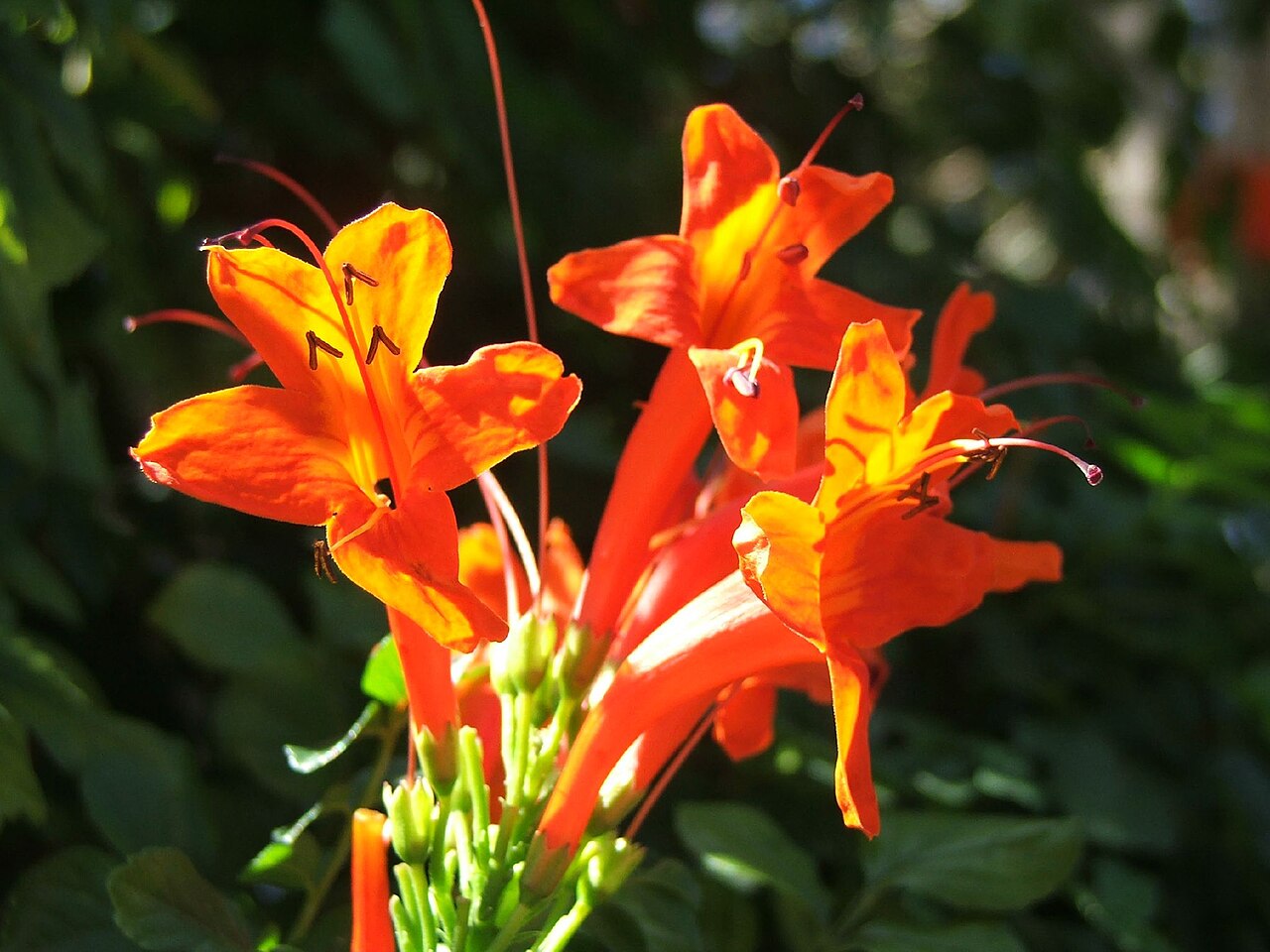
White Wrightia is familiar to many, but here the group found a yellow form, its flowers the colour of condensed-milk pudding. One member said the plant makes a fine bonsai. Nearby were Cape honeysuckle, surovi and Madhabilata in flower, a variegated weeping fig and two species of Podocarpus.
A Beaumontia vine shades a trellis next to two red sandalwood trees not yet in flower. An arch of climbing bamboo leads to another corner with bird of paradise, heliconia and water plants, and the collection also includes Tipu China, variegated fig, mahadebagota, pinto peanut, rudraksha, mistletoe fig and black Homalomena.
The plant that stayed with the writer most was a miniature hibiscus, its petals spreading just over an inch, in a soft colour; he says he had never seen such a small, pretty hibiscus. A private collection like this on the city's fringe shows how many species a small plot can keep alive, and how it gives people a chance to learn new flowers.
Photo: Ben Eenhoorn / Wikimedia Commons (CC BY 2.0)
Source: Prothom Alo

Comments
(0)