
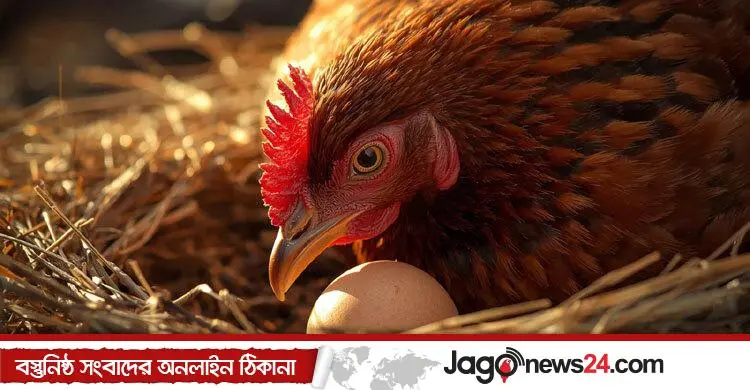
We may laugh when a chicken panics, tries to run away or freezes whenever a person appears. But this "fear" is really an expression of deep distress. People are part of a chicken's daily life on a farm, yet their presence often becomes a source of stress, and that fear gradually reduces production and affects the birds' health and welfare.
Fear is not a weakness but a natural defence mechanism. When an animal senses danger nearby, real or imagined, a "fear response" begins in its body. Just as hunger or thirst drive the body to act, fear motivates a chicken to stay alert and safe. The problem begins when the fear becomes long-lasting.
How fear affects the body
First, the chicken's body releases adrenaline, which raises the heart rate and gives the muscles energy. If the fear does not pass, a stress hormone called corticosterone begins to rise. Short-term fear, known as acute stress, is not very harmful; but if fear keeps returning, it creates long-term stress, or chronic stress, which seriously affects both the chicken's body and mind.
Chronic stress reduces a hen's ability to lay eggs. Research has found that birds living with fear and stress eat less, grow less and lay fewer eggs. Protein breakdown in their bodies increases, wasting energy and reducing reproductive capacity.
If people on the farm suddenly shout, grab the birds roughly or move in a threatening way, it is a major shock for the chickens. Such behaviour causes not only fear but is also one of the main reasons for lower production and misshapen eggshells.
Birds often injure themselves or neighbouring hens in the cage while trying to flee in fright, leading to injuries and infections. In all, fear affects not only the chicken's welfare but also the farm's finances directly.
Reducing fear on the farm
The most effective way to reduce fear is positive human behaviour. Research has shown that poultry that come into regular, calm contact with people quickly get used to their presence. Their heart rate stays lower, their feed intake is normal and production rises. Physical touch is not needed: walking slowly, speaking in a calm voice and keeping regular eye contact all create a sense of safety in the birds.
Environmental enrichment also plays a big role. Keeping toys, perches or objects of different shapes in the cage helps chickens get used to new things so they do not fear unfamiliar objects.
In the long term, genetic selection, that is, developing less fearful breeds, can also be an effective solution. Calm chickens are easier to raise and also produce more.
A frightened hen does not just lay fewer eggs; her immunity also falls, so infections and deaths on the farm increase. Fear-free birds, on the other hand, are active, healthy and productive. The guiding principle of a successful farm should therefore be "good treatment, good yield".
Every animal, even a chicken, has feelings. With a little patience, care and kindness, a farm can be made a fear-free, healthy and profitable place.
Ignoring fear means lower production and poorer animal welfare. Farm workers should understand the language of a chicken's fear: its behaviour, its eye movements or a sudden freeze are in fact a silent cry. When a chicken's fear is understood, the farm will be lively, production sustainable and animal welfare assured.
The information is drawn from Poultry Hub Australia.
Source: Jagonews24. First published in Bengali on The Agro News.

Comments
(0)