
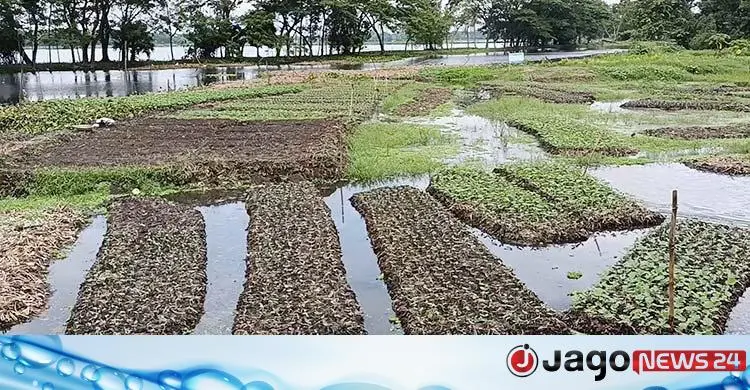
Water hyacinth clogging the Dakatia river and nearby water bodies was once a curse for local river life, blocking boats and causing waterlogging. That same weed is now showing a new direction for the rural economy of Faridganj. Hundreds of farmers are changing their fortunes by growing chemical-free vegetables and seedlings on floating beds (dhap) made from rotted water hyacinth.
This novel floating agriculture has been practised commercially for several years in the waterlogged area of Shovan in the upazila. The beds are green with bottle gourd, sweet pumpkin, red amaranth, cucumber, snake gourd and other vegetables. The chemical-free produce meets local demand and is also sent to the neighbouring districts of Lakshmipur and Cumilla.
Locals say enterprising farmer Shahid Talukdar was the first in the area to grow vegetables on floating beds, and his success inspired others. About 110 farmers in Shovan village alone now produce vegetables and seedlings commercially on floating beds. If these farmers, who have turned idle water bodies into jobs and income, receive training, modern inputs and balanced government support, Faridganj's floating vegetable farming could play an important role at national level.
Costs and returns
Shahid Talukdar said he prepared 60 floating beds on his own this season. Bed-making, labour and other costs came to about Tk 3.5 lakh, and he hopes to earn at least Tk 10 lakh from selling vegetables and seedlings by the end of the season.
Another farmer, Mizanur Rahman, said: "The water hyacinth that used to rot and stink is now collected and made into rows of beds, and we are earning extra income. It also meets our families' nutritional needs. And when the beds rot at the end of the season, they can be used on the land as good-quality organic fertiliser."
Complaints over support
Yet there is also discontent among many marginal farmers. Local farmers Md Rabbi and Md Rajib complained: "We have been farming with this technology on our own initiative for many years, but we don't get real help or incentives from the agriculture department. Agriculture officials hand out all the government benefits to a handful of people they favour."
Faridganj Upazila Agriculture Officer Kollol Kishore Sarkar said farmers in the low-lying and waterlogged areas of Faridganj are given support through demonstration plots from July to December.
He said seedlings produced in Faridganj are popular in neighbouring districts too. "We regularly write to higher authorities to raise the ceiling on government support. If the project's scope is widened, more farmers can be brought under government benefits," he said.
Source: Jagonews24. First published in Bengali on The Agro News.

Comments
(0)