
By Dr Syed Humayun Kabir
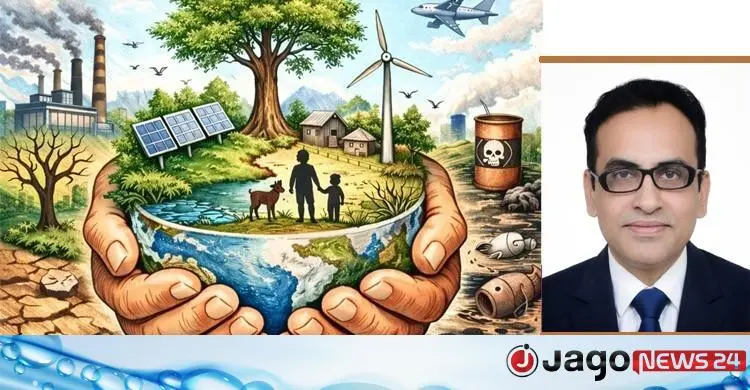
World Environment Day is observed every year on 5 June. The day is not just a formality; it confronts us with an important question: are we really leaving a liveable Bangladesh for future generations? The reality is that Bangladesh's environment faces a multi-dimensional crisis. The combined effect of air pollution, water pollution, plastic waste, e-waste, medical waste, deforestation, hill cutting and climate change is damaging the environment while increasing disease, premature death and economic loss. Protecting the environment is therefore no longer only a matter of conserving nature; it is directly a question of public health, the economy and national development.
Air pollution
One of the biggest environmental threats in Bangladesh today is air pollution. According to the international air quality monitor IQAir, Bangladesh's average PM2.5 level in 2024 was many times higher than the World Health Organization's safe standard. The situation in Dhaka is even more worrying. Emissions from old and unfit vehicles, industrial pollution, dust from construction, smoke from brick kilns and open burning of waste are the main sources. Large numbers of old buses, trucks and other vehicles still run in Dhaka and elsewhere, and their black smoke harms the environment and public health every day.
The health effects of air pollution are severe. Polluted air significantly raises the risk of heart disease, stroke, lung disease, pneumonia and cancer. Research has shown that air pollution is cutting the average life expectancy of people in Bangladesh by several years. Air pollution is therefore not only a health problem; it has become a national development crisis.
Another neglected source of air pollution is tobacco use. Smoking harms not only smokers but those around them. Cigarette smoke contains thousands of toxic chemicals, many of them carcinogenic. Cigarette filters are also among the most discarded plastic waste in the world, accumulating in soil, rivers and water bodies, adding to pollution and threatening biodiversity.
Water, plastic and e-waste
The picture of water pollution is equally worrying. Many rivers that were once the centre of Bangladesh's economy, culture and life are now overwhelmed by industrial and sewage waste. Heavy metals have been found in the water of the Buriganga, Turag, Balu and Shitalakshya rivers. Untreated industrial waste poses a long-term threat to river ecology and public health. Arsenic contamination is still a major public health problem in various regions, and the use of contaminated water is causing cancer, skin disease, kidney disease and other complications.
Plastic pollution is another major concern. The use of large quantities of polythene and single-use plastic every year is adding to the waste burden. Plastic that reaches rivers and the sea gradually turns into microplastics and enters the food chain, creating new risks for human health. Burning plastic in the open releases toxic chemicals such as dioxins and furans, raising the risk of cancer and other diseases.
With growing use of technology, the amount of e-waste in Bangladesh is also rising fast. Because old mobile phones, computers, batteries and other electronic devices are not properly managed, toxic elements such as lead, mercury and cadmium are spreading into the environment. Likewise, unregulated management of medical waste from hospitals and clinics poses serious risks to the environment and public health.
In addition, various plastic products, the lead-acid batteries of auto-rickshaws, industrial machinery batteries and other electronic waste are often recycled without any environmentally sound management. Melting plastic in the open or breaking batteries to recover valuable materials spreads lead, acid and other toxic substances into soil, water and air. Environmentally sound, modern recycling is still not well developed in the country, so these activities create new risks.
Forests, hills and climate change
Deforestation and the destruction of hills are making the crisis worse. The country's forest cover is far below what is needed. Continued hill cutting in Chattogram, Cox's Bazar and the hill districts is increasing landslides, floods and loss of biodiversity. The loss of forests reduces carbon absorption, which intensifies the impact of climate change.
The effects of climate change are especially worrying for Bangladesh. Sea-level rise, spreading salinity, severe heatwaves, irregular rainfall and prolonged drought are hurting agriculture, food security and public health. Extreme heat raises the risk of heatstroke, dehydration and heart disease, while drought disrupts farm production and worsens water shortages.
The economic cost of pollution is also high. Pollution-related illness raises medical costs and reduces work capacity and productivity. Protecting the environment is therefore a precondition for economic development and for protecting human resources.
What must be done
Environmental protection must be seen as a national priority. It is urgent to ensure effective waste treatment in industry, control brick kiln pollution, manage e-waste and medical waste safely, build environmentally friendly recycling, stop open burning of waste, reduce plastic use, strengthen tobacco control and phase out old polluting vehicles. There is also no alternative to raising public awareness and enforcing environmental laws effectively.
Most important is a large-scale tree planting and afforestation programme. Trees absorb carbon dioxide, supply oxygen, reduce air pollution and help tackle the effects of climate change. Trees must be planted widely in cities, villages, educational institutions, industrial areas and hill regions. In particular, hill cutting must stop and planned afforestation must be carried out there.
Protecting the environment does not only mean protecting trees, rivers or hills; it means protecting human life. Safeguarding the air we breathe, the water we drink and the soil in which we grow food is the foundation of our future. If we are not responsible towards the environment today, the next generation will face an even harsher reality.
On World Environment Day, let our pledge be to reduce pollution, plant trees, protect forests, stop the destruction of hills, improve waste management and adopt an environmentally friendly way of life, because there is no alternative to protecting the environment for a healthy, safe and prosperous Bangladesh.
The writer is a public health and cancer prevention researcher and president of World Cancer Society Bangladesh.
Source: Jagonews24. First published in Bengali on The Agro News.

Comments
(0)