
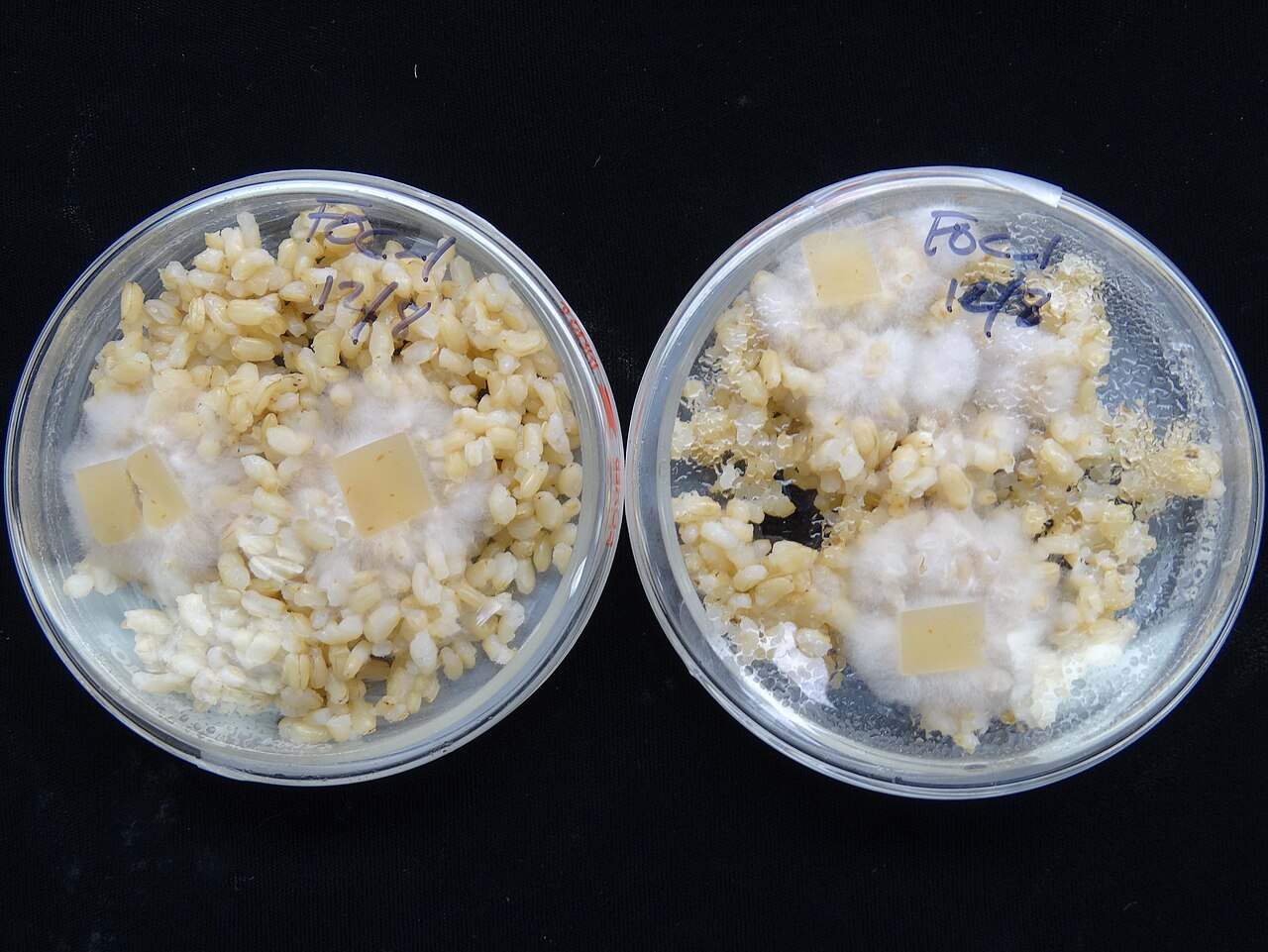
Researchers at Embrapa Mandioca e Fruticultura in Cruz das Almas, Bahia, part of Brazil's agricultural research agency, have confirmed that a gene called MusaDMR6 helps banana plants succumb to Fusarium wilt, making it a candidate target for breeding or gene editing resistant varieties, Global Agriculture reports.
Fusarium wilt, or Panama disease, is caused by the soil-borne fungus Fusarium oxysporum f. sp. cubense. It blocks the plant's water-conducting tissue and has no effective chemical cure once a field is infected, and the aggressive Tropical Race 4 strain has spread through Asia, Africa and more recently Latin America.
In other crops such as tomato, DMR6 acts as a brake on salicylic-acid-based immune signalling, and knocking it out with CRISPR has made plants more resistant. The team inoculated the cultivar Prata-Ana and tracked the gene with RT-qPCR: its activity dipped in the first 24 to 48 hours, then rose 6.5-fold at 72 hours compared with healthy plants. By 90 days infected plants had a disease severity index of 80%.
The study, led by Claudia Fortes Ferreira with Marcio Leandro da Silveira Fonseca, Edson Perito Amorim and colleagues, was published on 29 August in Molecular Biology Reports.
The researchers validated DMR6 as a target but did not edit it, so no resistant banana exists yet; an edited line would still need trials and Brazilian regulatory approval before release.
Photo: Scot Nelson / Wikimedia Commons (CC0)
Source: Global Agriculture


Comments
(0)