
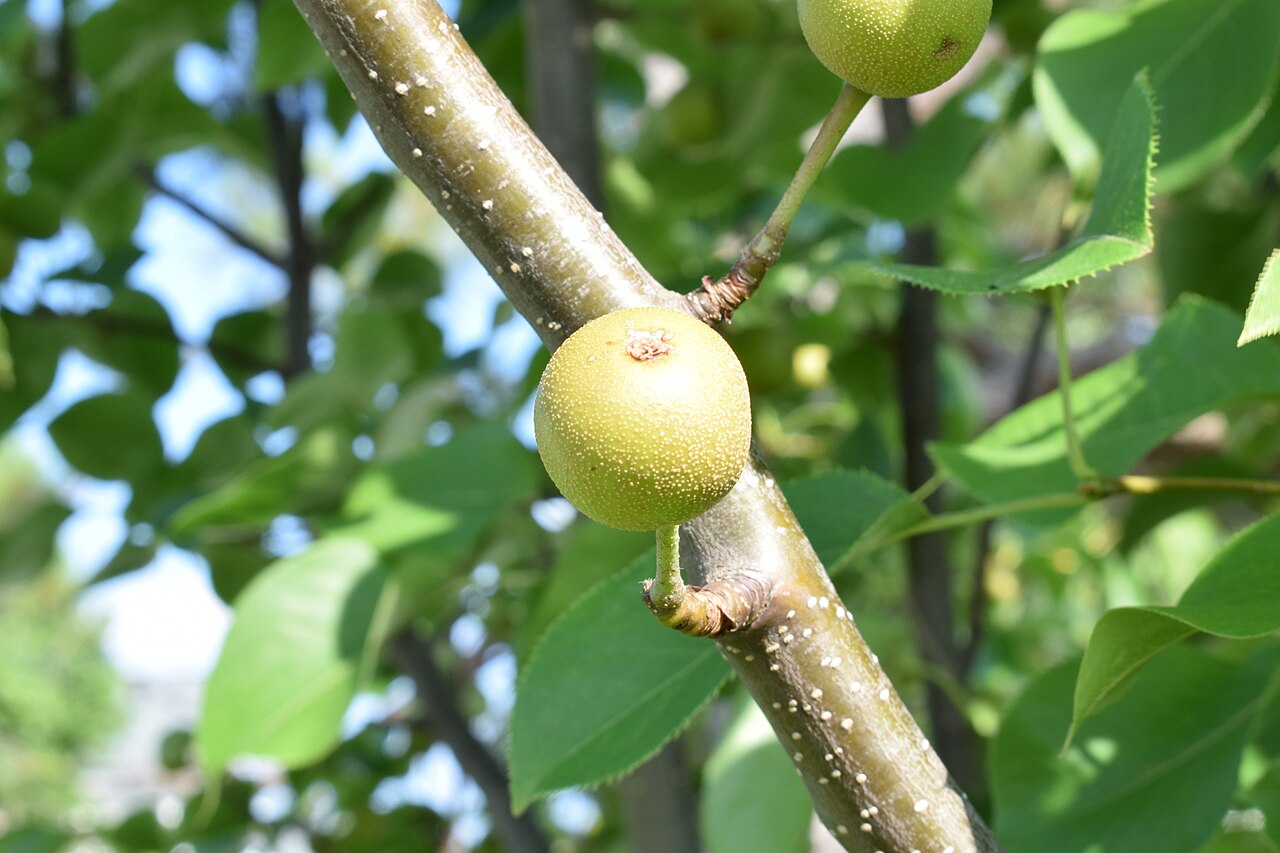
Brazil's agricultural research corporation Embrapa has released BRS Áurea, a pear cultivar bred for the country's southern growing regions to reduce heavy dependence on imported pears and cut fungicide and insecticide use.
Developed by Embrapa Uva e Vinho in Bento Gonçalves, Rio Grande do Sul, from a 2006 cross between the Asian pear Hosui and the European Abate Fetel, the variety was registered with the Ministry of Agriculture and Livestock in May 2025 and presented to growers at the Expointer fair in late August and early September 2026. Breeder João Caetano Fioravanço led the work, with post-harvest specialist Lucimara Antoniolli assessing storage.
Brazil imports an estimated 90 to 95 per cent of its pears, mostly from Argentina and Chile, because most varieties need more winter chilling than its mild climate provides, and the main local variety, Rocha, suffers badly from disease and pests in humid conditions.
BRS Áurea resists Fabraea leaf spot (entomosporiosis) and pear scab, and in field trials had a South American fruit fly infestation rate of about 10 per cent against 70 per cent for Rocha. It needs only 400 to 600 hours below 7 °C to break dormancy, matures about 106 days after full bloom — reaching market in early to mid-January, ahead of imports — and yielded close to 30 tonnes per hectare in high-density trials.
Fioravanço said the cultivar combines adaptation to southern Brazil's climate, high yield and good fruit quality. Because resistance is bred into the plant, growers should need less fungicide against leaf spot and scab and less spraying against fruit fly than with the varieties it replaces.
Photo: PumpkinSky / Wikimedia Commons (CC BY-SA 4.0)
Source: Global Agriculture
Comments
(0)