
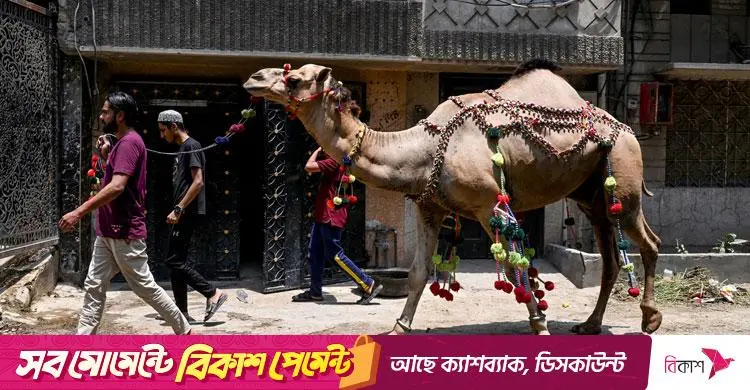
Eid-ul-Azha is one of the largest religious festivals of the Muslim world. Every year millions of animals are sacrificed across Muslim-majority countries around the festival. Besides its religious significance, it brings considerable economic momentum to farming and livestock in many countries. Many people are curious how many animals are sacrificed in each country.
Analysis of government and international agency data each year shows that the number of sacrificial animals varies from country to country with social, economic and geographical conditions. This report sets out recent figures for several Muslim-majority countries.
Cattle, buffalo, goats, sheep, fat-tailed sheep (dumba) and camels are commonly used for sacrifice. The type and number of animals differ by country and culture. A brief outline for several Muslim-majority countries follows.
Animals sacrificed
- Saudi Arabia: Large numbers of animals are sacrificed during Hajj. According to 2024 figures, about 15 lakh pilgrims performed Hajj that year and around 10 lakh animals were sacrificed for them, mostly sheep and goats.
- Pakistan: About 24 crore Muslims live in Pakistan, 98 per cent of the population. Some 70 to 80 lakh animals are sacrificed each year, including cattle, goats, sheep and camels. Sacrifice of dumba is more common in the colder regions.
- Indonesia: The country with the world's largest Muslim population (about 20.3 crore) sacrifices some 20 to 25 lakh animals, mainly cattle and goats.
- Bangladesh: About 16 crore Muslims live in Bangladesh. More than one crore animals were sacrificed in 2024, most of them cattle and goats.
- Iran and Turkey: These countries sacrifice about 15 to 20 lakh animals a year. Cattle and sheep are more popular in Iran, and sheep and goats in Turkey.
The hide trade
Hides from sacrificial animals are an important raw material for the global leather industry, and in Muslim-majority countries the hides produced at Eid make a significant contribution to the economy. The scale of the hide trade in several countries is outlined below.
- Pakistan: Pakistan's leather industry is among the largest in the world. About 70 lakh hides are collected during Eid, with a market value of about 1,500 crore rupees, used by domestic tanneries and for export.
- Bangladesh: About one crore hides are collected during Eid in Bangladesh. The market value of hides in 2024 was about Tk 1,500 crore. However, wastage and poor preservation reduce the value of 20 to 30 per cent of hides. Bangladesh earns about $1 billion (100 crore dollars) from leather exports.
- Saudi Arabia: About 10 lakh hides are collected during Hajj and Eid-ul-Azha, worth about 50 crore riyals, and sold in local and international markets.
- Indonesia: The hide market is relatively small, but about 20 lakh hides generate business of 20 crore dollars a year.
- Iran and Turkey: The hide market in these countries is worth about 30 to 40 crore dollars. Exports are relatively low because of local demand.
The report cites the BBC, AP and Wikipedia as its sources.
Source: Jagonews24. First published in Bengali on The Agro News.

Comments
(0)