
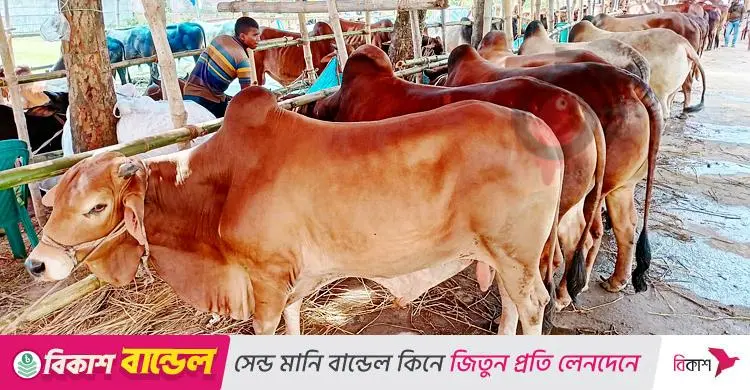
Ahead of the coming Eid-ul-Azha, the authorities concerned have been instructed not to lease 217 identified potential markets for buying and selling sacrificial animals that sit on or beside highways.
The decision was taken at a stakeholder meeting at Bidyut Bhaban in the capital on Monday (12 May).
Rules for animal markets and transport
Under the meeting's decisions, market entrances must face away from the road, and vehicles carrying animals must always use the left side of the highway. To keep order on the roads, trucks carrying sacrificial animals were told to display a banner on the front showing which market they are heading to. The authorities were also told to take the necessary steps to stop goods and animal carriers, especially returning vehicles, from carrying passengers.
The meeting agreed that the necessary steps should be taken to stop paddy, straw, wood and the like being dried on highways and construction materials being stored there, and that drivers should be encouraged to use alternative roads to avoid congestion-prone areas.
Mobile courts and road safety measures
It was decided that mobile courts would be run, in coordination with BRTA, police commissioners, city corporations, deputy commissioners, superintendents of police, the Roads and Highways Department, upazila nirbahi officers and representatives of transport owners' and workers' organisations, to keep passenger travel safe and smooth.
Other decisions were to keep wreckers ready to clear crashed vehicles quickly; to stop extortion at all bus terminals and on highways; and to take the necessary steps against theft, robbery, mugging, pickpocketing and the "molom party" and "ogyan party" gangs who drug travellers.
Instructions were also given to ensure orderly movement of vehicles to and from Sayedabad, Mohakhali, Gabtoli and Fulbaria bus terminals and other places in Dhaka, and to stop overcharging on fares. Mobile courts will be run from ten days before Eid against rickety, unfit and faulty vehicles and at repair workshops. Other instructions were:
- no carrying of goods or passengers beyond capacity;
- removal of temporary and floating markets from both sides of roads;
- ensuring that three-wheelers such as nosimon, korimon and easy-bikes stay off national and regional highways;
- preventing passengers from travelling on goods vehicles;
- no parking except at designated places, and no picking up or dropping passengers anywhere and everywhere.
Monitoring teams on the highways
Development work on highways is to stop for seven days during Eid. Of 149 potential congestion spots, the source lists 49 on the Dhaka-Chattogram-Cox's Bazar highway, 54 on the Dhaka-North Bengal highway, six on the Dhaka-Mymensingh highway, 42 on the Dhaka-Sylhet highway and eight on the Dhaka-Paturia-Aricha highway. For these and for the Dhaka-Bhanga-Benapole, Dhaka-Barishal and Dhaka-Mawa expressway routes, monitoring teams of the highway police, district administration, district police, upazila nirbahi officers and officers-in-charge of police stations are to act before and after Eid-ul-Azha and to run mobile courts.
Present at the meeting were Muhammad Fouzul Kabir Khan, adviser to the Ministry of Road Transport and Bridges and the Ministry of Railways; Asif Mahmud Shojib Bhuyain, adviser to the Ministry of Local Government, Rural Development and Co-operatives and the Ministry of Youth and Sports; Sheikh Moinuddin, the chief adviser's special assistant attached to the Ministry of Road Transport and Bridges; Md Ehsanul Haque, senior secretary of the Road Transport and Highways Division; and Mohammad Abdur Rouf, secretary of the Bridges Division.
Source: Jagonews24. First published in Bengali on The Agro News.

Comments
(0)