
Eid ul-Fitr and Eid ul-Azha are the two most important festivals of the Muslim world, and they hold deep meaning for Bengali Muslims. In our Muslim-majority country the days are marked with both solemnity and joy. Since childhood I have seen that Bengalis are a people of "thirteen festivals in twelve months", among whom not the slightest trace of communalism has been seen, and none is seen even now. Over time the colours of Eid have changed and the scale of the festival has grown. The Eid that lies deep in the heart of Bengali Muslims has brought joy in new hues.
Eid means happiness, Eid means joy; that idea seems rooted at the core of the festival. In a few days comes Eid ul-Azha, better known to us as the Eid of Qurbani, when Muslims sacrifice animals according to their means in the way of Almighty Allah.
How Eid became a national festival
History says Muslims came to Bengal from the Middle East by way of the Persian region, entering the subcontinent through Iraq, Iran and Afghanistan. Families held various religious observances throughout the year, but Eid ul-Fitr and Eid ul-Azha stood above everything. Because the Muslims of rural Bengal were poor and marginal, the two days did not at first become major occasions when Islam arrived here. Over time, as Muslims found economic prosperity and a middle class emerged in society, Eid gained social standing in this land. In the era of the nawabs and emperors of the subcontinent, Eid was transformed into a festival. These facts are drawn from the pages of history.
With the passage of time, the Muslims of Bangladesh have raised Eid to the rank of a national festival, adding new cultural dimensions and many new elements. Eid is no longer only a religious occasion for Muslims. It has gradually crossed from the religious into the social and national sphere and become an international festival, a festival for everyone. Eid fashion, special Eid issues of newspapers and magazines, plays, stage shows and even week-long programmes on radio and television have helped make Eid universal.
Eid among Bengalis in Bangladesh has many dimensions. It differs between village and town, and also between sections of society. But the core ingredient of any festival is joy, which people seek in every celebration. When everyone in society stands within the same circle of joy, a festival becomes universal. That is why people have asked through the ages what gladdens the human heart, what teaches a person to wipe away the grime of daily life and stand up again, and what gives new inspiration to live.
Where the media leaves the village out
The media is now a special space for celebrating Eid, where people look for entertainment during the Eid days. Television, radio, newspapers, magazines, cinema halls and online news portals all want to dress up for the festival, and viewers and readers want a little extra joy. Urban people occupy a large part of the space in planning these programmes and writings. Publishers and television owners seem eager to show or print whatever city people want to see or read. And the advertising market cannot be forgotten either.
When Eid comes, every advertiser wants star-studded programmes and multidimensional modern publications on celebrities' fashion, cooking and so on. Without stars, advertisers are unhappy, and earning a profit becomes hard for any branch of the media, whether TV, radio or the others I mentioned. In television, where I have worked since the early 1980s, I always saw that there was nothing in the Eid festivities for the entertainment of marginal and rural people. Nor was there anything in newspapers, online or on radio.
How could ordinary village people be included in the joy of Eid? That question, and a sense of obligation, had been with me for a long time. After the programme Hridoye Mati O Manush began on Channel i, the idea moved closer to reality, and the plans slowly matured.
Krishoker Eid Anondo
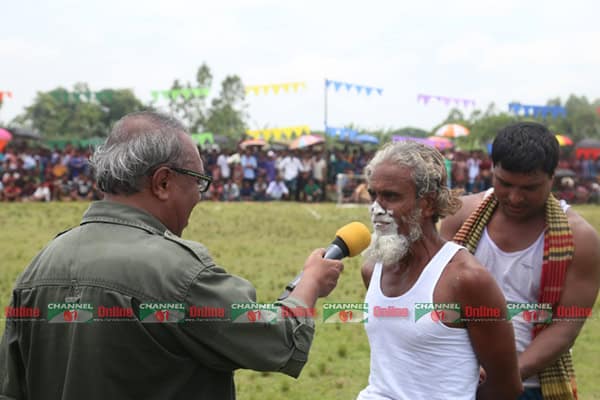
Finally, in 2006, I started a new dimension in Bangladesh's Eid entertainment on television: Krishoker Eid Anondo (Farmers' Eid Joy). Marginal, poor and self-reliant farmers take part, and in the satellite age their village games reach towns, cities and even the whole world. This hugely popular programme has won hearts not only because of the games or the farmers' participation. It has done so because its participants are ordinary people, and the many stories of their lives are woven between the games in documentary form.
Not only the country's farmers but farmers from around the world have joined this Eid entertainment programme: farmers in Uganda, farmers in Germany. Staged at historic sites at home and abroad, Krishoker Eid Anondo has become a global programme of international standard. When it airs on Channel i, the largest number of viewers have their eyes on the television screen. This achievement belongs not only to Channel i or Hridoye Mati O Manush but to all the people of Bangladesh. If an important class of the country is left out of Eid entertainment entirely, what does entertainment even mean? That is why viewers have loved this programme wholeheartedly. Let me add, reader, that there was once no idea of agricultural news on any television channel.
We were the first to start it. In the early days neither the editorial board nor anyone else believed agriculture could be news. Later agricultural news came to television, and we began it with skill. Other channels besides Channel i now broadcast agricultural news too. I believe the same is now true of entertainment for farmers, with Krishoker Eid Anondo showing the way. Other television channels in the country are gradually coming forward; two to four channels have already begun making similar Eid entertainment programmes following its example. Viewers have placed Krishoker Eid Anondo on their list of Eid programmes out of love, and people everywhere, in villages, hats and bazaars, towns, cities and ports, wait to watch it.
A plea to the media
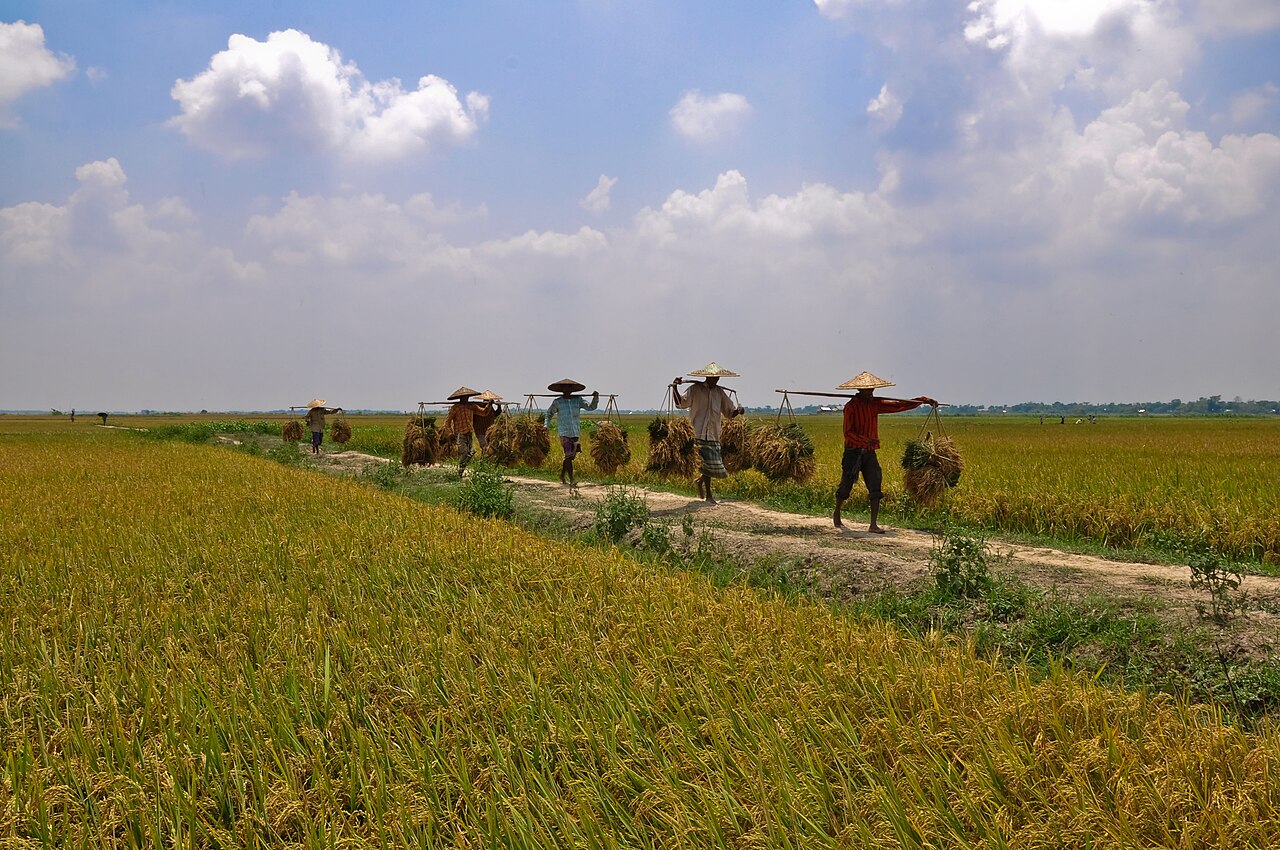
Dear reader, culture is an essential part of how Bengali Muslims celebrate Eid, and television culture is now being assessed in a new light. Against this backdrop, our television, newspapers and other media must ensure that rural people take part in the joy of Eid. Otherwise we will fall behind. The world will not learn that our strong economy stands on the labour and sweat of Bangladesh's rural people; that they are the backbone of this nation, and that they go on growing golden crops for us, burned by the sun, soaked by the rain and in the biting cold.
I humbly urge everyone involved in the media, and the people of the country, not to push entertainment into the ranks of discrimination nor be swept along by the tide of commerce, but to embrace the joy of the country's ordinary people as our own, and to try to present our rural culture and heritage, on which we stand, on television and in newspapers. We must also take care that this land, where culture once grew out of agricultural culture and which grew up in a colourful cultural setting, is not lost in the herd-like current of today's so-called modernity.
The joy of Eid can therefore never be the victim of discrimination anywhere. So I believe that in a country where 11 crore people live in rural areas, at this Eid and in this new tide of Eid culture, let us make room in the media for these people too. Let the joy of Eid bring victory to the toiling people of Bengal, whom we have had the good fortune to give at least a little entertainment amid a whole year of hard labour and hardship.
Source: Shykh Seraj. First published in Bengali on The Agro News.
Comments
(0)