
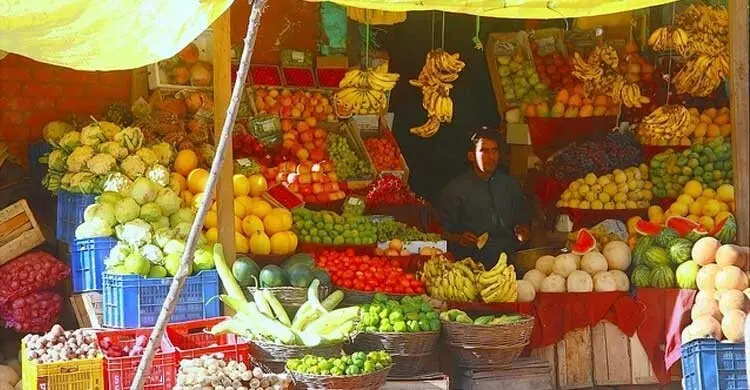
Egypt is well advanced in fruit diversity and farming culture. Thanks to the fertile silt of the Nile, a favourable climate and thousands of years of farming tradition, the country has been known worldwide since ancient times for producing a variety of tasty, nutritious fruit.
Although some fruits such as jackfruit, Bangladesh's national fruit, coconut and pineapple are not seen in Egypt, the country is rightly called a "paradise of fruit". One of the main treasures of this paradise is the date.
Dates have held a special place in Egypt's culture, diet and economy since ancient times. The many varieties grown in different parts of the country not only meet local demand but are also exported to countries around the world.
Egypt's famous fruits include mango, orange, malta, grapes, pomegranate, figs, alu bokhara (plums), watermelon, melon and strawberries. Oranges and other citrus fruits in particular carry Egypt's name in the international market. These fruits are grown in the farming areas along the Nile.
What expatriates enjoy
Expatriate businessman Al-Amin said fruit here is relatively cheap and of excellent quality, and it features prominently in expatriates' daily diet. Expatriates like Egyptian mango, figs and fresh olives most.
The taste of mango here is different from Bangladesh's Amrapali or Himsagar, but it is very sweet and fibreless, he said. Expatriates also love the traditional Arab fresh dates and figs, and watermelon and cantaloupe grown in Egypt's vast deserts quench their thirst in the hot season.
What they miss
Another expatriate, Liakat Ali, said with regret that for all Egypt's abundance of fruit, some fruits are not available at all, which constantly haunts expatriates. Jackfruit, Bangladesh's national fruit, is nowhere to be seen, and local sweet-sour fruits such as green mango, jamrul, latkan, amra, star fruit (kamranga) and jamun are not available in Egypt.
Md Sumon Hossain, who works in Cairo, said: "However cheaply we get malta, grapes or figs in Egypt, you could not find the taste of one latkan or star fruit from home here even for crores of taka."
"We especially miss the smell of jackfruit and green mango bhorta in the monsoon. Sometimes when someone comes from home and brings one or two jackfruits or amras, it feels like holding the moon in our hands. These fruits are not available here, and that is our biggest regret," he said.
Egypt's mango and orange varieties
When it comes to Egyptian mango, the first names are Ismailia and Fayed, the two areas known as Egypt's "mango capital". Of the mangoes produced there, the Awis variety is called the "king of mangoes".
Other varieties, including Fas, Siddika, Alphonse, Taimour, Zebda, Sukkari, Naomi, Mango-el-Hind and Keitt, are an important part of Egypt's farming heritage and economy, drawing fruit lovers at home and abroad with their taste, aroma and variety.
After mango, oranges and grapes are among Egypt's most popular fruits. While a kilogram of oranges costs Tk 300 to 400 in Bangladesh, a kilogram of fresh oranges just picked from the orchard costs only about Tk 30 in Egypt's local markets. Juicy, colourful grapes picked from the vine sell for Tk 80 to 100 a kilogram.
Egypt has many orange varieties, among them Ustafandi, mandarin, Baladi, Valencia, navel and Sukkari. Popular grape varieties include Banati, Thompson Seedless, Flame, Red Globe and Superior Seedless.
Watermelon and various melons are in great demand in summer, not only for their taste but as an important way to stay refreshed in the intense heat. In winter the markets for oranges, mandarins and strawberries come alive.
Fruit farming is an important sector of Egypt's farm economy, involving thousands of farmers, traders and exporters. Fruit plays an important role in the country's farm exports and is one of its sources of foreign currency.
Egyptian fruit in Bangladesh
Fruit Day is not only a day to enjoy the taste of fruit but also an occasion to honour farmers, nature and the farm economy. Egypt's variety of fruit reflects the blessing of the Nile, its natural resources and its rich farming heritage.
Fruit traders say large quantities of citrus fruit go from Egypt to Bangladesh every year, with malta and oranges the most popular. Their bright colour, thin skin and extra sweetness and juiciness create strong demand in Bangladesh's market.
High-quality pomegranates, grapes and premium dried dates are also regularly exported from Egypt to Bangladesh. In the off-season, when the supply of local fruit falls, Egyptian malta and grapes hold Bangladesh's market.
Hundreds of Bangladeshi workers and traders now work in large fruit wholesale markets and orchards in Cairo, Alexandria and other Egyptian cities. They also ease the process of buying Egyptian fruit in local markets and exporting it to Bangladesh.
If direct cargo flights between the two countries begin and customs complications ease, it will be possible to bring more varied fruit from Egypt to Bangladesh at lower prices, which would play a big role both in expatriate employment and in meeting the country's demand for fruit.
Source: Jagonews24. First published in Bengali on The Agro News.
Comments
(0)