
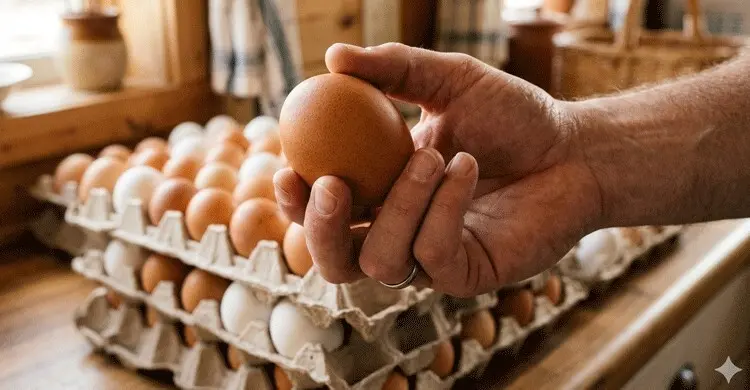
Eggs are said to be one of the best sources of protein and are almost essential in daily meals, from breakfast to lunch or dinner. Cheap, nutritious and versatile, they are popular with children and older people alike. The problem is that it is very hard to tell from the outside whether an egg is fresh or several days old.
We often buy eggs that turn out to be bad when cracked at home, wasting both food and money, and you cannot crack eggs to test them in the shop. Knowing a few simple tricks helps you judge freshness when you buy.
Why the date is not enough
Many people judge an egg by the date printed on the carton, but that date is not always a reliable guide to freshness. It is often the packing or marketing date, not the date the egg was laid, so it can be hard to know an egg's real age. This is even harder with eggs sold from open trays or cartons, so a few simple checks are useful.
The float test
The most popular way to check freshness is the float test. Fill a deep bowl with cold water and gently lower the egg in.
- If it sinks and lies on its side, it is fresh.
- If it sinks but stands upright or tilts slightly, it is a little older. Such eggs are usually safe to eat but are best used soon.
- If it floats to the top, it is better not to eat it, as such eggs are usually very old and more likely to be bad.
Why do old eggs float? An eggshell has countless tiny pores. Over time air enters through them and the air pocket inside grows. The more air collects, the lighter the egg becomes, until it floats. A fresh egg has a small air pocket, so it stays at the bottom.
Crack it and smell it
Freshness is also easy to judge once the egg is cracked. A fresh egg has a thick, slightly sticky white and a high, rounded yolk. An old egg's white is much thinner and spreads out, and the yolk looks flat. A very watery white is a sign that the egg is quite old.
The simplest way to tell whether an egg has gone bad is the smell. If a strong rotten or sulphur-like smell comes out as soon as it is cracked, throw it away at once. Such an egg is never safe to eat.
Storing eggs
To keep eggs good for longer, pay attention to storage. Experts say eggs should always be kept in the fridge, and if possible in their original carton. This reduces temperature swings and preserves quality for longer.
Eggs are nutritious, but choosing and storing them properly matters. Keep these tips in mind next time you buy eggs to make sure the ones on your plate are safe and fresh. The advice draws on The Guardian, HelloFresh, Milk and More and other sources.
Source: Jagonews24. First published in Bengali on The Agro News.



Comments
(0)