
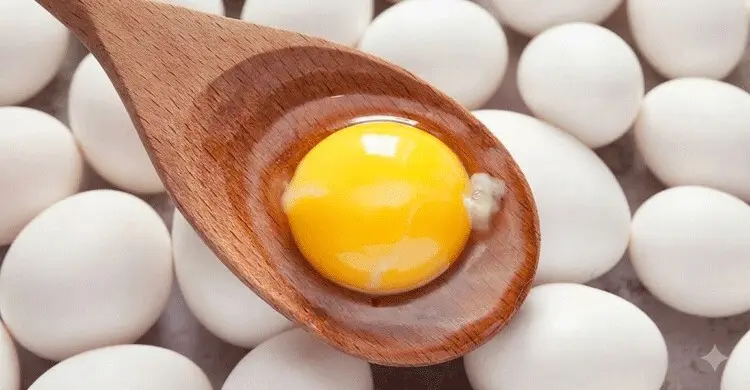
Many people are startled when they crack an egg and see a white, thread-like strand clinging to the yolk. Some think the egg has gone bad; others pick it out and throw it away. But according to nutritionists there is no reason to worry. The strand is a normal and important part of the egg's structure, and it can even indicate that the egg is fresh.
According to dietitians, the white, thread-like strand attached to the yolk is called the chalaza. It is entirely natural and a normal part of every healthy egg.
The chalaza works mainly like a tiny anchor. It helps hold the yolk steady in the centre of the egg white. This protein fibre keeps the balance so that the yolk does not slide around or break easily when the egg is moved or transported. In fact an egg contains two twisted chalazae that hold the yolk from both sides, so however much the egg is shaken, the yolk stays largely protected.
A normal part of the egg
Many believe the white strand is a defect or a sign of spoilage. In reality the opposite is true. The chalaza is completely edible and safe. It is made mainly of protein, so eating it does no harm to health. According to nutritionists, it has no negative effect on the taste, smell or nutritional value of the egg, so there is no need to remove it. It blends easily into the egg during cooking.
A clue to freshness
The chalaza is not only a normal part of the egg; it also gives an idea of how fresh the egg is. In fresh eggs it is usually clearly visible and firm. As an egg ages, the chalaza gradually weakens and becomes less visible.
So if you see a clear white strand beside the yolk after cracking an egg, it is in many cases a sign that the egg is relatively fresh.
There is no need to think an egg has gone off because of the chalaza. However, if the egg smells bad, the white has become unusually thin, or the colour and texture of the yolk have changed abnormally, it is better not to use it.
Next time you crack an egg and see the white strand beside the yolk, there is no reason to be alarmed. It is a normal part of the egg's structure that protects the yolk and often signals freshness. There is no need to remove the chalaza or throw the egg away; you can cook and eat it without worry.
Source: Jagonews24. First published in Bengali on The Agro News.


Comments
(0)